Category: artists

  • Piano Transplants by Annea Lockwood

    Piano Transplants by Annea Lockwood

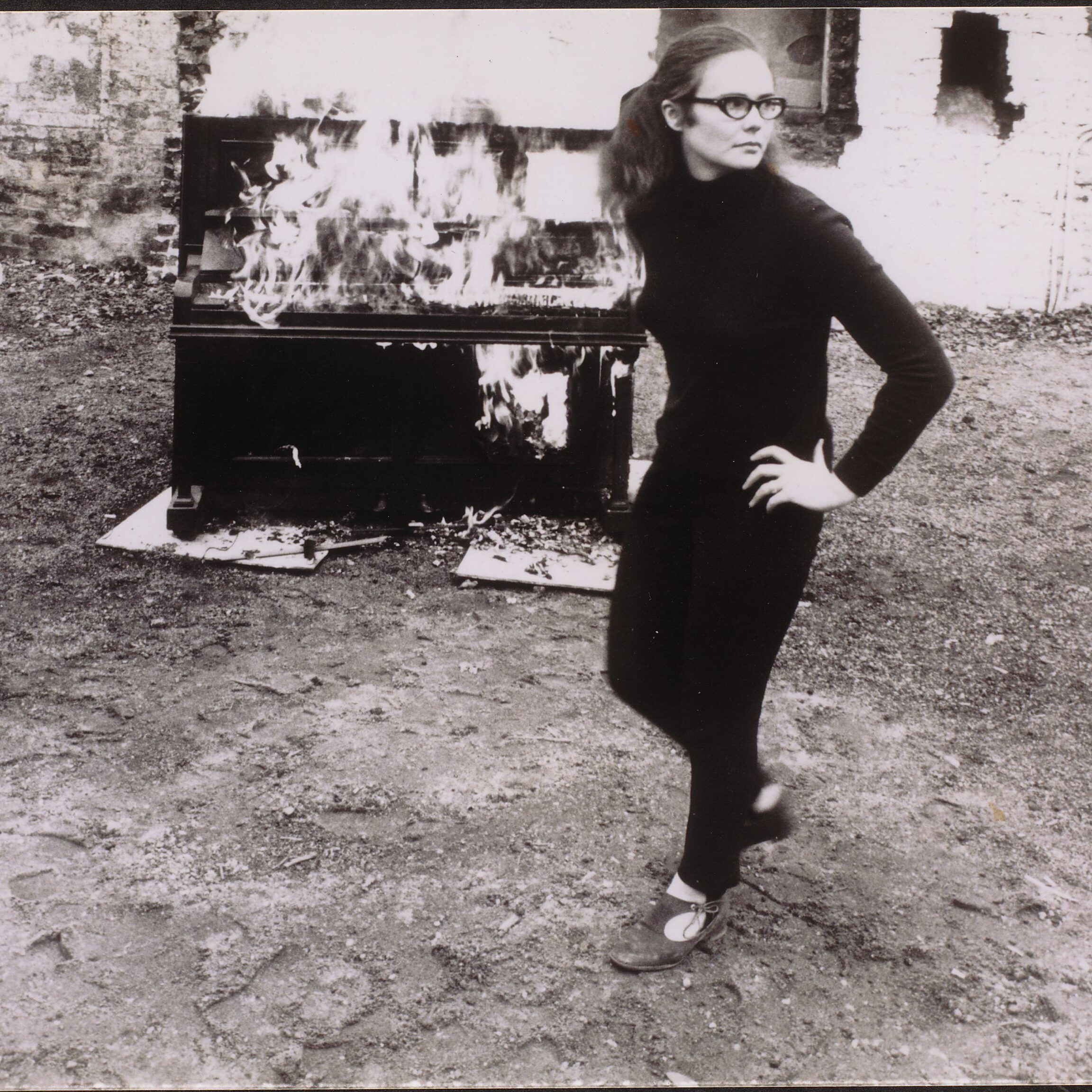
    During the 1960s, Lockwood created works such as the Glass Concerts, initiating her focus on timbre and new sound sources. In synchronous homage to Christian Barnard’s pioneering heart transplants, Lockwood began a series of Piano Transplants (1969-82) in which defunct pianos were burned, drowned, beached, and planted in an English garden. Piano Burning continues to be performed around the globe.

    Lockwood’s deep affection for all things water-related is evident throughout her catalog. Her attention to performance works focused on environmental sounds and life narratives began in the 1970s and ’80s with World Rhythms and A Sound Map of the Hudson River. A Sound Map of the Danube weaves field recordings of the rivers with recorded stories of the people living and working on the water. Delta Run features a recorded conversation with the sculptor Walter Wincha near the time of his death. Her 2016 tribute to the composer Pauline Oliveros, bayou-borne, for Pauline, is a graphic score; a map of the six converging bayous in Houston, Texas, where Oliveros was born.

    Collaboration and improvisation are vital features of Lockwood’s output. Jitterbug, commissioned by the Merce Cunningham Dance Company for the dance eyeSpace, incorporates Lockwood’s recordings of aquatic insects, and three improvising musicians working from photographs of rock surfaces. She has worked with engineer and sound designer Robert Bielecki on devices such as the Sound Ball, created for Three Short Stories and an Apotheosis in which a ball containing six small speakers and a receiver is rolled, swung on a long cord, and passed around the audience. Lockwood and Bielecki also collaborated on the outdoor installation Wild Energy (2014), which resides in the permanent collection of the Caramoor Center for Music and the Arts and draws on geophysical and atmospheric infra and ultra sound sources transposed into the human hearing range.
    https://www.annealockwood.com/

  • Miya Masaoka

    Miya Masaoka

    Resonant frequencies meet parabolic surfaces made from clay of the earth, animals of the sea, and met with the activity of human toil.

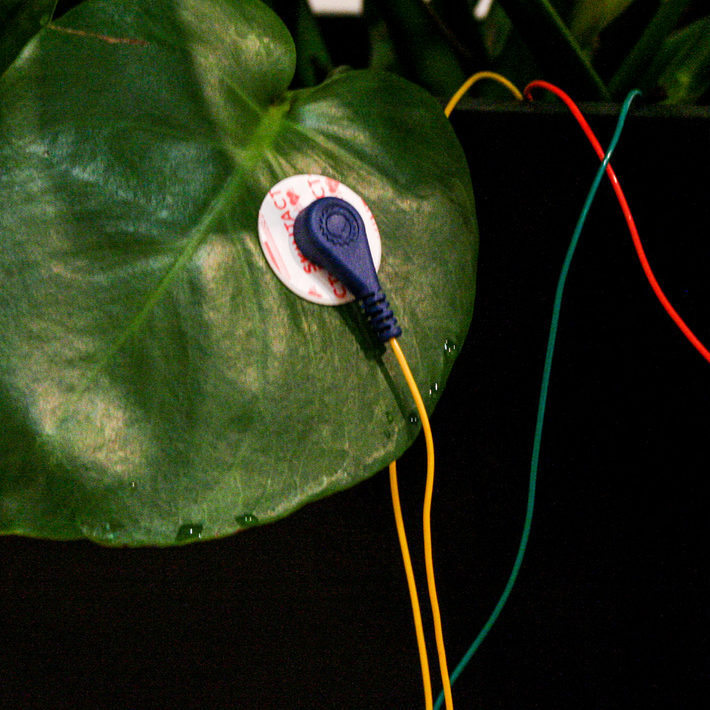
    Miya Masaoka is a Guggenheim and Rome Prize-winning composer, performer, and installation artist. Her work explores the natural world, bodily perception of vibration, movement and time while foregrounding complex timbre relationships. . Classically trained, her work operates at the intersection of spatialized sound, frequency and perception, performance, social and historical references. Whether recording inside physical objects or inside a plant or the human body, within architecturally resonant spaces or outdoor resonant canyons, she creates incongruencies that feed the paradox of the contemporary condition. She is a polyglot, and speaks six languages.

    Her interconnected artistic practices include notated composition, alternative personas, hybrid acoustic-electronic performance on Japanese traditional string instruments such as the koto and ichigenkin. Her work includes writing new Noh music, instrument building, wearable computing, and sonifying the behavior of plants, brain activity and insect movement. Her work has been exhibited nationally and internationally, including the Venice Biennale, Park Avenue Armory, MoMA PS1, Kunstmuseum Bonn, Institute of Contemporary Art Philadelphia, Museum of Contemporary Art Chicago, and the Laboratorium for Contemporary Art Museum at Ujazdowski Castle and Siggraph. She was the keynote speaker for NIME (New Interfaces for Musical Expression) in Brisbane, Australia and a Fulbright Fellow to Japan in 2016. She has been the recipient of such grants and commissions as the Doris Duke Artist Award, the Alpert Award in the Arts, The Gerbode Foundation, The Electronic Music Foundation, the MAP Fund, The NEA, The Montalvo Arts Center’s Lucas Artists Residency, STEIM, Issue Project Room (Siloh), The Headlands, Harvestworks at Governors Island and others. Masaoka has taught composition at New York University and the Sound program at the Milton Avery School of the Arts at Bard College. She is named a Park Avenue Armory Studio Artist in 2019, as has a commission to create an outdoor sound installation for Sonic Innovations at the Caramoor in 2019.

    https://miyamasaoka.com/

  • Krzysztof Cybulski

    Krzysztof Cybulski

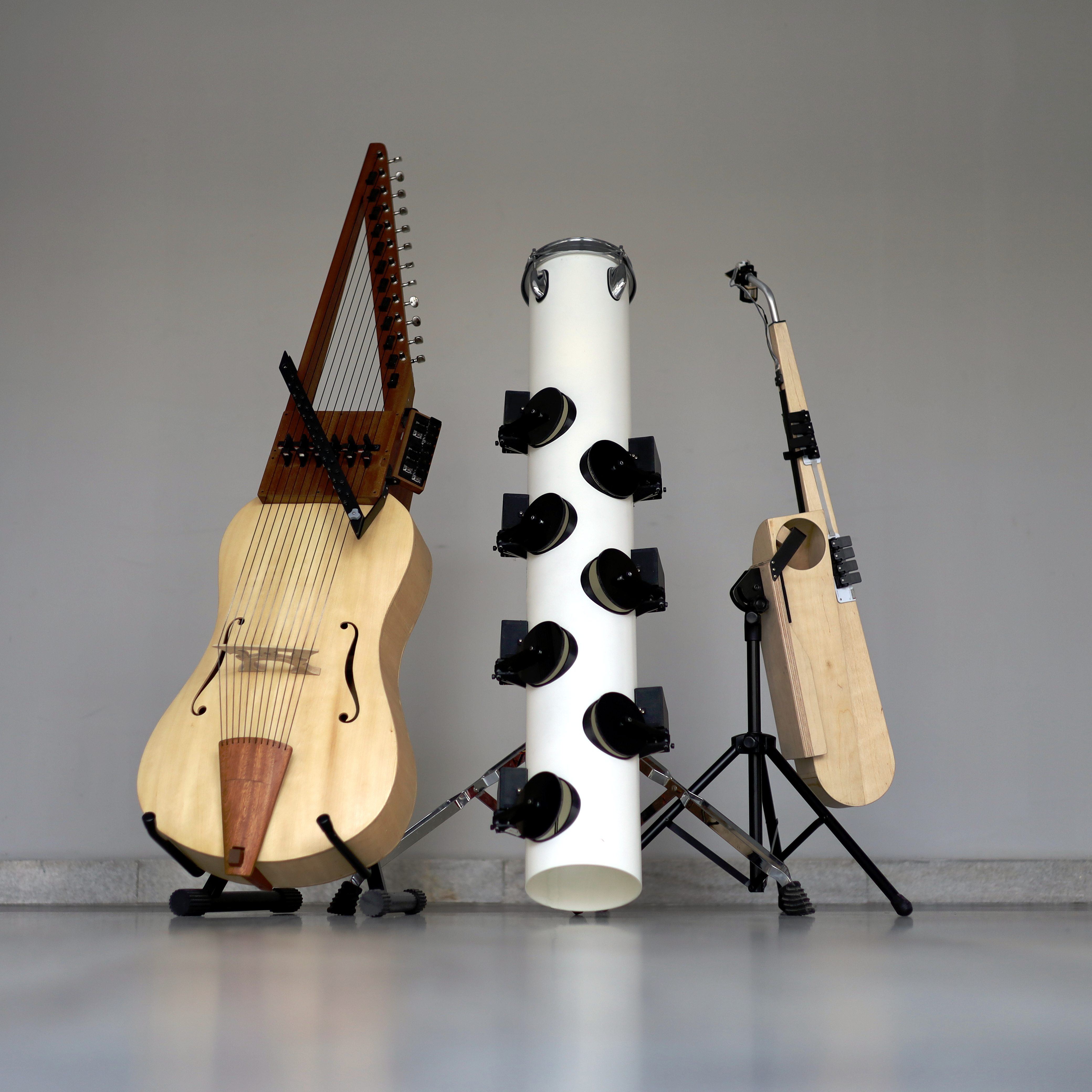
    Krzysztof Cybulski is a musician and sound artist. In his work he combines analog, digital, acoustic and mechanical elements in a postdigital approach, mixing new and obsolete technologies to create new and surprising combinations that eventually become interactive sound installations and instruments.

    Modular Process Music is a concept / set of instruments designed to create improvised music in a new way. The title can be understood in 3 ways:

    • “process music” – a method of creating the music where a composer/artist doesn’t create fixed piece; rather they are designing a process which, in turn, generates the music;
    • “modular process” – a process that could be redesigned on the fly by changing the order and relationships of several sound modules;
    • “modular music” – a piece of music comprising of modules, or parts, which can be reassembled and rearranged freely on the go.

    The instruments communicate with each other through sound itself, in the same way as improvising musicians do. Unlike a typical modular synth, rather than connecting the modules with patchcords, each instrument has a speaker and a gooseneck microphone, so they can listen to each other or to any other external sounds. Some of the instruments are controlled only with sound, other could be also controlled manually. The instruments are designed to make their interactions and the process of creating sound clearly visible and comprehensible to the audience – visual feedback is provided by mechanical movement of the elements.

    The project consists of 7 instruments. Each of them can work independently, but they could also be combined together in a number of different ways:

    • Tape Sampler is a digitally controlled analog tape recorder, with the ability to sequence tape speed and direction of movement;
    • Memo/move is a midi controller with 3 motorized faders, which can loop the actual fader movements, rather than the sound itself;
    • Memo/move works together with Granular Sampler, allowing for capturing and manipulation of the sound on the fly;
    • Igafon and Igafon Pro are lo-fi samplers, Igafon Pro’s sound can be also triggered by external sounds;
    • Rhythm Box V.2 creates ever-changing rhythmical structures, complexity of which is based on the volume of external sound;
    • String Box V.2 creates harmonies based on notes detected in external sounds, it can be triggered by short percussive sounds.

    Rhythm Box and String Box were created in late 2016 as “Feedboxes”, but their software had been rewritten in 2019 to suit the Modular Process Music project. The project can be presented as a performance and / or workshop; some of the instruments can be also presented as interactive objects / installations.

  • Mendi + Keith Obadike

    Mendi + Keith Obadike

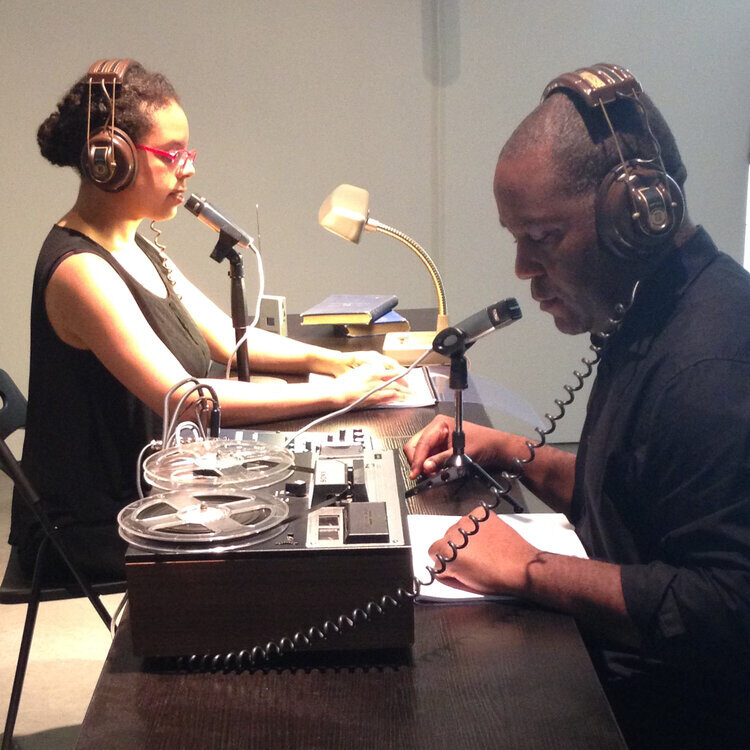
    Mendi + Keith Obadike make music, art and literature. Their early works include The Sour Thunder, an Internet opera (Bridge Records), Crosstalk: American Speech Music (Bridge Records), Black.Net.Art Actions, a suite of new media (internet art)  works (published in re:skin on M.I.T Press), Big House / Disclosure, a 200-hour public sound installation (Northwestern University), Phonotype, a book & CD of media artworks, and a poetry collection, Armor and Flesh (Lotus Press).

    Read More

  • Camille Norment

    Camille Norment

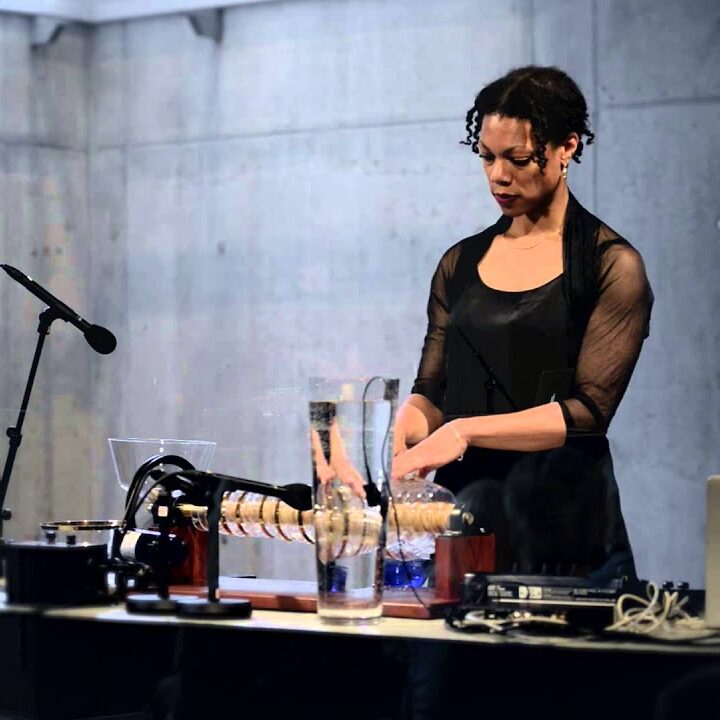
    Sound is a physical force that connects everything in its omnidirectional path. The term psychoacoustics names the study of sonic phenomena as it meets, interacts with, and is transformed by encounters with objects, structures and other bodies across time and space.  Camille Norment coined the term cultural psychoacoustics as a dynamic aesthetic and conceptual framework to probe and politicize various cultures of sonic investigation, particularly instances of sonic and social dissonance. Here, the sonic is not only sound listened to, but sound felt, and even imagined. Human and non-human bodies are activated through the resonance of empathetic narratives that emerge between the present, and a multiplicity of concurrent histories and futures. 

    Camille Norment