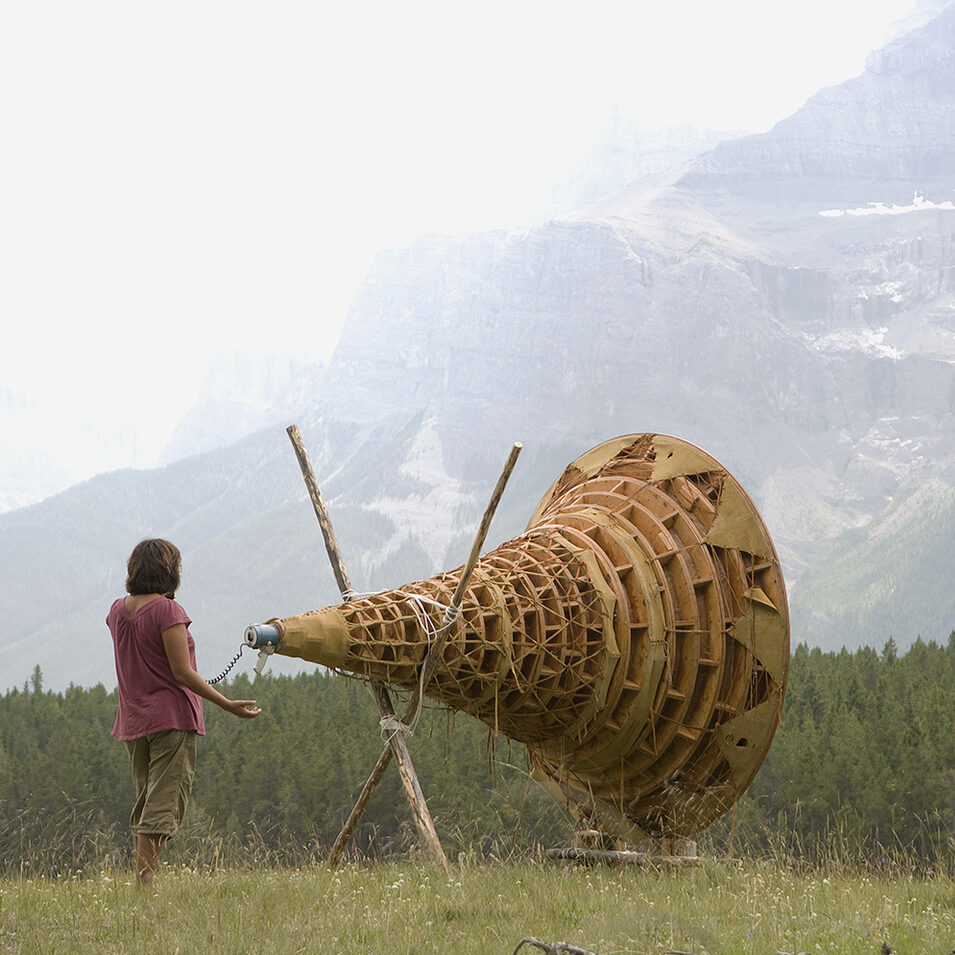
“This artwork was my response to what is now referred to in Canadian history as the “Oka Crisis.” During the summer of 1990, many protests were mounted in support of the Mohawk Nation of Kanesatake in their struggle to maintain their territory. This object was taken into many First Nations communities – reservation, rural, and urban. I was particularly interested in locating the Aboriginal voice on the land. Asking people to address the land directly was an attempt to hear political protest as poetic action.”
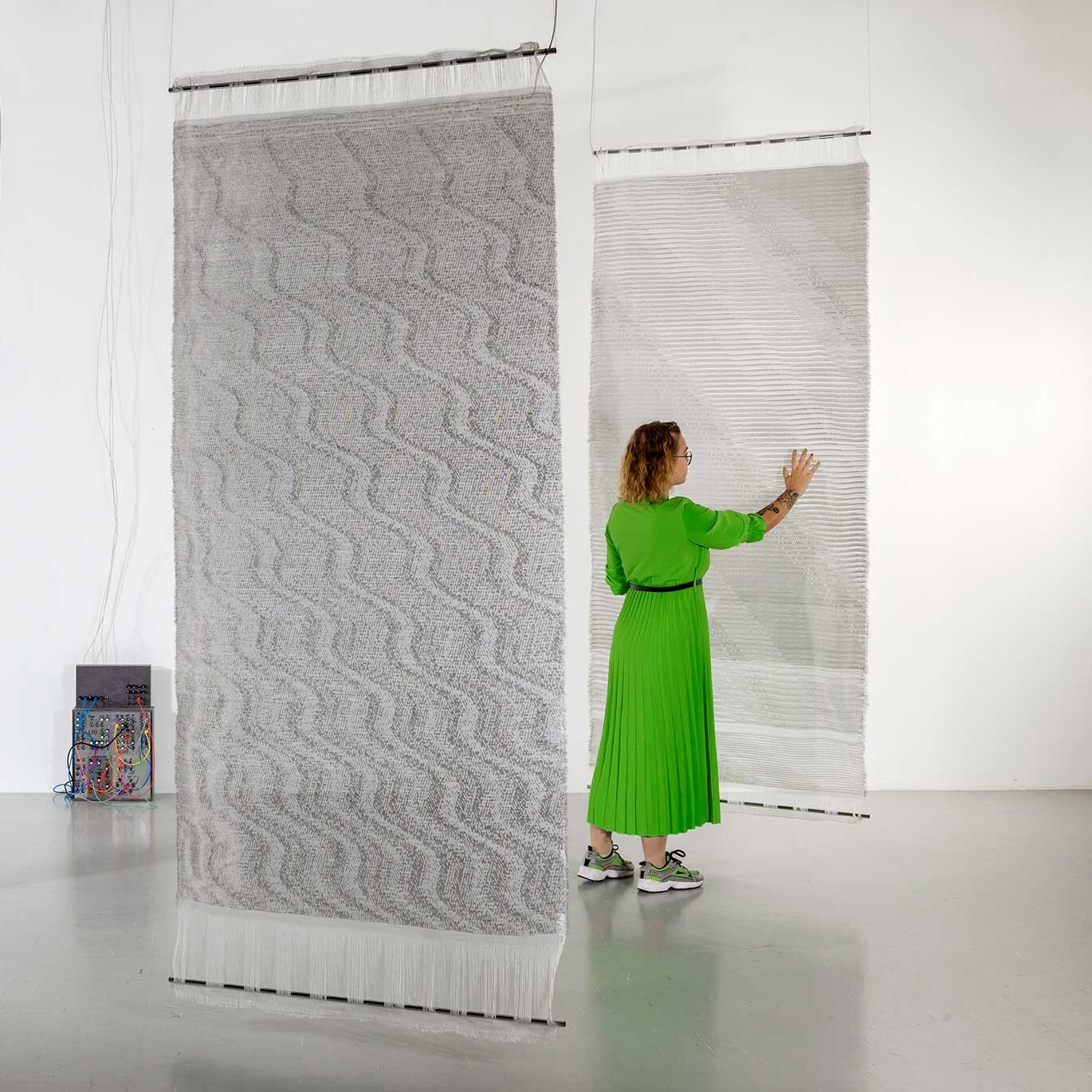
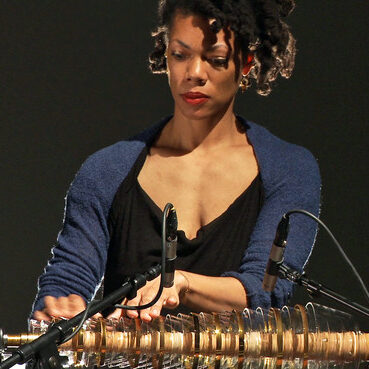
Pearla Pigao weaves large-scale tapestries that double as musical instruments. By using metal threads as warp and weft in the loom, the tapestries can played by audiences moving between and around the textiles, altering the electromagnetic field between their body and the textile surface.
Céleste Boursier-Mougenot is a French artist and composer who creates large-scale acoustic installations and environments which draw upon forces of nature and the rhythms of everyday life to produce new forms of art and music.
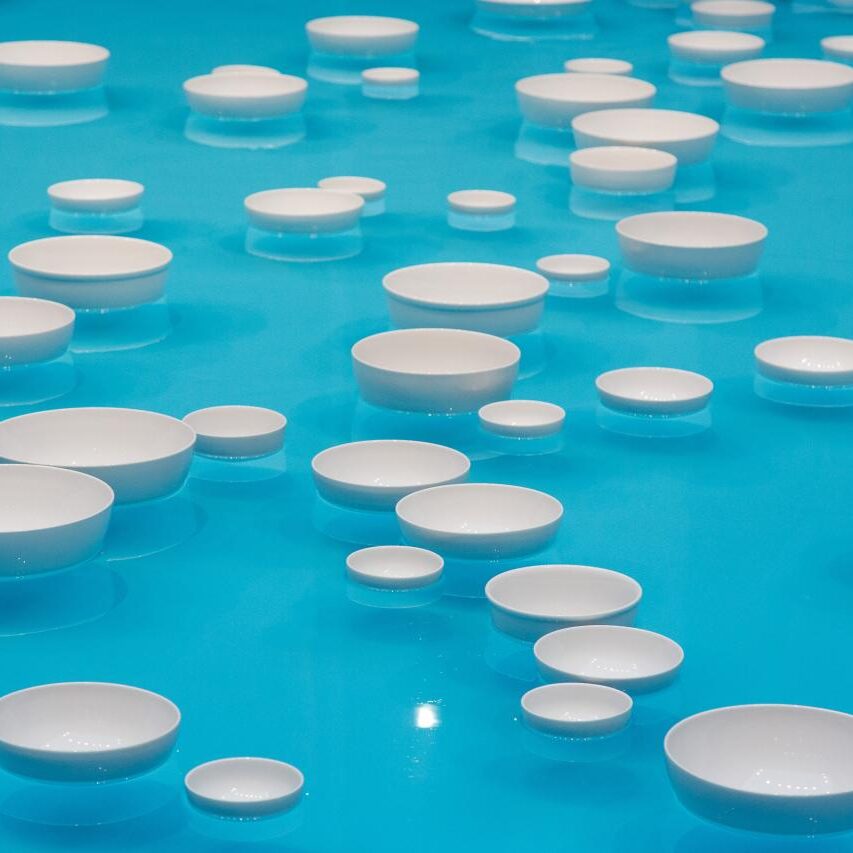
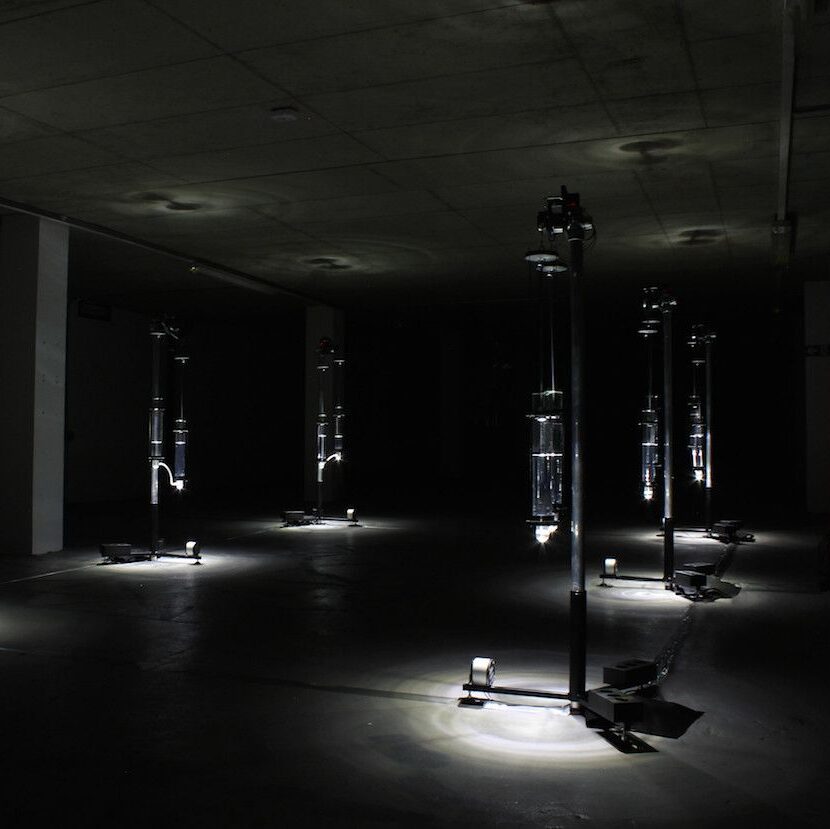
With clinamen 2013, white porcelain bowls float upon an intensely blue pool. Circulating gently, swept along by submarine currents, floating crockery acts as percussive instruments, creating a resonant, chiming acoustic soundscape, marked by complexity, hidden patterns and chance compositions.
In its unification of colour, sound and space, clinamen encourages a form of multi-sensory or ‘synaesthetic’ engagement with the work of art. Working in a tradition established by American composer John Cage, Boursier-Mougenot’s installation promotes chance and indeterminacy in musical composition, as well as the use of unorthodox musical instruments.
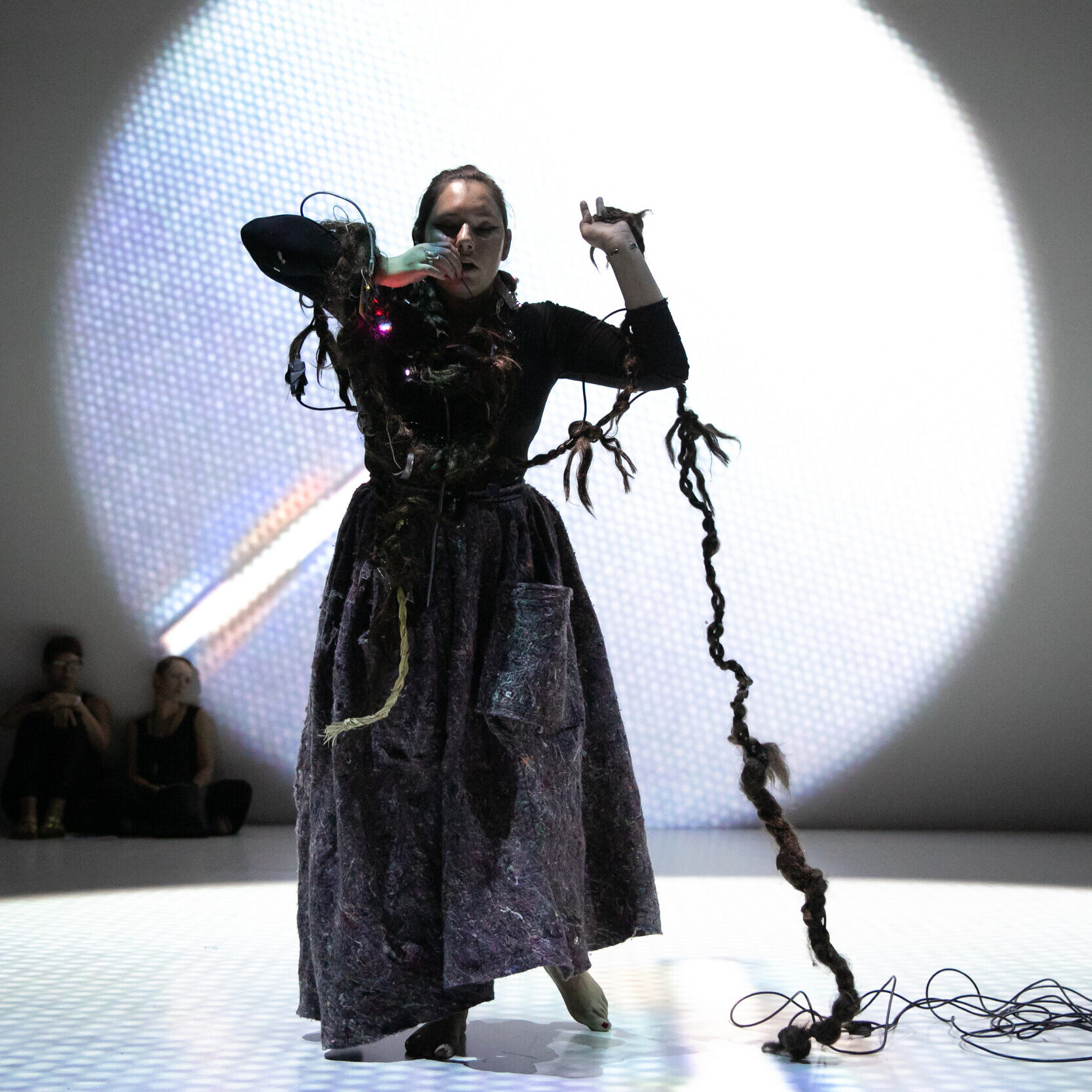
This sculpture interrogates the relationships between human and non-human entities and intelligences. Through Oglala Lakota ontologies, even materials such as metals, rocks, and minerals can communicate of their own volition. By considering the ‘hearing’ and ‘listening’ capabilities of nonhuman entities, a method of engagement reliant upon mutual respect and responsibility becomes possible. Íŋyaŋ Iyé speaks, you respond to it by bending and moving its braids, effecting the sounds it makes. Íŋyaŋ Iyé listens to the changes in its own voice and generates a response in lights and sound.
Kite aka Suzanne Kite is an Oglála Lakȟóta performance artist, visual artist, and composer raised in Southern California, with a BFA from CalArts in music composition, an MFA from Bard College’s Milton Avery Graduate School, and is a PhD candidate at Concordia University. Currently she is a 2019 Pierre Elliott Trudeau Foundation Scholar and a Research Assistant for the Initiative for Indigenous Futures. Her research is concerned with contemporary Lakota epistemologies through research-creation, computational media, and performance practice. Recently, Kite has been developing a body interface for movement performances, carbon fiber sculptures, immersive video & sound installations, as well as co-running the experimental electronic imprint, Unheard Records.
“In our daily lives, our eye and ear are constantly working together as a closely linked team to form our perception of the world.
Traditionally practitioners in the plastic arts have adjusted this perception through vision, forming with shape and color. I on the other hand work with our sense of hearing.
Our perception of space depends as much on what we hear as on what we see.”
My work grows from a partnership between nature and technology expressed through audio-visual installations and performances that combine sound, sculpture, image and light. I frequently work in collaboration with other practitioners and scientists and often actively involve the audience in the process. Drawing on inspiration from behaviours and phenomena found in the natural world, I create work that is generative; that evolves; that can be different each time it is experienced.
My process often employs ‘open scores’ and chance procedures. I compose carefully constructed frameworks from which the precise nature of sonic and visual events are changeable rather than fixed. When composing with open scores, I aim to define uncomplicated rules, from which a complex system of behaviours can emerge. As nature adapts in response to its environment, my ‘open scores’ shape the behaviour and evolution of the music and visuals or sculpture.
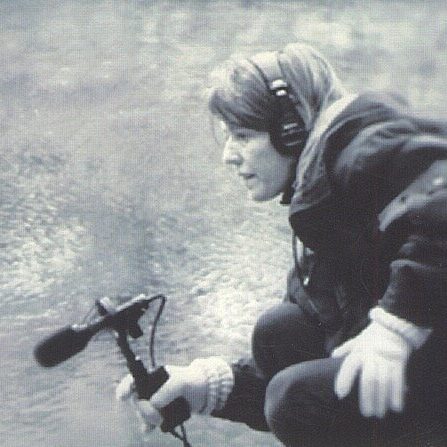
I often create work in public spaces, including night-time walks with a series of installations positioned within a landscape. I aim to fully immerse the audience in a locative experience that can be intimate, and quiet, yet also expansive via the setting of a night time walk. I aim to give rise to a poetic and reflective experience that enriches an appreciation of the everyday, inviting a heightened awareness of the world around us, thus imbuing a refreshed sense of value with nature.
I often make installations that are a cross between kinetic sound sculptures and a newly invented musical instrument which can become a site for live performance and improvisation. I often re-purpose broken or unused instruments and research ways to incorporate low tech, low cost, hacked, or repurposed electronics into my installations, blending digital and analogue systems. I incorporate computer programming to generate non-repetitive structures. Systems, models, and data drawn from the natural world e.g. animal behaviours, biodiversity and dynamic ecosystems contribute to the material I work with.
The height of my concern as an artist is humankind’s relationship with the environment, other species, each other and the earth’s systems. I am interested in the philosophical ideas of Ecosophy; a balance of mind, environment and society, and Deep Ecology; an environmental movement and philosophy which regards human life as just one of many equal components of a global ecosystem.
I aim to create work that generates an immersive and embodied experience to create space for imaginative thinking and reflection around environmental issues. I create openings in my practice for participation and direct engagement through social interaction often framed as listening walks.
“Just as species are disappearing at an alarming rate, whole areas of human thought, feeling and sensibility are becoming extinct through the power of an infantalising mass media and the social exclusion of the old, the young and the unemployed.” Felix Guattari, The Three Ecologies
“reconsider the human being as an ‘organism-in-its-environment’ rather than as an autonomous (discrete and ‘bounded’ ) being which faces an external environment composed of non-human elements” Tim Ingold, The Perception of the Environment.
“Our intention is to affirm this life, not to bring order out of chaos, nor to suggest improvements in creation, but simply to wake up to the very life we’re living, which is so excellent once one gets one’s mind and desires out of its way and lets it act of it’s own accord.” John Cage
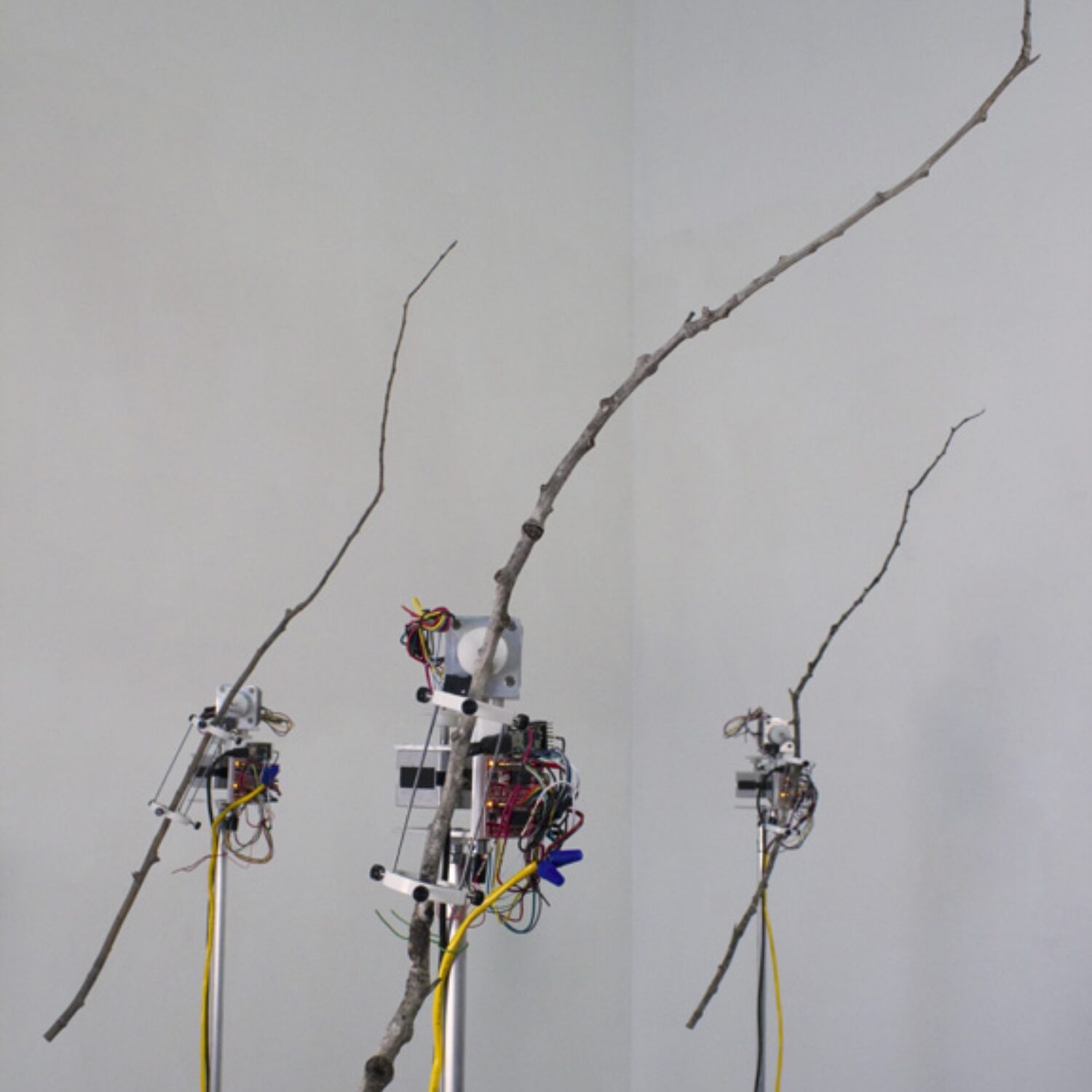
The 50 twigs in this installation point in unison in the direction of the oldest piece of spacejunk currently above the horizon in their location. The invisible network of forgotten debris being tracked are spent rocket bodies, parts from defunct satellites and wayward tools launched in missions as far back as 1958. Constantly circling the earth at over 17,000 miles per hour these unseen distant relics enter our physical space approximately every 90 minutes. With decaying orbits the debris rise and set in ever changing arcs. As if compelled by phototropism, the twigs collectively strive in unison bending toward these tiny, invisible, inert suns sweeping across the sky. When the debris being tracked drops below the horizon the twigs all go to a downward pointing position and await the rise of next orbiting fragment.
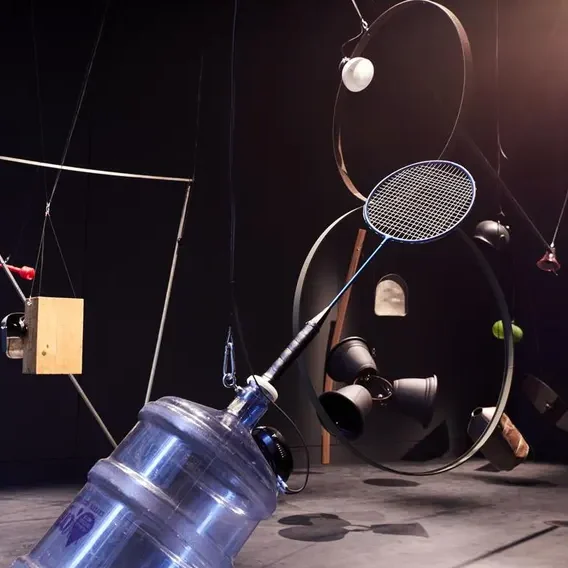
Rainforest, a sound art installation from 1968 by David Tudor, uses audio exciters (or transducers) to vibrate physical objects, turning them into speakers.