Guiding Framework
Reframing Relationships with Food
This focus area has been an undercurrent of the lab since CFIL began. We have been exploring how our relationships to food are conveyed through the way food is presented, described, shared, and offered. There were many opportunities in the lab to focus on this topic as we practiced it as a way of being, hosting, relating and making. We explored concepts of seasonality, cultural foodways, and alternative approaches to surplus food.
Approaches
In CFIL 2 we worked with the Equitable Food Circle, which included local food recovery organizations, food justice advocates and community and staff members from First Nations in the region. This group served the role of describing pathways to transform Vancouver’s colonial, linear food system into one that is rooted in climate justice and dignity. The dialogues and materials created with this group served as a compass for reframing relationships to food, our ecosystems and each other throughout the lab.
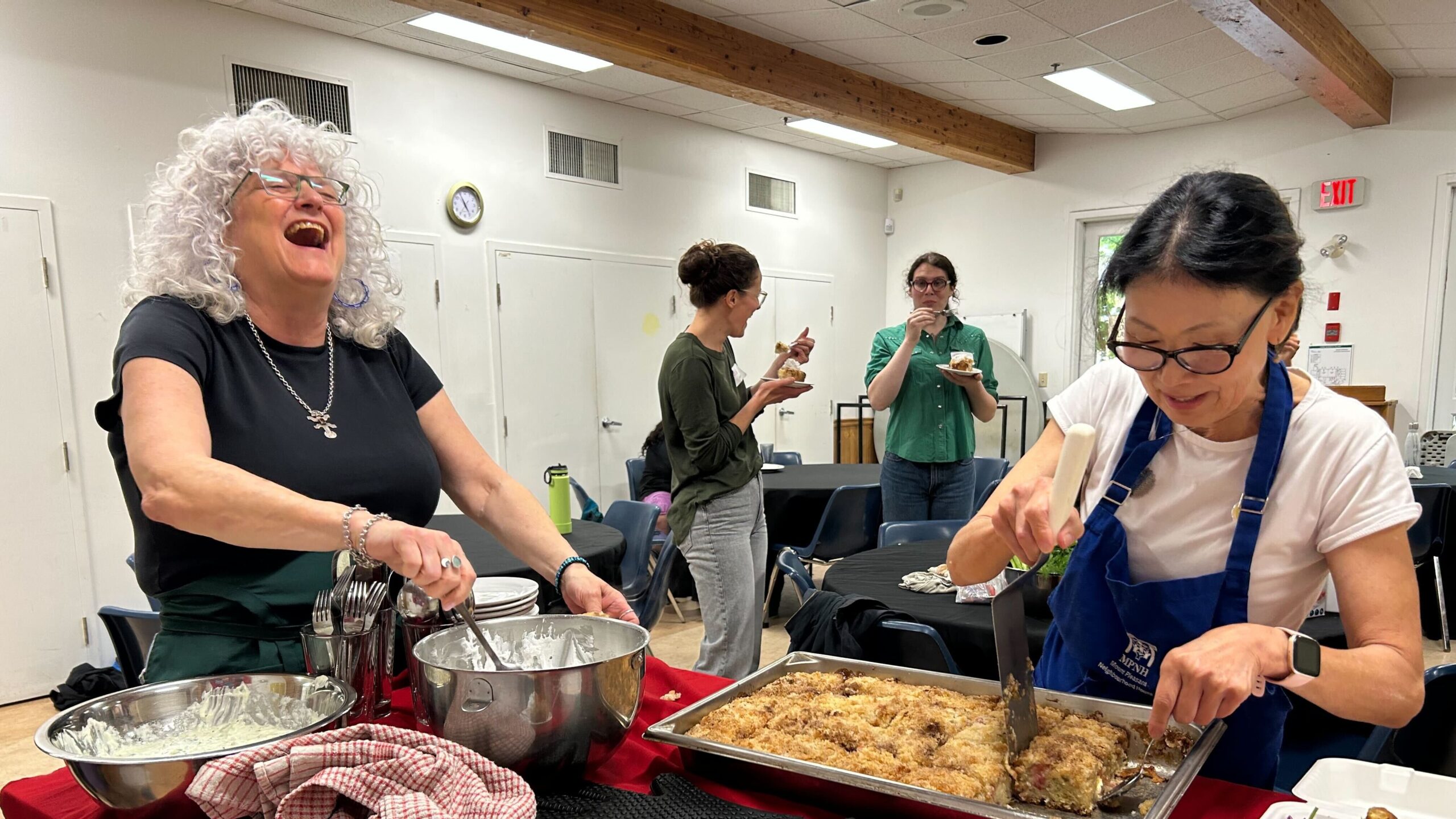
We also hosted seasonal Community Kitchens, where all individuals involved in the lab- including Equitable Food Circle members, participating businesses, advisory committee members, designers and funders – could visit and foster relationships with one another while we cooked a meal together.
As designers we also physically worked with food waste by making dyes from food and food scraps. Foods like onion skins, purple cabbage, beets and turmeric were made into colourful inks and used for various components of our project such as gift-giving, community events, and visualizations on our printed and digital material.
Throughout both CFIL 1 and 2, we have been paying attention to how we use language to talk about food and food waste across the system. Over the years we have gathered up different terminologies, and have also probed how different ways of talking about food can invite different kinds of relationships with food.
Knowledge-Sharing
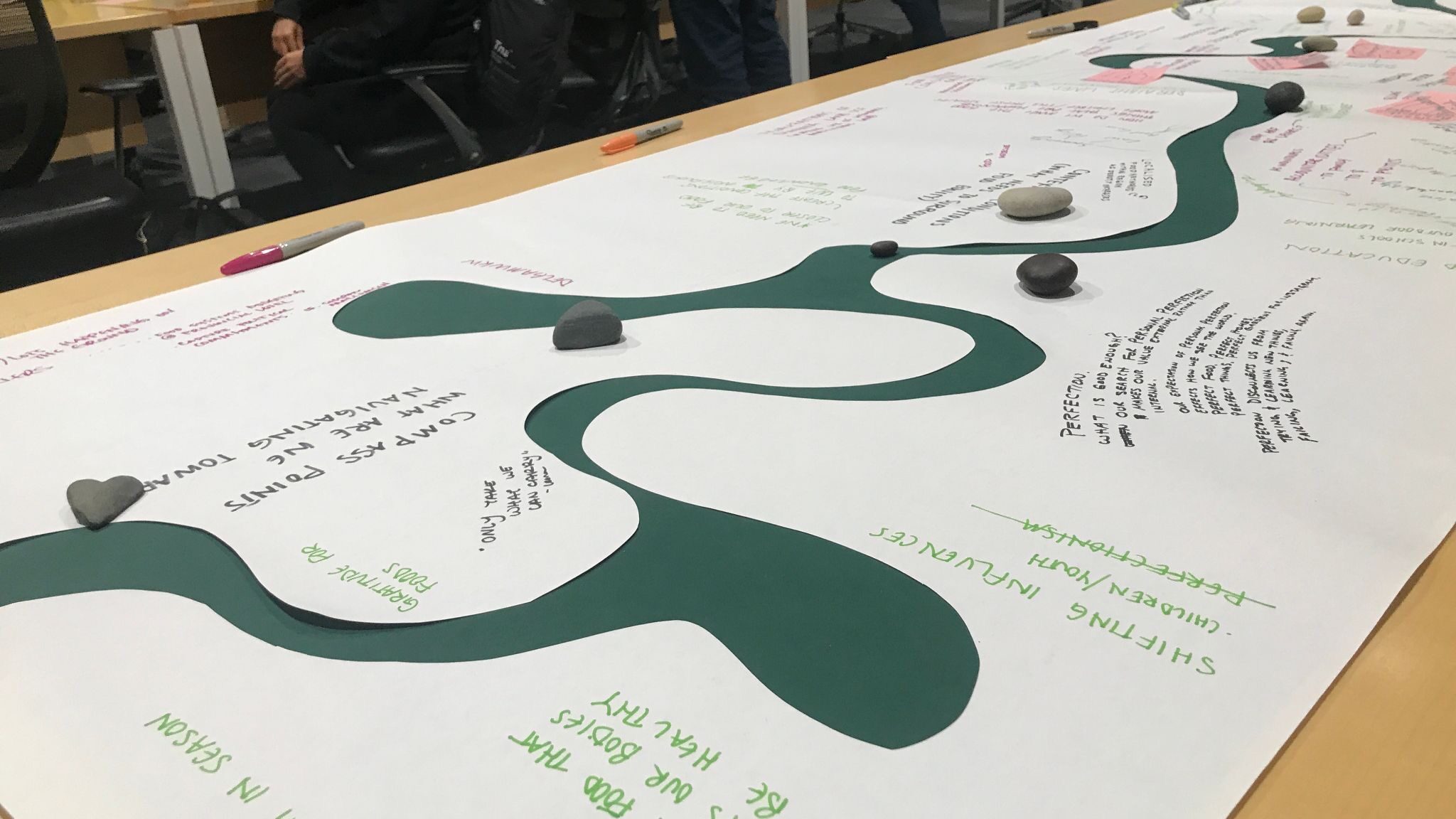
As both a reflective and speculative taking stock of our current food system, The Equitable Food Circle discussed the past, present and future of our food system while the design team mapped these discussions along a schematic that took the shape of a river. The group articulated current realities of our food system, including characteristics and potential risks, patterns and trappings that keep our food system stuck. Through the river mapping the group also named stories, precedents and teachings that can be drawn on for navigating where we need to go, and described necessary conditions that make food equity possible. This mapping served as a compass for further exploring what reframing relationships to food could look like.
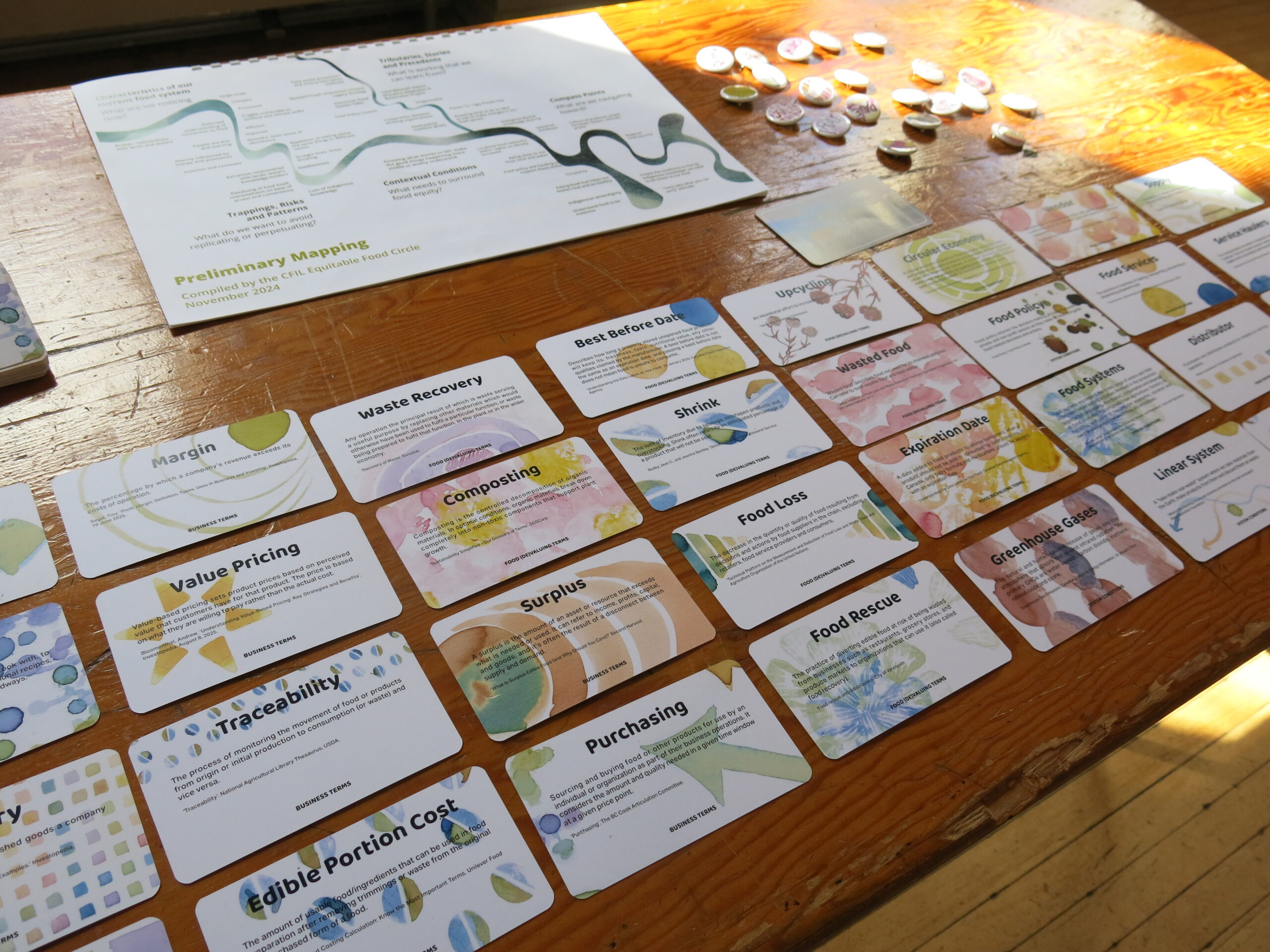
This research topic, along with others, revealed learnings that the operations, language and culture of businesses varies widely, with many individuals naming communication breakdowns as a key challenge. This card deck gathers up the many vocabularies we heard, inviting food actors to consider where language can be reimagined or shared understanding can be deepened in order to strengthen relationships to support food waste reduction.
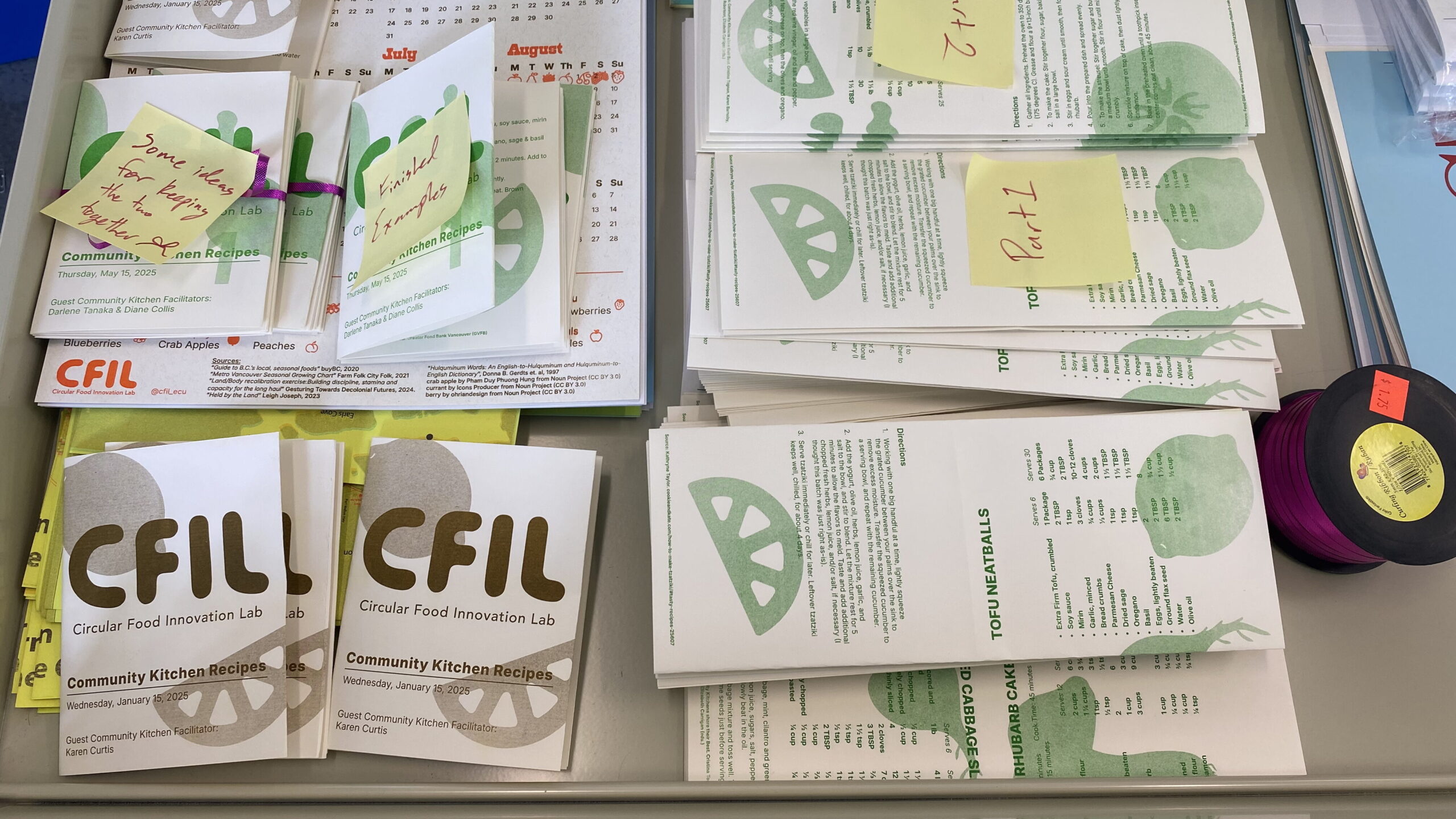
As gifts for Community Kitchen attendees, we created small recipe booklets which contained ingredients and instructions for making the meals we made together at home.
We made this gift for our second Equitable Food Circle gathering in January. This one-page calendar included the dates of when 12 locally grown fruits and berries would be in-season. This included both indigenous fruits and berries, as well as ones that were brought by settlers. When possible, we included the names of each fruit/berry in local languages, such as Sḵwx̱wú7mesh sníchim and hən̓q̓əmin̓əm̓.