Focus Area
Staff Learning and Engagement
Working closely with employees across food businesses, this topic supported learning opportunities and building capacity for food businesses’ team members to discuss challenges and share expertise and knowledge as they relate to food waste prevention.
We facilitated opportunities for staff to re-imagine practices and processes within their work and begin to prototype materials and resources to support these ways of working. This work took place across two sessions with teams on-site at food businesses.
Background
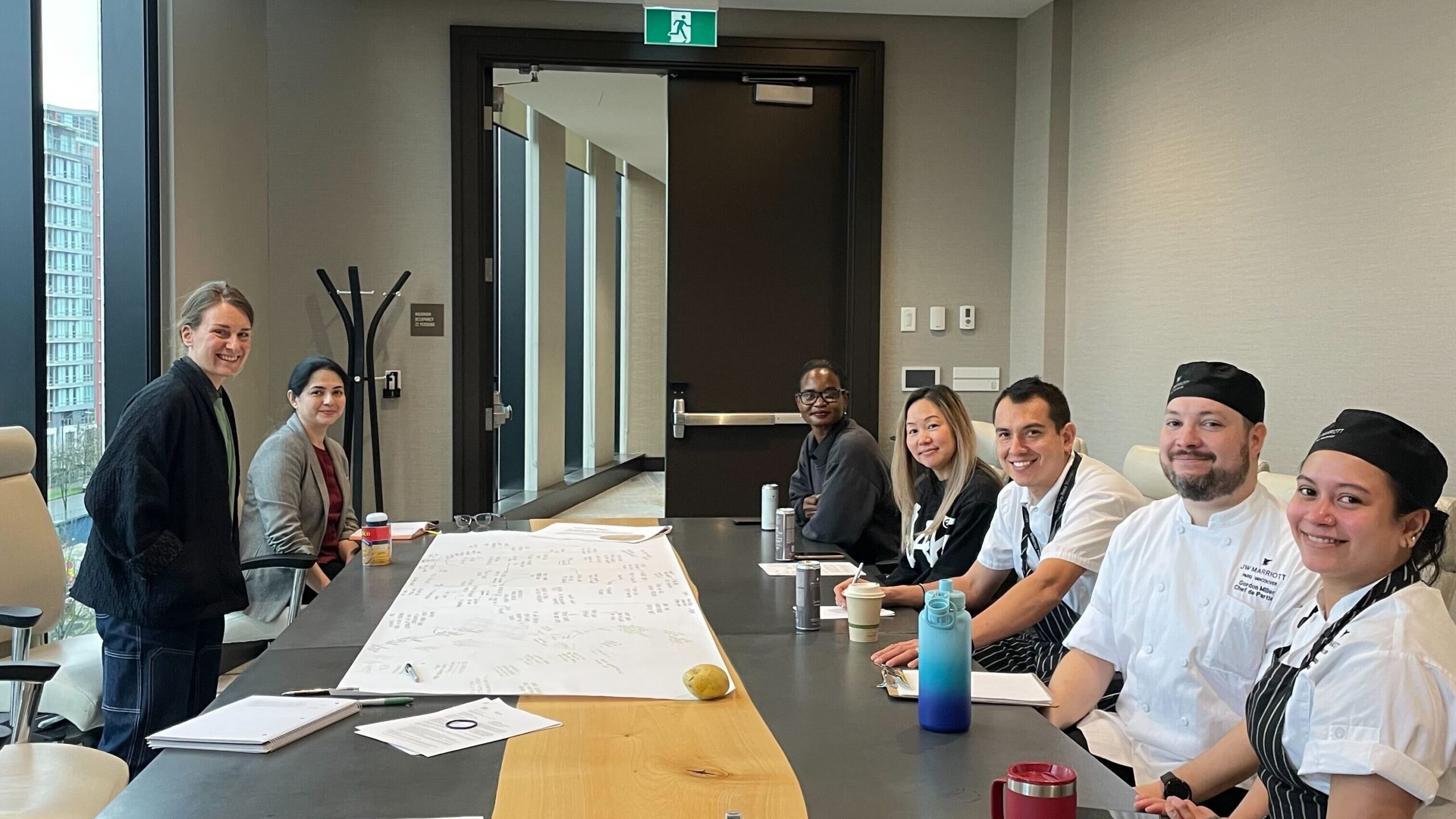
The first session traced the pathway of a particular food item or product from the moment it arrives at a business until the moment it leaves. Staff chose which product to trace, and we mapped the journey it took, noting where and how it gets stored, who comes into contact with it, what communications or technology trigger the movement of the product. The second session mapped what we learned from the first site visit. We identified key challenges, and uncovered areas of opportunity for food waste prevention.
Approaches / Methods
At the core of our approach, we wanted to build genuine commitment to listening and learning from staff. We understand that each staff member brings valuable insights into the workplace and many have been working together for years, knowing all the ins and outs. We wanted to hear their thoughts, ideas, current understanding of dynamics and systems, communication and concerns. This approach helped us create meaningful solutions that reflected their experiences and met their needs. We emphasized that we are here to support staff in ways that may not be working, not to impose on them. Our role was to facilitate, learn, and co-create alongside them, making sure every voice is heard and respected.
We also used visual mapping as our main tool in the sessions to understand the complexity of food systems in a way that traditional conversations might not capture. Using a particular food as the entrypoint, we mapped the journey of how this food flowed through the operations of each participating business. Staff mapped out the stages it goes through, from delivery to preparation, to serving. Together, we explored where food waste happened and where communication gaps may occur in the process.This activity is highly visual and participatory. We used big rolls of paper and markers to capture the stages of the food item, highlighting where waste happens, who is involved, and how the process flows. We often work with 2-3 different food items, depending on the group, so each map is unique and helps to uncover diverse perspectives on the food system.
This process allowed for a highly engaging discussion, visually seeing what’s missing in some of the process, and enabling us to ask more questions and truly follow the problems and work across staff. By seeing the entire process mapped out, staff connected the dots, gained new perspectives, and identified opportunities for improvement that might not have otherwise been overlooked. Since many of these organizations work at a very fast pace, the visual mapping allowed them to pause, zoom in and take the time to identify collectively what’s going on.
Focusing on specific needs within each business participating in the co-design session, through this topic we generated a variety of visual communications tools to support improvement of internal operations related to food handling, storage and donation. Through our prototyping we looked at how designing visually compelling materials might add value to pre-existing and new educational resources for food staff. These are shared below.
Knowledge Sharing
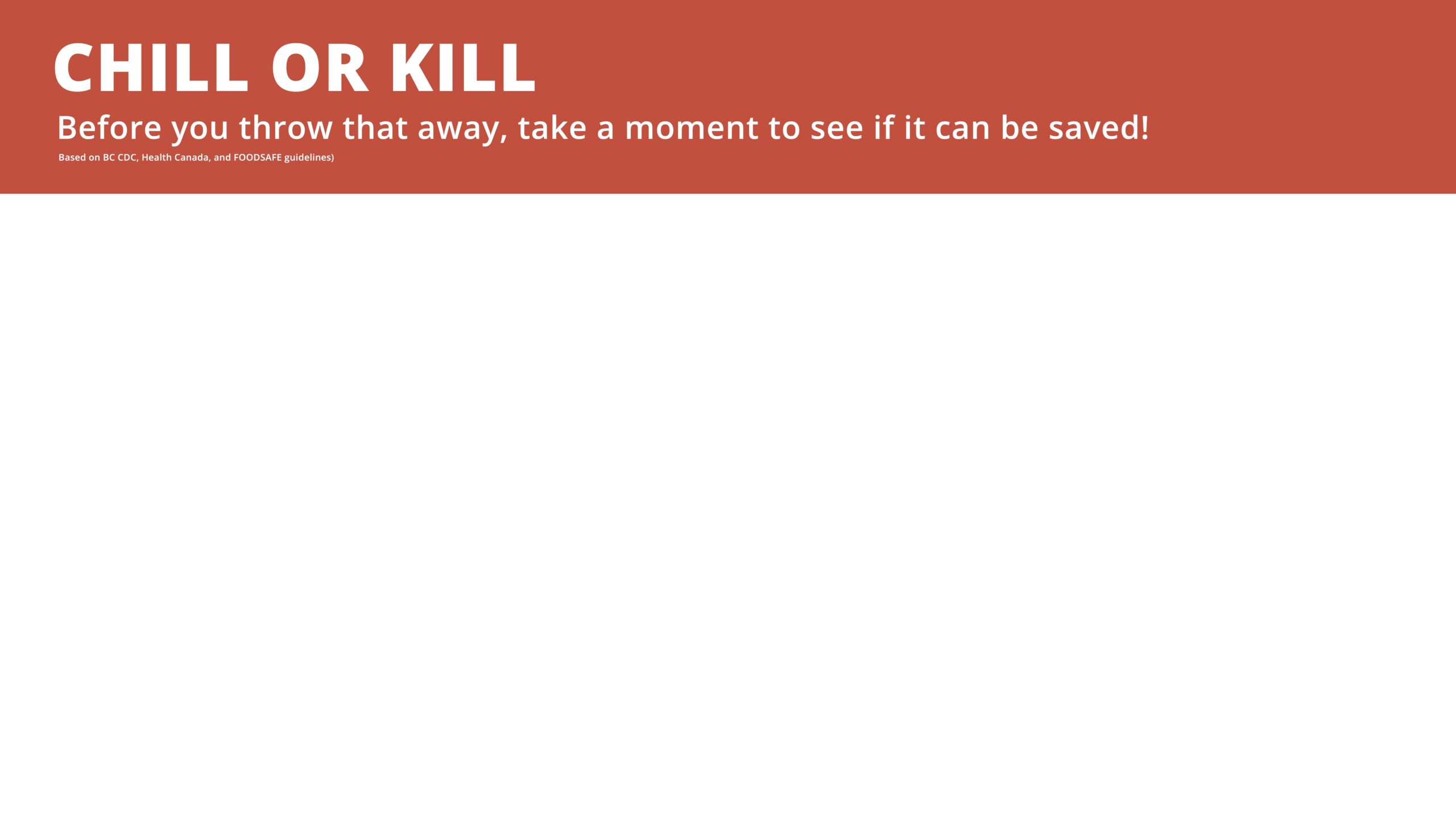
This set of communications materials provides guidance on safely storing, cooling, and re-heating food.
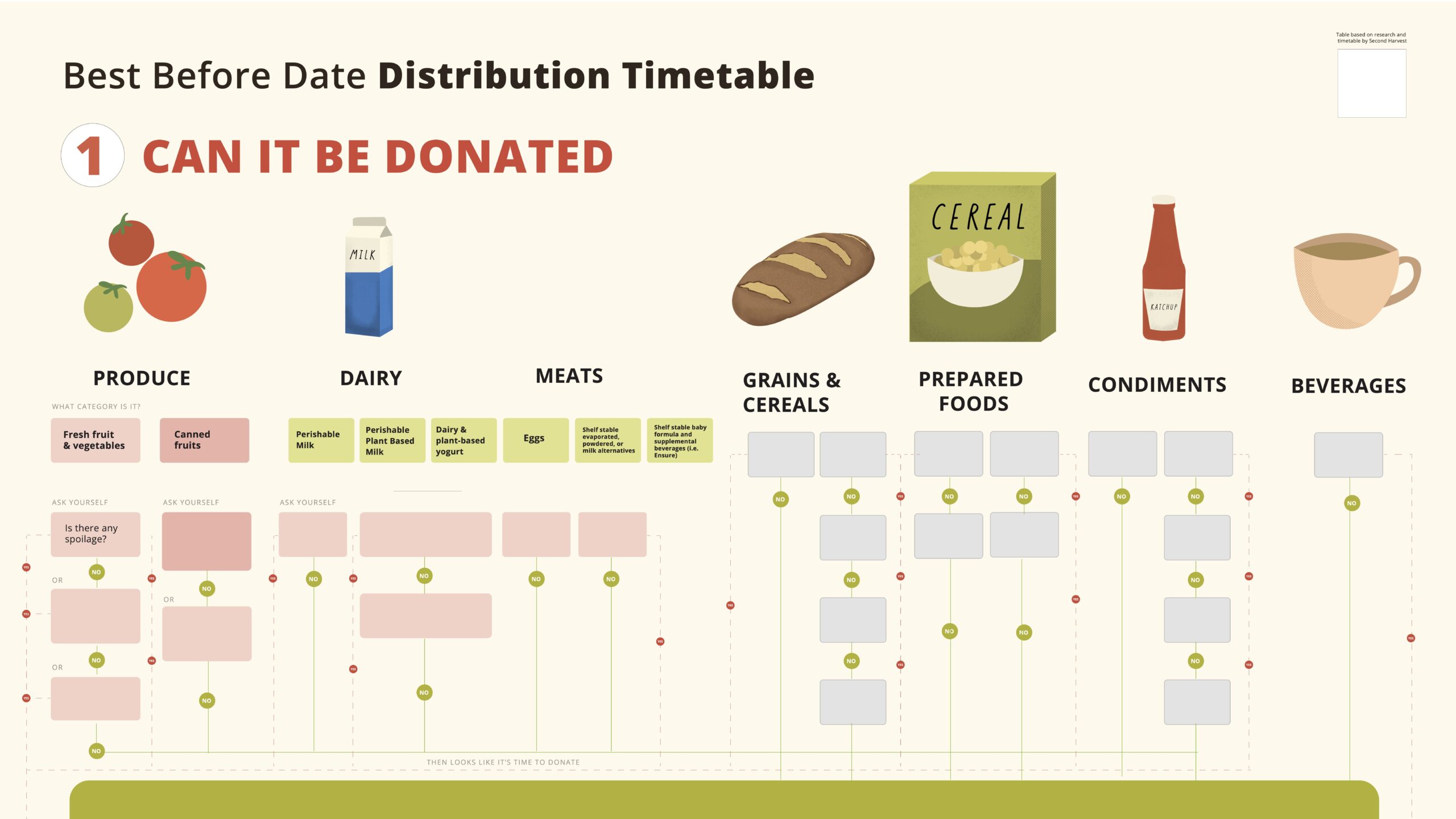
This set of visual materials supports grocery store staff in understanding the difference between key terms such as “Best Before” “Expiry Dates” and “Packaged on / Sell by”. It also includes some decision guides and flow-charts to identify whether food can be sold, donated or composted.
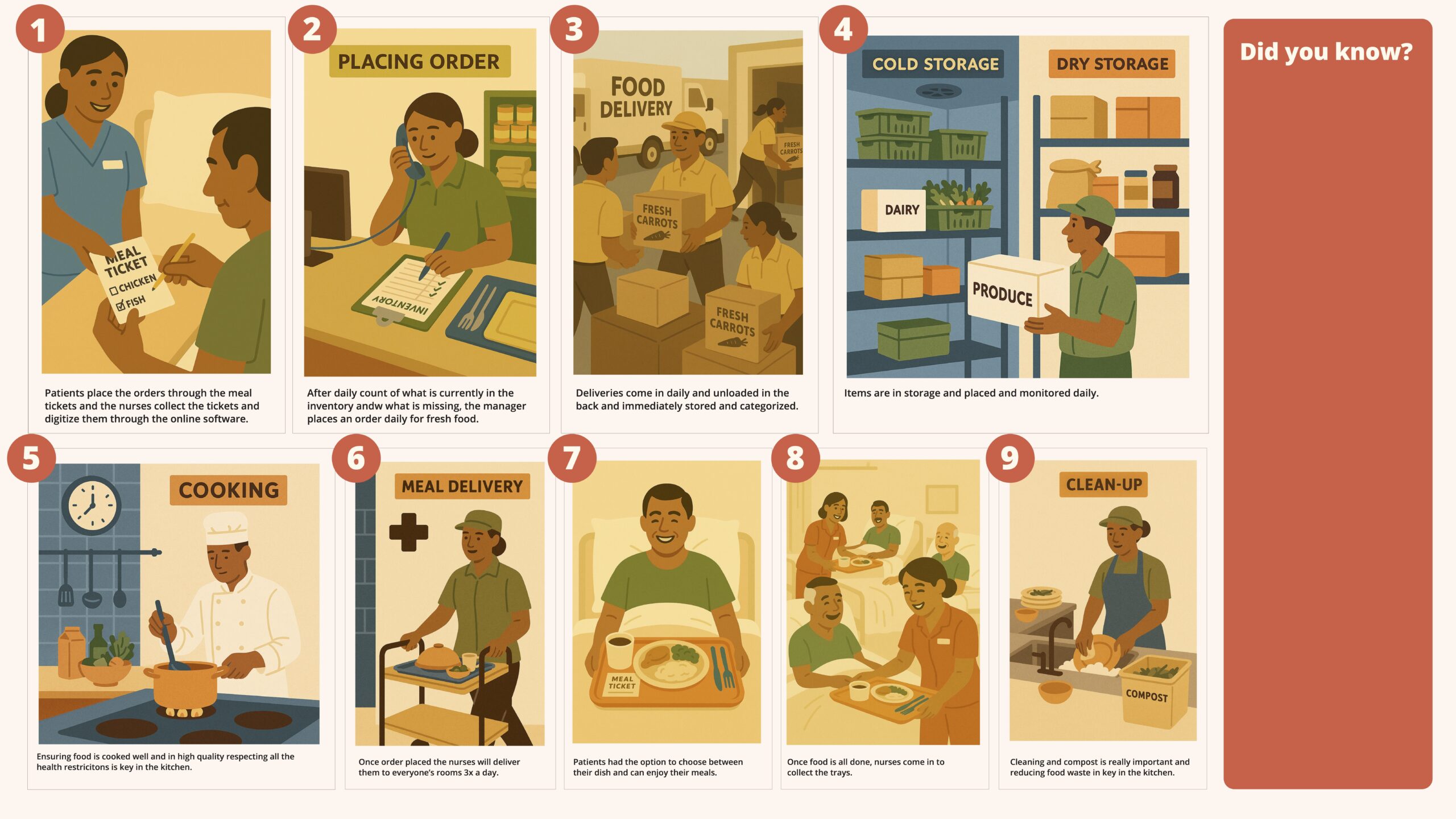
This set of materials was designed for a healthcare facility offering food service to acute- and long-term patients, as well as the general public through a cafeteria. It communicates to customers the energy, care and effort that goes into the sourcing, storage, preparation, delivery and clean-up of the meals they serve to patients.
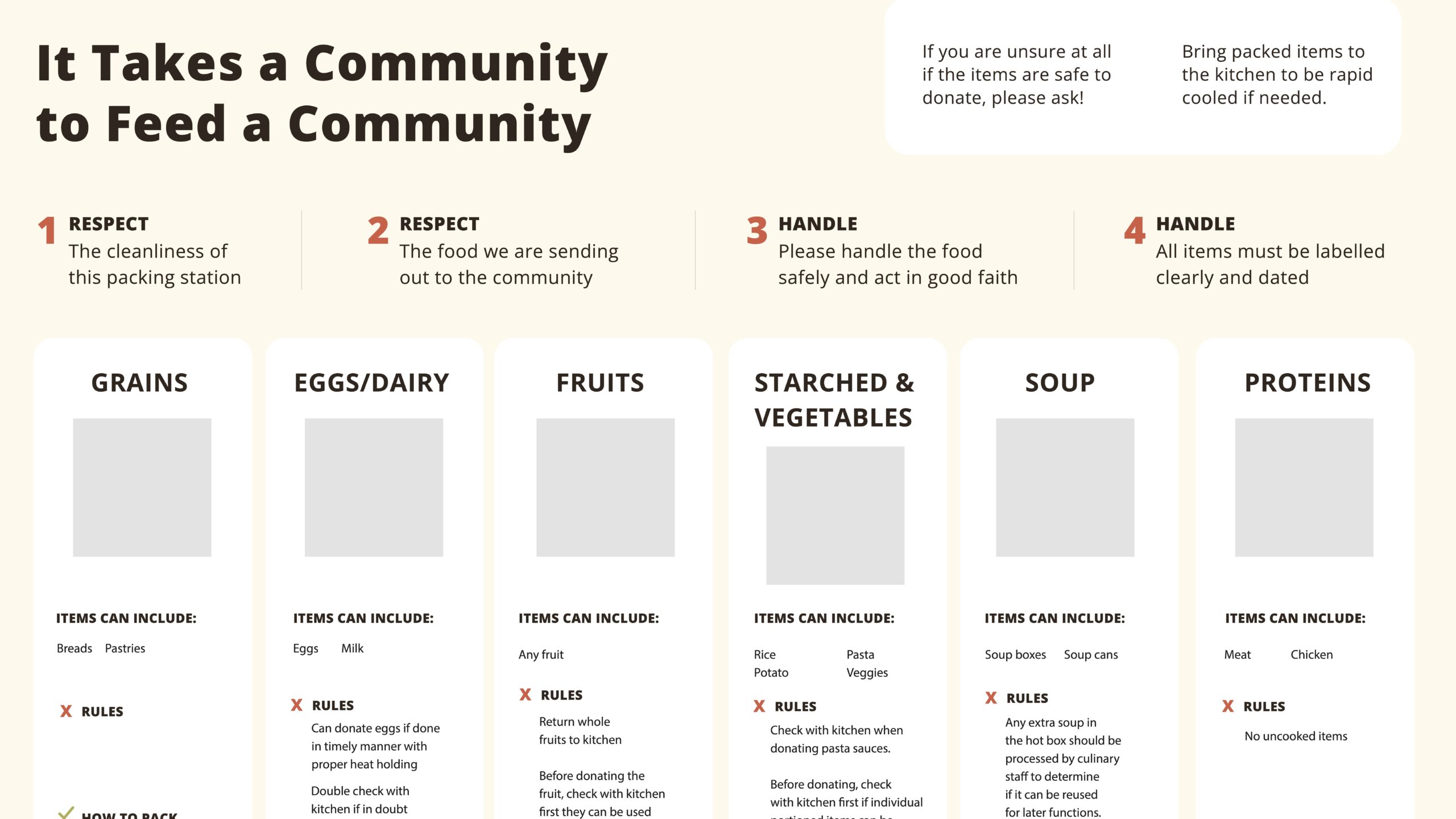
This poster series communicates values and standards for packing food for pick-up by food rescue partners. It offers guidance for staff on adequate conditions for different kinds of foods, such as grains, eggs, protein and prepared food.
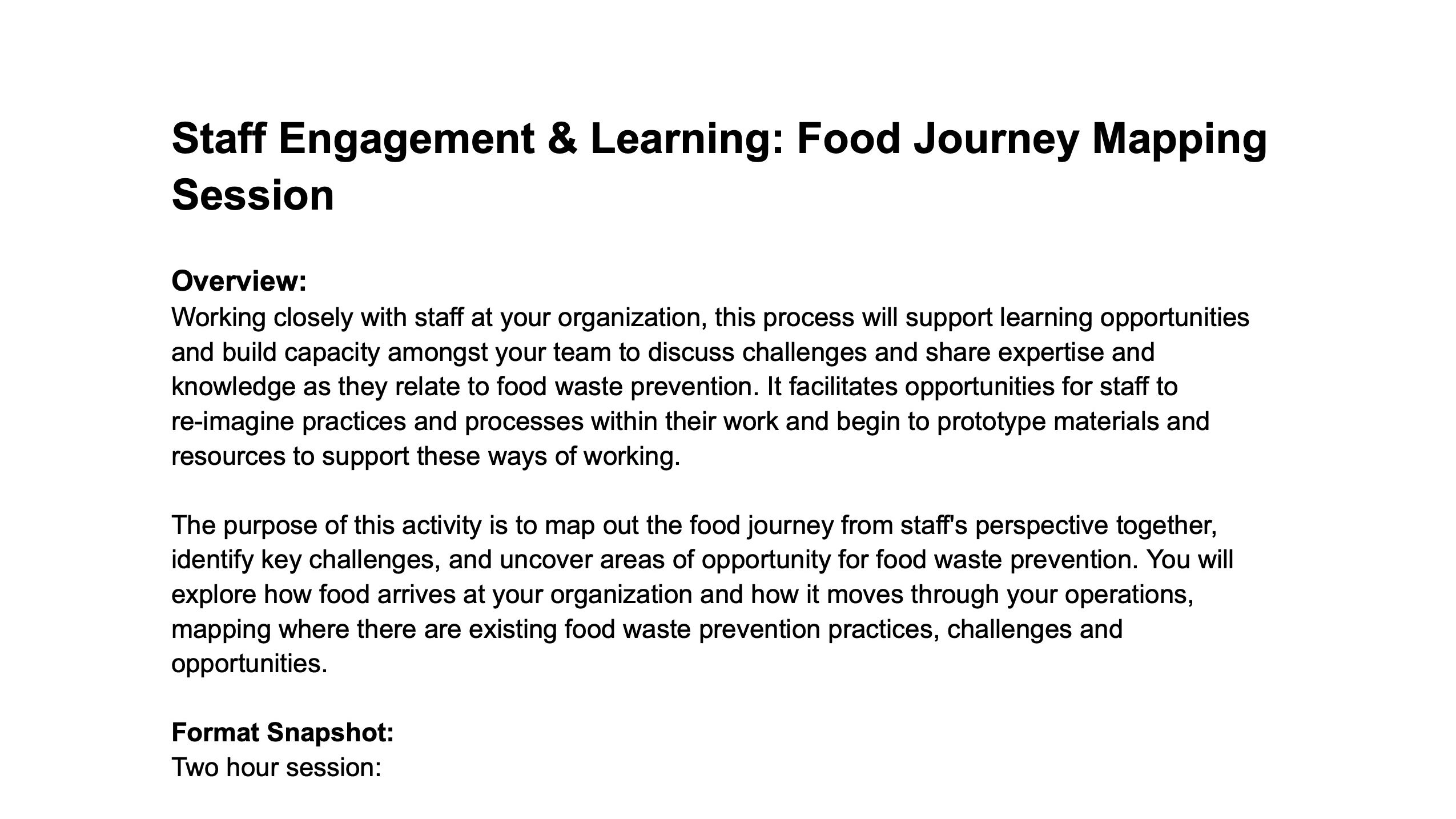
For those looking to lead a session with food staff either as a team member or an external facilitator, this template is based on our initial 2-hour engagement sessions with staff.