Launched in spring 2025, The Occasional Club was created as a means of facilitating the sharing of collections (including ephemera, publications, books, and other interesting artifacts).
Meetings were held on alternating Thursdays in the Communication Design studio, and open to the entire ECU community. Each meeting focused on a chosen theme, which ranged widely with everything from children’s books to classic game consoles. Organized by a team at the Occasional Press and The Stationery Project, The Occasional Club is a free and agile space that expands on our Ephemera Afternoons of the past.
Though collections provide a fascinating look into the interests of others, they often exist as nothing more than unshared personal interests—left collecting dust on shelves, only appreciated by their collectors and close friends in passing. Each meeting of The Occasional Club afforded these collections a chance to be appreciated by the broader community at Emily Carr, allowing their collectors to act as curators, answering questions and pointing out subtle details to others, working to create an engaging dynamic each week.
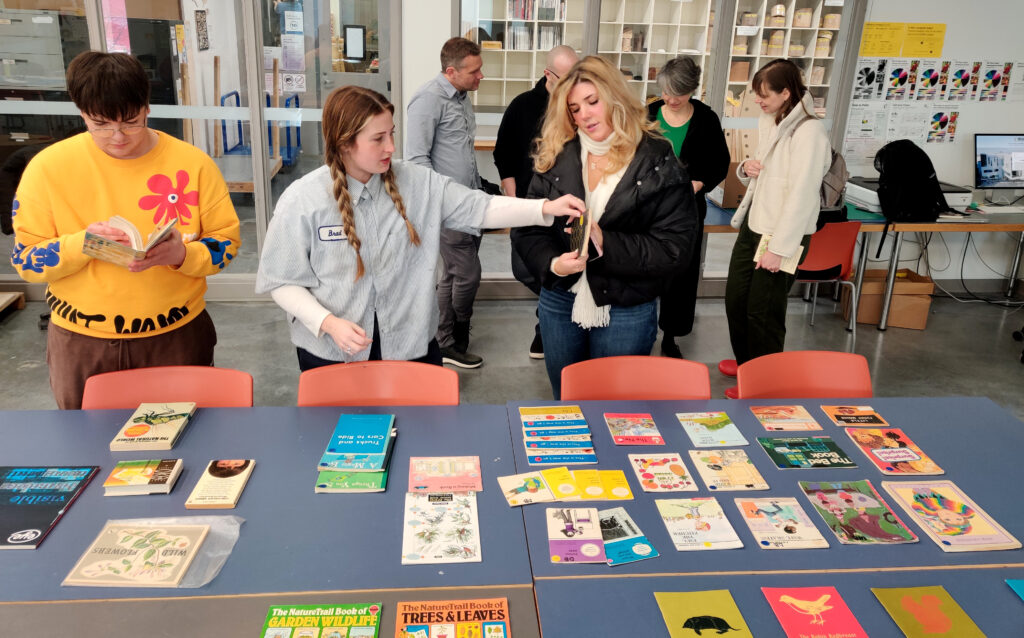
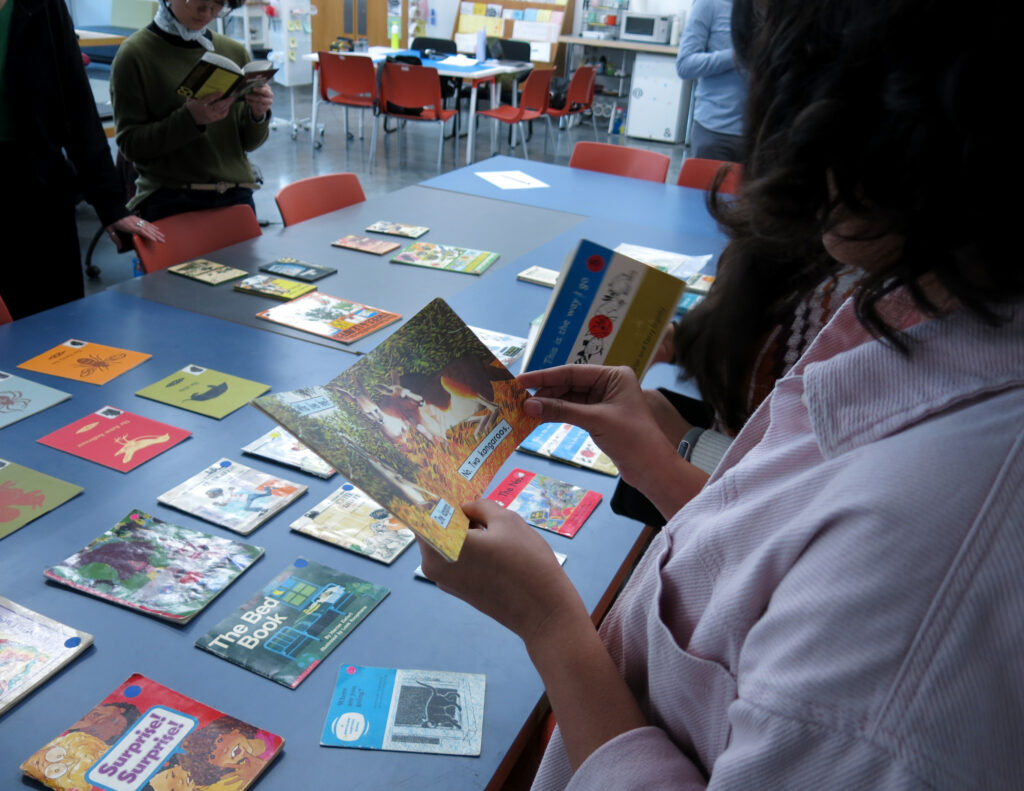
Our first event on January 23, focused on Children’s Picture Books, featuring vintage storybooks and children’s non-fiction, from the collections of Katherine Gillieson and Morgan Martino.
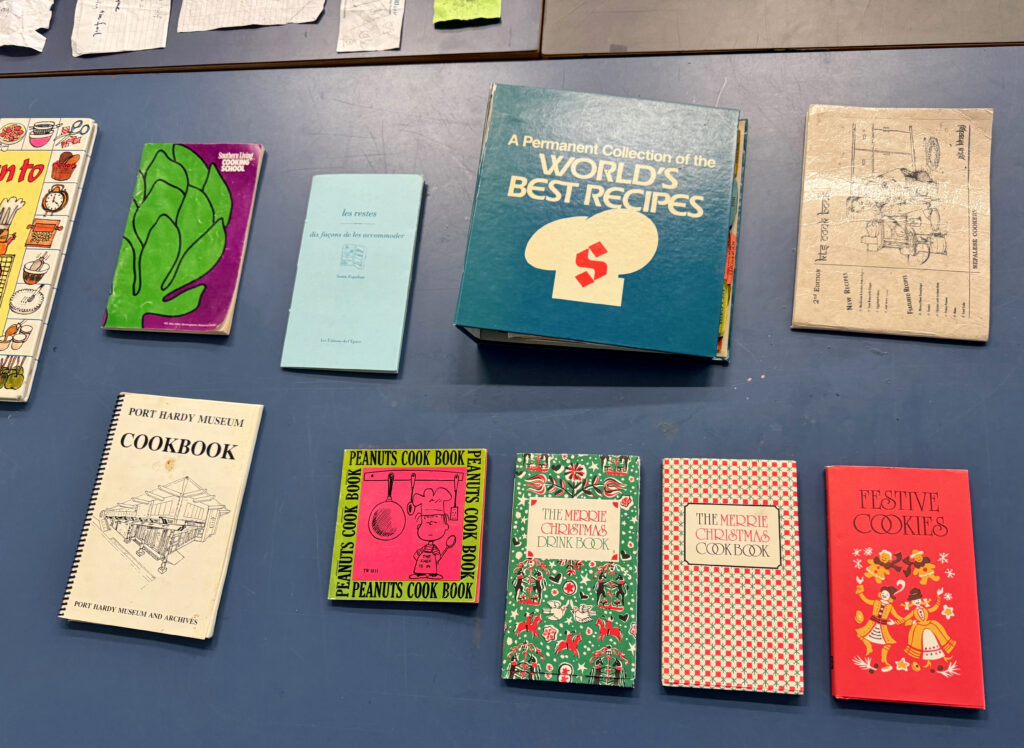
Our second meeting on February 6 had us looking at Food and Cooking Ephemera, with vintage cookbooks from the collections of Gabe Wong, and vintage napkin and paper placemats from the 50s and 60s by Katherine Gillieson. Kitchen gadgets and an expansive collection of found/collected grocery lists provided by Morgan Martino, giving the spotlight to what most would otherwise consider trash. The subtle differences in handwriting, paper, wear, and listed items, gave each piece of the collection its own unique personality.

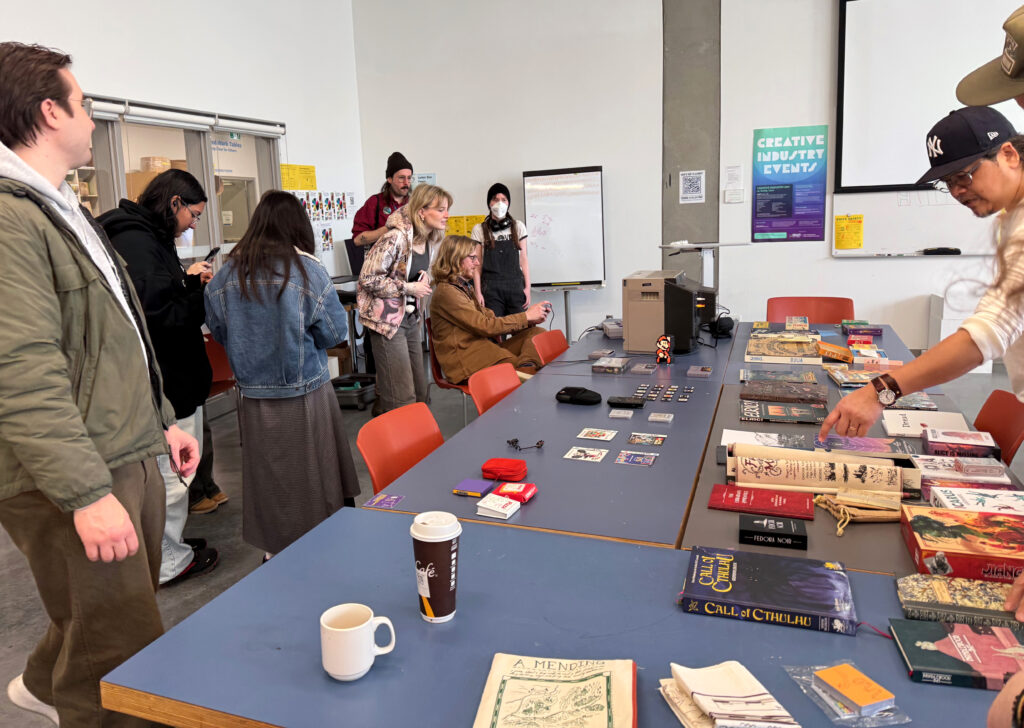
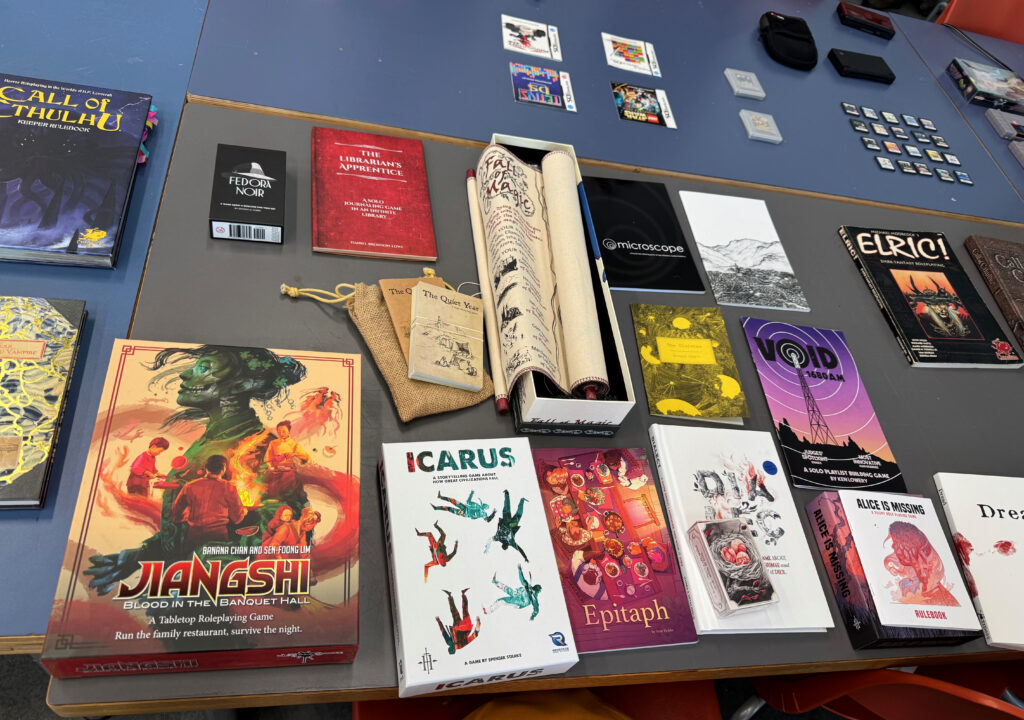
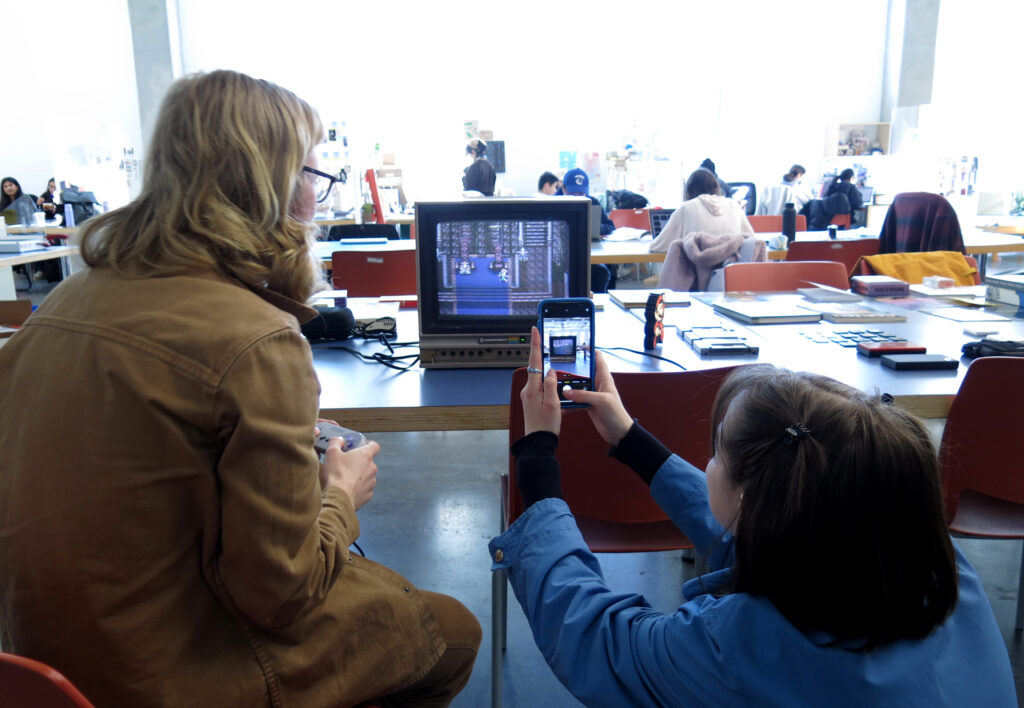
Our third event on March 13 focused on Vintage Games & Objects of Play, and featured physical copies and the related ephemera of tabletop roleplaying games, card games, board games, and vintage video games, from the collections of Brendan Tang, Katherine Gillison, Brendan Denesiuk, and Morgan Martino. This was easily the most interactive of any of the meetings, featuring a CRT monitor setup with a Super Nintendo provided by Brendan Denesiuk—giving attendees an opportunity to take turns playing Chrono Trigger, Donkey Kong Country 2, and Super Mario World. Brendan Tang contributed a large number of tabletop roleplaying games and related ephemera from a personal collection, giving an increased sense of scale compared to the previous meetings.
Our March 27 session was themed around Visualizing the Sciences, featuring books about ecology, chemistry, biology, and physics (alongside a molecule building kit!), from the collections of Katherine Gillison and Brendan Denesiuk. On the surface, older children’s non-fiction books may not seem very significant, but they are interesting from a design history perspective because they are more richly illustrated and diagrammatic than books for adults, and science as a topic is inherently ‘visual’, producing volumes which are not only stunning (see the 1960s french volumes illustrated by Alain Grée), but informative.
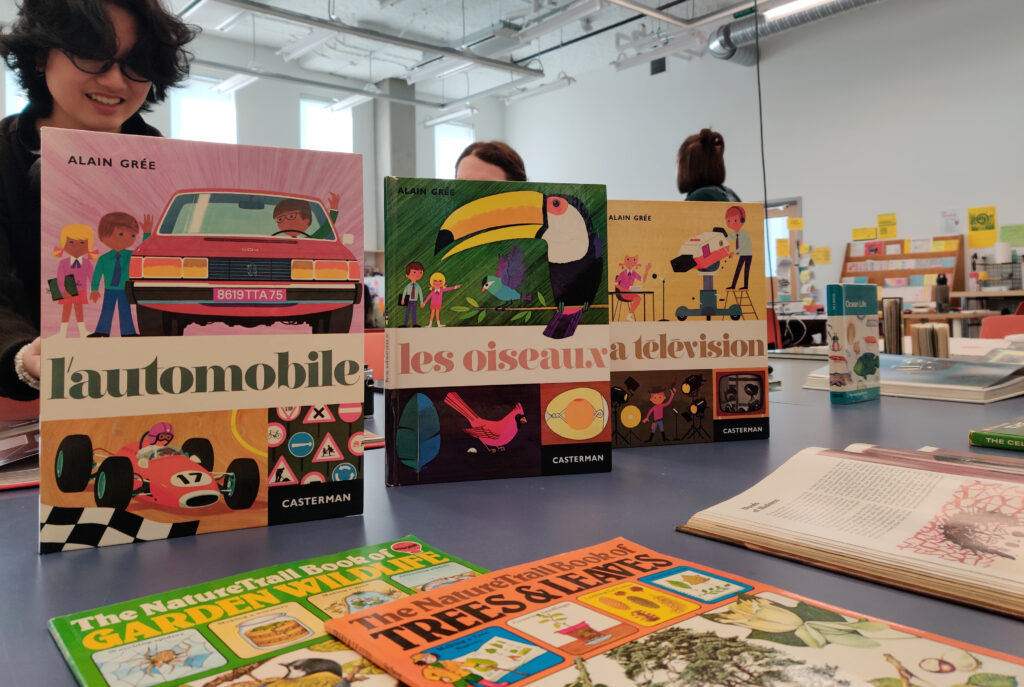
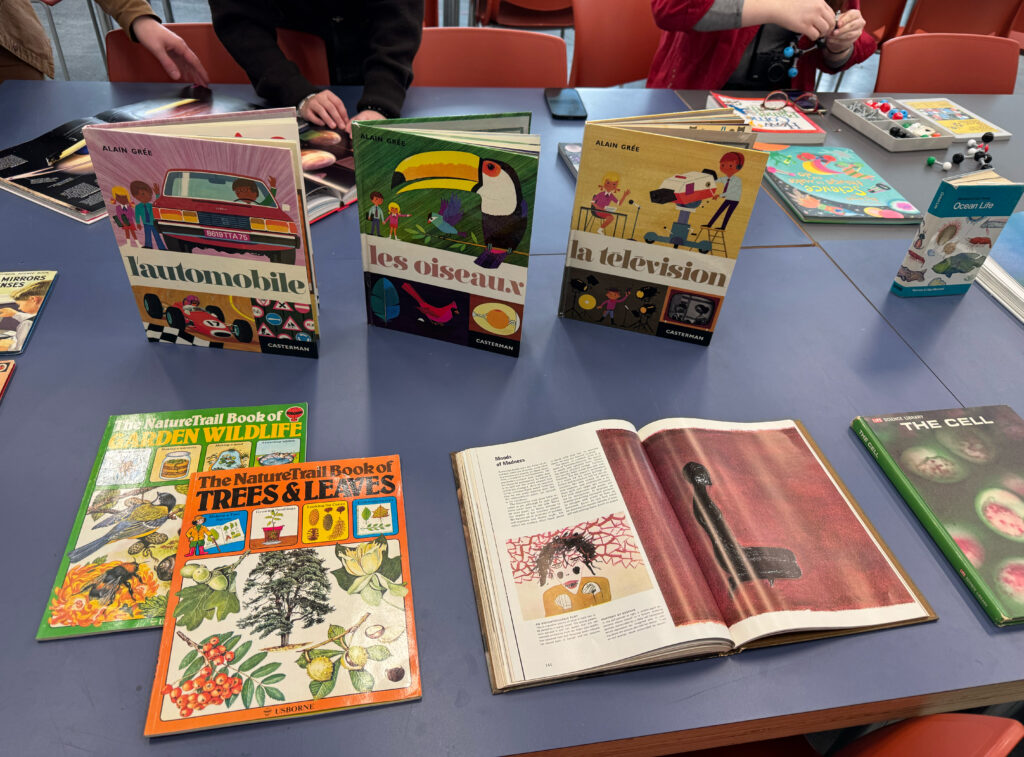
as a fun opportunity to reminisce about childhood learning and learn something new about our world (although we all mostly just spent our time flipping through the books, looking for cool photos).
Our final meeting of the semester, on April 17, was entitled Multi/Lingual/Book/Typography, which included typographic posters and ephemera, alongside relevant books and novels, with those related to type design, those that made use of interesting and unorthodox typographic presentations in service of their narratives (such as House of Leaves), and those that utilized multilingual typography. The featured objects were sourced from the collections of Brendan Denesiuk, Gabe Wong, Charlie (Liyang) Zha, and Abi Simatupang. In addition to these there were items generously provided by the Emily Carr library’s extensive collection of Artist Books, including Marc Saporta’s Composition No 1, Baco Ohama’s Red poems of rain and voice, and Benjamin M. Evans’ A Partial History of the S-Relation.
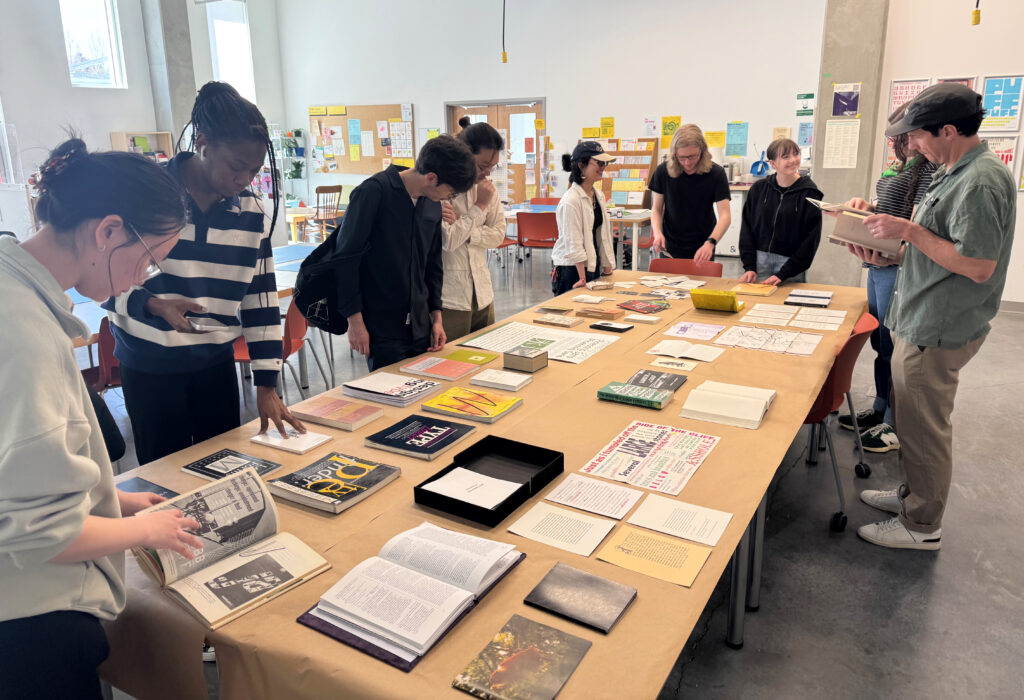
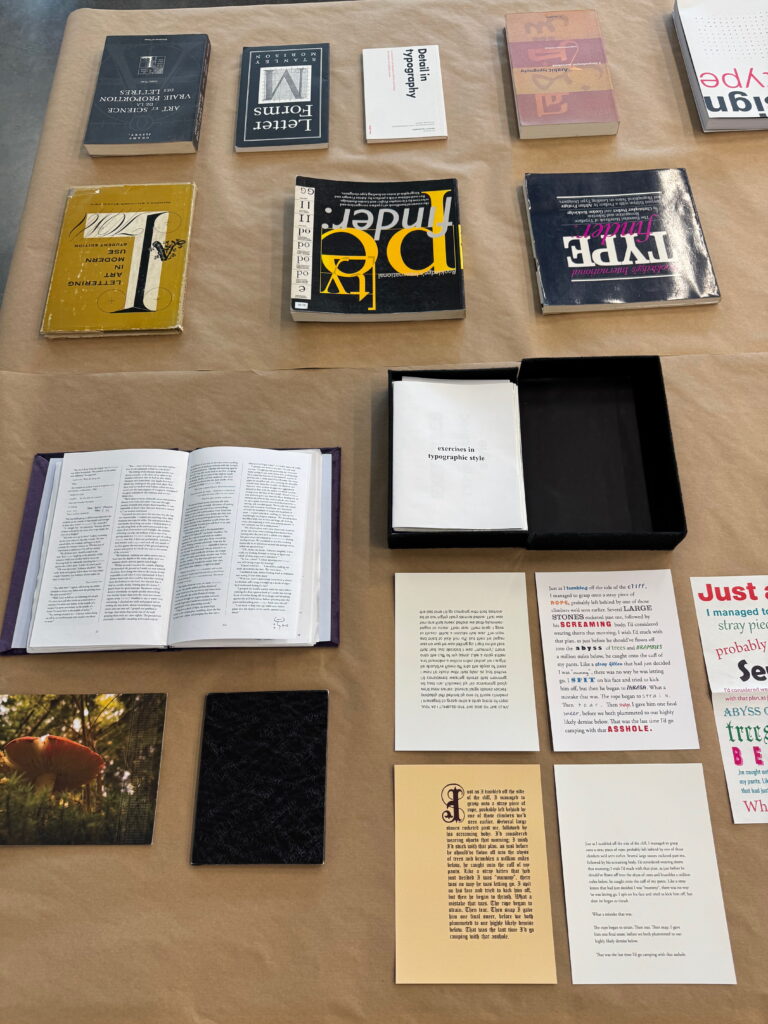
These books are rarely seen by the greater campus community, being only accessible by appointment; displaying them here helped bring eyes to some super interesting items from the expansive collection, if even just a small portion of it.
We hope to continue running this event, and giving light to amazing collections, in the semesters that follow. We hope to see you there and would love to hear ideas and suggestions for future sessions!