Categories
news S3D

3D[FWD] International Conference :: PART 1

This is PART 1 of 3 Recaps for the 3D[FWD] Conference and Networking Reception.

 Emily Carr University pf Art +Design with the S3D Centre are thrilled to have organised this event with the International 3D Society, with support from National Research Council’s Industrial Research Assistance Program (NRC IRAP). This event couldn’t have been possible without the support of those organizations, and also our friends at Massive Media.

This was the banner event for the recently created Canadian Chapter of the International 3D Society. More information will be available at the Chapter website in mid February. Audio and videos will be hosted there from the event and future events. If you are interested in becoming a member of the Society, please contact us for more information.

“I think it was probably the best first time 3DU Event that any chapter has done. We’ve got some great chapters. But it could not of gone any better.” Jim Chabin, President, International 3D Society

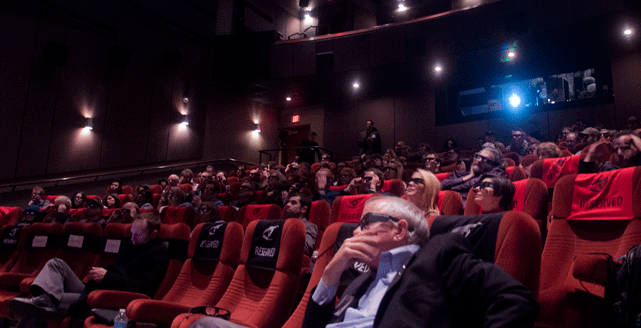
Over 130 attendees came to Vancity theatre on the 25th of January to listen to some of the best 3D leaders in the world. We were treated to 4K 3D presentation of content from our speakers thanks to Christie Digital stepping in with a model CP4230 projector. The content was not only in brilliant hi-res 3D, but was BRIGHT! Our fantastic A/V team from Vancity Theatre and Zoom A/V made sure the projector and Dolby 3D system were installed in time, and that all the speaker’s presentations flowed without problems.

3D00

Session 1: Your World in 3D with Jim Chabin, International 3D Society

The most exciting thing Chabin spoke of was that patents for 3DTV, 3D devices and technology are exploding in huge numbers. Companies are certainly looking at 3D and preparing for the future.

The professional community is both excited and hesitant over 3D, this is due to a large amount of mixed information, new information, and brand new technology. Chabin discussed auto stereo as the next movement in the entertainment and consumer landscape. “It has already started, products are being rolled out and content created for them.” In regards to the adoption of consumer 3DTV, Chabin said “Whatever TV you buy is going to be 3D ready, price is no longer an issue. Prices are going down and more people are going to have a 3D TV than not within the next couple of years.” Chabin stated that their are millions of 3DTVs now in homes around the world, and displayed a graph showing the surge in growth.

It was discussed that commercials in 3D encourage better retention from consumers than repetitive commercials in 2D, and the figure of 40% increase in retention for schoolchildren who watched educational material in 3D (compared to 2D) was presented. Chabin stressed the importance that from architecture to medical, and military to Nano technology, professionals have already been using 3D technology and will need to become familiar to 3D. For example, the Mars Curiosity rover has 2 3D camera systems onboard, and this addition greatly influences the scientists’ ability to drive the rover over Mars’ terrain. Chabin gave some examples of successful business people that were among the first to embrace and invest in 3D. Steve Jobs was used as an example, having been involved in 3D from the early 2000s.

“You are part of a very, very cool club. When we concise information from our business and organizations, it becomes obvious front he statistics that 3D is considered by consumers to be a premium and enhancement on everyday experiences.” “We have come a long way in just a few years, HD and colour TV took triple the time to get where we are today”.

DSC_0914_small

Session 2: Distribution, Content Licensing, and Financing for 3D with David Brenner, Principal Media

“Lets talk about the commerce; who is paying? How do you find a business model that really works?”

Brenner gave some fantastic examples of what the current outlook at international broadcasters look like “Basically,” he stated “It depends where you go.” He went on to describe how in China, a law was passed with their national broadcaster CCTV that rules a certain percentage of content MUST be 3D. He explained how the process works at the large 3D network 3NET if you want to get your content shown. And importantly, Brenner gave tips to indie producers and content creators about the various things they must know when selling their material and connecting with a distributor. He displayed a check lists of things that your distributor MUST provide to you, and he gave advice on how to shop around for a distributor that offers the best options for you as a content creator. His checklist included warning signs for a poor partnership, and how to avoid missing out on a better deal. Brenner presented figures of what to expect when licensing your content, and he stated that “nearly any good 3D content can be sold, you need to understand what angle to market it.”

Brenner used the example of an S3D Centre staffmember’s ongoing project and how it could generate income and reach audiences. “Hire an experience narrator, and have them create a professional delivery.” He stated that in many cases, once you study successful campaigns for short form 3D content you may quickly realize they all have the same formula: quick, punchy titles, a subject matter that uses 3D creatively, and a professional delivery of narration and visual effects. It is clear from Brenner’s talk that there are many areas we have not been considering when selling 3D content- for example, to 3D technology companies such as LG or Samsung even.

3D02

In the Q&As, there was some discussion as to why Canada’s distribution model is so much more underdeveloped compared to the USA and UK models. Attendees expressed their concern and not being able to catch the eye of local broadcasters who could consider a 3D initiative. TELUS 3D Optik network was brought up as an example of a network that has a 3D channel, but does not purchase content. Brenner was able to suggest several strategies for how Canadians could market their content to the US networks, while maintaining rights over the content for further use.

Many of the attendees walked away with a broader understanding of how to finance and sell their 3D projects, and Brenner was able to answer some of the most pressing questions from our local media community.

I had a GREAT experience at the 3D Conference last week!  I learned tons, made connections and I am determined to work in the 3D realm.  Thanks for hosting such an educational and insightful event.  I feel much closer now to achieving my dream of directing a low budget comedy/horror film in 3D. – Andrea Fredrickson Producer/Director, FFF
3D02A
Good advice, David.

Continue onwards to PART 2 of the Recap
—
Parallax films has a fantastic review on their website, as well as one of our most favourite moments from the movie “Honeymooners”. A highlight of their review:

James (Stewart) provided us all with the talking points to sell our media form, reminding us all that if 3D is a fad, it is a 227.27 BILLION dollar fad, that is growing at 15% per year. – Parallax Films

Thank you to all of our speakers, sponsors, and of course the attendees for helping us make an incredible landmark event! Please visit the Chapter Website in February for more information. Don’t forget to follow us on Twitter, @EmilyCarrS3D and @_MassiveMedia to see the live Tweets of the event and stay up to date with the next events. Again if you wish to become a member, contact us through Twitter, or our direct email. 

sponsor01

sponsor02

Categories
news S3D

3D[FWD] International Conference :: Full Recap

3D[FWD], held in Vancouver at the Vancity Theatre on January 24th & 25th, brought together business leaders from a cross-section of industries to explore the impact of 3D technology and emerging 3D concepts and tools.

Emily Carr University of Art +Design with the S3D Centre are thrilled to have organised this event with the International 3D Society, with support from National Research Council’s Industrial Research Assistance Program (NRC IRAP). This event couldn’t have been possible without the support of those organizations, and also our friends at Massive Media.

This was the banner event for the recently created Canadian Chapter of the International 3D Society. More information will be available at the Chapter website in mid February. Audio and videos will be hosted there from the event and future events. If you are interested in becoming a member of the Society, please contact us for more information.

“I think it was probably the best first time 3DU Event that any chapter has done. We’ve got some great chapters. But it could not of gone any better.” Jim Chabin, President, International 3D Society

Over 130 attendees came to Vancity theatre on the 25th of January to listen to some of the best 3D leaders in the world. We were treated to 4K 3D presentation of content from our speakers thanks to Christie Digital stepping in with a model CP4230 projector. The content was not only in brilliant hi-res 3D, but was BRIGHT! Our fantastic A/V team from Vancity Theatre and Zoom A/V made sure the projector and Dolby 3D system were installed in time, and that all the speaker’s presentations flowed without problems.

3D00

Session 1: Your World in 3D with Jim Chabin, International 3D Society

The most exciting thing Chabin spoke of was that patents for 3DTV, 3D devices and technology are exploding in huge numbers. Companies are certainly looking at 3D and preparing for the future.

The professional community is both excited and hesitant over 3D, this is due to a large amount of mixed information, new information, and brand new technology. Chabin discussed auto stereo as the next movement in the entertainment and consumer landscape. “It has already started, products are being rolled out and content created for them.” In regards to the adoption of consumer 3DTV, Chabin said “Whatever TV you buy is going to be 3D ready, price is no longer an issue. Prices are going down and more people are going to have a 3D TV than not within the next couple of years.” Chabin stated that their are millions of 3DTVs now in homes around the world, and displayed a graph showing the surge in growth.

It was discussed that commercials in 3D encourage better retention from consumers than repetitive commercials in 2D, and the figure of 40% increase in retention for schoolchildren who watched educational material in 3D (compared to 2D) was presented. Chabin stressed the importance that from architecture to medical, and military to Nano technology, professionals have already been using 3D technology and will need to become familiar to 3D. For example, the Mars Curiosity rover has 2 3D camera systems onboard, and this addition greatly influences the scientists’ ability to drive the rover over Mars’ terrain. Chabin gave some examples of successful business people that were among the first to embrace and invest in 3D. Steve Jobs was used as an example, having been involved in 3D from the early 2000s.

“You are part of a very, very cool club. When we concise information from our business and organizations, it becomes obvious front he statistics that 3D is considered by consumers to be a premium and enhancement on everyday experiences.” “We have come a long way in just a few years, HD and colour TV took triple the time to get where we are today”.

Session 2: Distribution, Content Licensing, and Financing for 3D with David Brenner, Principal Media

“Lets talk about the commerce; who is paying? How do you find a business model that really works?”

Brenner gave some fantastic examples of what the current outlook at international broadcasters look like “Basically,” he stated “It depends where you go.” He went on to describe how in China, a law was passed with their national broadcaster CCTV that rules a certain percentage of content MUST be 3D. He explained how the process works at the large 3D network 3NET if you want to get your content shown. And importantly, Brenner gave tips to indie producers and content creators about the various things they must know when selling their material and connecting with a distributor. He displayed a check lists of things that your distributor MUST provide to you, and he gave advice on how to shop around for a distributor that offers the best options for you as a content creator. His checklist included warning signs for a poor partnership, and how to avoid missing out on a better deal. Brenner presented figures of what to expect when licensing your content, and he stated that “nearly any good 3D content can be sold, you need to understand what angle to market it.”

Brenner used the example of an S3D Centre staffmember’s ongoing project and how it could generate income and reach audiences. “Hire an experience narrator, and have them create a professional delivery.” He stated that in many cases, once you study successful campaigns for short form 3D content you may quickly realize they all have the same formula: quick, punchy titles, a subject matter that uses 3D creatively, and a professional delivery of narration and visual effects. It is clear from Brenner’s talk that there are many areas we have not been considering when selling 3D content- for example, to 3D technology companies such as LG or Samsung even.

3D02

In the Q&As, there was some discussion as to why Canada’s distribution model is so much more underdeveloped compared to the USA and UK models. Attendees expressed their concern and not being able to catch the eye of local broadcasters who could consider a 3D initiative. TELUS 3D Optik network was brought up as an example of a network that has a 3D channel, but does not purchase content. Brenner was able to suggest several strategies for how Canadians could market their content to the US networks, while maintaining rights over the content for further use.

Many of the attendees walked away with a broader understanding of how to finance and sell their 3D projects, and Brenner was able to answer some of the most pressing questions from our local media community.

I had a GREAT experience at the 3D Conference last week!  I learned tons, made connections and I am determined to work in the 3D realm.  Thanks for hosting such an educational and insightful event.  I feel much closer now to achieving my dream of directing a low budget comedy/horror film in 3D. – Andrea Fredrickson Producer/Director, FFF

Session 3: PANEL: Telling Your Story in 3D with Adam May, Vision 3; Robert Neuman, Disney; & Joshua Hollander, Pixar | Moderator: Buzz Hays, True Image Co.

We watched clips from Pixar’s “Brave”, Disney’s “Tangled” and a compilation of Vision3’s project to kick off this panel session, with all three being extraordinary in immersiveness and 3D skill. The scene from “Tangled” called ‘Lanterns’ was the recipient of Scene of the Year at the Society’s 2nd Annual 3D Creative Arts Awards, and it was clear how this scene won by a landslide. It had every checklist element of 3D one could wish for 1) good character roundness, 2) 3D that flowed seamlessly between positive and negative parallax  and 3) interesting story elements that took advantage of the very nature of 3D.

Neuman entered the industry wondering how 3D could be used as another tool in the cinematographers’ tool belt, and what the 3D grammar/language would look like. He created a 3D language for Disney and began working in 3D in “the most organic part of the creative process of the film as we could”. “The 3D you see isn’t just the literal stereoscopic geometry between the left and right camera, it is often composed of 8 stereo layers that include the characters and environment”.

Hollander: “We wanted to resurrect some of our old titles at Pixar, and see what that would look like. As a result we got approval to do “Up” in 3D, and we started an aggressive testing, experimentation, and education campaign in the company. In the beginning we kept the 3D subtle in those early days, and since then as our understanding and sophistication of the medium has increased, we are doing more multi-cam and involved 3D usage”.

Hays: “Underneath all this technical talk, 3D is considered an art form. We concentrate on NOT overwhelming people with technology and focus rather on the use of 3D in story.”

3D02B

All four panelists discussed the use of convergence as a subtle tool, and how each of them approaches convergence with interaxial. Neuman states that he looks always at comfort first, and also what the main subject is. He stated that he tracks the viewers natural focus point as close to the screen (converged upon at the screen plane) as possible. May discussed his approach in live action, and how nothing can truly be fixed and 100% controlled on a shoot. But he did state that as a general rule, they try to converge on the furthest point in a room. “It ticks two boxes. When shooting converged, it is an immediate 3D reference on the shoot, but also you still have some level of flexibility in post production”. In terms of editing, May explained too that they reduce the depth in faster cut sequences and use depth in a rhythm with the edit pace for the story. He utilizes depth scripting considerably, not too dissimilar to how animated films operate. Hollander explained their influence at Pixar from scientist Archibald Stanley Percival’s’ philosophy of the ‘zone of comfort’, and how the ocular system operates with physical space. “We converge on where the audience is focusing, and use negative and positive parallax for emotional impact.” Hollander describes a terrific scene from “Up” where 3D is used with colour to create incredible emotional impact on the audience. As the scene progresses, the colour saturates and the 3D depth increases coinciding with edit cuts. This was a terrific example of how 3D not only improves upon, but also in some cases creates an emotional intensity not otherwise possible without 3D.

“Thanks for having me up there for 3D[FWD].  I really enjoyed the panel and all of my informal conversations.” – Joshua Hollander, Director of 3D Production, Pixar Animation Studios

One point often brought up was how 3D depth can be used like a musical score. Neuman in particular demonstrated the incredible level of detail that the Disney team goes into with the stereo grading on each shot, and how the shots together create a linear ‘score’. In live action, May said, “we don’t have the same level of control. But we absolutely use 3D like a soundscape and a reference when we talk about 3D, and its emotional arcs.”

Hays states “There is a lot to talk about with the creatives on this topic. And sometimes you have to explain this to a non-creative, who isn’t as passionate about 3D. 3D should never be an afterthought, because you are not taking into consideration the framing, the depth, the emotional aspects that 3D can create.” He went on to say “there are more bad 2D movies than 3D. But 3D is the new kid on the block, so you feel like you can punch him in the gut when you need some validation.” Hays promoted experimentation if it is possible prior to a project as a safe place to make errors and figure out what will work with the project. He also explained how directors like Baz Luhrmann and Robert Zemeckis were able to see the potential of 3D to become an intimate and emotional contribution to a story, and add a new level of creativity to the film.

We were able to view some of Vision3’s 2012 Olympic indents, which were truly breathtaking in not just 3D, but also shot at high speed for slow motion. We also watched a short by Pixar, called “Night and Day” which takes advantage of 3D in one of the most unique ways yet.

“Congratulations in organising a brilliant 3D conference, I thought it was incredibly well organised and the attendees certainly came away with a lot!” – Adam May, Head of Production Vision3, UK

Session 4: PANEL: Is 3D Production a Fool’s Errand or the Road to the Future?with James Cowan, Finale Editworks & Ian Herring, and Parallax Films | Moderator: James Stewart, Geneva Films

Parallax Films showed some clips from “Blowdown”, “Battle Castle”, and an upcoming graphic novel they are creating. Cowan stated that “3D in Vancouver has had a bit of a love and hate relationship. As a major production Centre, we were inundated with feature film work that used US 3D crews. Som many people here haven’t had their services used even yet.” On “Piranha 3DD”, Cowan completed all the 3D post production on the film with Technicolor in Vancouver. Ian Herring had great information for the audience about their “Blowdown” structural implosion project in 3D of a major football stadium in Brazil. He spoke to the difficulty and also perfect storm of conditions that led to working with a demolition team for National Geographic, and being able to test their 3D pipelines simultaneously with National Geographic. In their 3D episode of “Blowdown”, they had to build actual custom 3D capture systems and also used a Canon 5D beam splitter, many security cameras, and manage to edit the content form these systems seamlessly together.  Cowan echoed this by discussed the challenges doing DI and stereo grading on “Piranha 3DD” due to having so many multiple camera systems including Red cameras. He explained their process for making the mixed content balanced not only in colour, but also balanced in stereo.

3D03

Herring mentioned with “Battle Castle” that they were able to pitch the idea of shooting it in 3D, and once approved they were able to use better 3D equipment and green screen stages. During the process, the 3D hype started to taper off and instead of doing an agreed three episodes in 3D, the network only ended up doing one. Herring explains that the networks were concerned about making money, and “coming in from Blowdown, we already had a structure in 3D. But for someone coming in cold, I am not sure how anyone would have done that”. From an independent producers point of view, Herring explained how to negotiate for 3D: “As a Canadian, we land of Canadian 2D deal first. We go to Shaw cable, for example, then carve out 3D. Then we take this model down to 3net to get financed that way. This is in fact, a VERY workable model, and I am surprised that more Canadians are not doing this. With that anchor broadcaster in place you can bring in $400,000 or so, then go to the US and pick up $100,000 more. There is no guarantee it will pick up, as it must not only fit America’s needs, but also International needs.” Herring explained his enjoyment of the latest fixed interaxial Sony cameras and how you can shoot native 3D, and also provide 2D content from it. Stewart explained how Toronto has good 3D resources such as 3D rigs and these are available for rent to Vancouver. Cowan explained how Vancouverites have an excellent talent base, and are highly educated on working on 3D projects. He explained that several companies including Finale that are 3D ready, and available to support a project, which echoes what Herring stated which is: “Canada can do 3D”

“We were so impressed by the level of talent and interest.” – Don Thompson, President/Founder Finale Editworks

Session 5: 3D Conversion: The State of the Art & Debunking the Mystery with Mark Lasoff &  Colin Jenken, Gener8

“Every single frame of that started from 2D,” starts Mark Lasoff after their sizzle reel finishes. For the kind of projects Gener8 completes, there is a large VFX component to the film- so Gener8 works not only of converting 2D capture, but also completes VFX shots. Lasoff continues that they get three kinds of films; 1) 2D that needs to be converted to 3D, 2) films shot in native 3D but for cost reasons included 2D with the intent on converting, and 3) native 3D shots that need to be converted due to errors or re-shoots.

Gener8 is composed of some extremely gifted personell. Lasoff himself has won Academy Awards for his VFX work, and Jenkin has worn many hats in this idustry, having also created some of Gener8’s pipelines and software. They have a common goal at Gener8, and Lasoff describes how inside Gener8, they believe the stereographer must be included throughout the process from start to finish. Using their depth assessment process, they continue on to match move of camera, rotoscope, then rotomation. At the very end, they project the frame onto their models. The Gener8 team demonstrated on their proprietary software Stereo Composer this entire process, which eventually ends in final approval to the client. Lasoff continues to state that the entire stereo conversion process is some simultaneously to the VFX pipeline, which is what truly sets Gener8 apart from their competition.

3D04

Colin Jenkin explains how this is what enables Gener8 to deliver quicker than their competition and with the best quality of image possible. Jenkin showed some clips from Ghost Rider: Spirit of Vengeance that demonstrates how the VFX looks when worked at the same time as the actual conversion, all the way to the final shot. “We really based our pipeline around the stereographer,” states Jenkin.  “Simple convergence and IA can be adjusted in real time rendering.”

On Prometheus, Gener8 had to match the converted footage to match what the excellent native 3D appeared to be. Most of the work done on this project was to correct occlusion, and it was natural to create depth continuity. Whether converting is more affordable than shooting native 3D is completely debatable at this time (hint: it depends on many variables) but there is one thing very obvious: as they continue to put research and develop into their tools, there is no doubt that Gener8’s process will become even more affordable.

Session 6: IMAX 3D, 1985 – ??? with Hugh Murray, IMAX Entertainment

Murray explained how for IMAX before the current 3D revival, their last studio 3D projects were in 1983. The coming of digital 3D created a brand new model for IMAX, and this started with the release of “The Polar Express” in IMAX 3D. Murray explains, “What kept this going were world’s fairs and expos. Everyone wanted to showcase the best technology in their pavilion so we would be called to help. Our first world fair was in 1987, in Montreal.” These expos provided financing for IMAX to complete more testing and innovation that helped make IMAX the game changer it is today. Murray spoke about how IMAX has evolved dome projection in 3D, and spoke a bit to the incredibly complex process of filming and projecting for dome presentations. On several instances, Murray mentions the dome presentations combined with the incredible CG effects created the closest thing he has seen to virtual reality. Complications around shooting fisheye 3D are what pushed IMAX to create their own 3D system. Murray was involved in the engineering and creation of the first IMAX 3D system- from camera to rig and he describes the issues around finding lenses that allow for an interaxial that is practical. Eventually three of these cameras were built, and Murray’s role changed to also include training camera operators to use the 3D systems.

One of the first to be proficient in 3D was Vancouverite Noel Archambault, who died tragically in a place crash while filming “Galapagos: The Enchanted Voyage” in 1998.  Archambault had worked on every IMAX 3D film until his death, and Murray states that most of IMAXs original staff was indeed from Vancouver originally, hence Vancouver’s rich history in large format 3D. Murray explains what really sets IMAX apart is its ultra immersive experience. “What IMAX is really striving for, is orthostereo experiences. What that means is the cameras are going to shoot parallel, and you shoot with lenses that match as much as possible the perspective the audience will have. You try and match scale and distance in the theatre with what exactly was in front of the camera.” IMAX theatre used to be geometrically scaled versions of each other to perfectly match the narrow dimensions needed. Modern theatres are only slightly different now. “Screen plane was never part of our discussion as stenographers. What screen plane was, was just us asking what the audience would be looking at, and what is comfortable for them (inside the stereo pyramid that included the whole theatre).” IMAX often would shoot stereo infinity on their shoots, and having known what the exact scale of the theatre is, IMAX crews are able to understand while shooting exactly what geometry is needed for the audience.

3D04B

In Murray’s opinion, the 3D projects were what truly built IMAX as a company well into the 90’s. IMAX campaigned to create 3D films for blockbusters from 95′ onwards, and Murray was given a budget to collaborate with Mainframe Vancouver to test some stereo 3D for the show “Reboot”, which led to IMAX completing some conversion work for some already completed 2D animations. IMAX reinvigorated interest in 3D by demoing some experiments that resulted in production of a The Simpsons / Ants 3D compilation film called “Cyberworld” in 2000. “The Polar Express” came on board immediately after, and the reinvention of IMAX 3D films was born from there. Murray describes the process of training astronauts for IMAX’s space films, including the incredible “Hubble 3D”. IMAX has become renown for its space films, and after seeing two 4K 3D clips from IMAX’s “Hubble 3D”, it is certainly easy to see why.

“You did a spectacular job on the conference, congrats! I thoroughly enjoyed hearing from folks working at the pinnacles of production levels and hearing shared challenges and inspirations. I will need to join the society, definitely puts wind in my sails to continue with a current S3D project in the tundra.” – Marten Berkman visual artist, film maker and photographer

Session 7: Advertising & Marketing in the 3D Space with James Stewart, Geneva Film Co.

“Why 3D? People often ask me. And my answer is always: 3D is better. When people see the same content in 2D and 3D, they always enjoy the 3D content more,” starts Stewart for his presentation. He states that he explains a great amount to advertising agencies and producers about what 3D is, and how it can be created. Stewart believes that in many cases, 3D does add to the story, but in other cases doesn’t add a thing. The easiest way to explain 3D to someone is: “2D is a painting, and 3D is a sculpture. 2D is a wall, 3D is a window. Sometimes you come into a lot of cynicism when you pitch 3D to advertiser or filmmakers, but you are in good company if you share enthusiasm for 3D.” Stewart finsihed that sentence by showing some of the world’s most respected companies in film, tv, advertising and media. As to why 3D is becoming popular once again now, Stewart explains that the digital revolution has finally enabled much more creativity and immersion than previous incarnations of 3D. Stewart says regarding 3D conversion that there is a conversion camp, and a native 3D camp in Hollywood that is now starting to collaborate. For Stewart, he claims he is neutral on the subject and sees the value of both in various scenarios. Stewart makes a valid point that with films like “Pina”, “Cave of Forgotten Dreams”, “Hugo” and “Life of Pi”, it can be demonstrated that even those in older demographics have been enjoying 3D. Young people aren’t the only ones now that enjoy the medium.

3D05

Having been to over 60 agencies, Stewart finds advertisers are largely hesitant to come on board for 3D until they see more convincing statistics that significant viewers will be able to watch their spots on their 3DTV at home. It is a guarantee that cinema commercials will receive large amount of exposure, but TV seems a tougher sell. Stewart mentioned that we are starting to build an ecosystem and argument that there is a place for 3DTV ads; especially since nearly all-new models of TVs will be 3D enabled in the next couple years. “People do want to watch 3DTV, as long as they can find the opportunity to actually view it.” Stewart touches upon auto stereo displays and how some people’s hesitancy to watch 3D is due to the glasses, but being a glasses wearer he doesn’t believe it is as big an issue as it is made out to be. Rather, the accessibility of 3D on tablets and mobile devices seems the most exciting propositions. At this time, 3D technology creators like LG and Samsung are the ones commissioning and paying for content. He explains that some of the auto stereo 3D content is actually already available on some tablets and mobile devices such as the LG 3D Optimus, and he passed this model around for the audience to see. “When you place one of these devices into a clients hands, they immediately see it and get it. It is an excellent tool of persuasion.”

Session 8: 3D at 2D Economics with Grant Anderson, Sony 3D Technology Centre

“Our job is to get those eyeballs onto 3D sets. We hear over and over that people are scared to undertake 3D, because they imagine it may cost too much and slow down the production on set. However, that is the last thing we want to hear, and we have developed a case study and whitepaper that you can access.” With good foresight and planning, Anderson describes that the Sony 3D Technology Centre can demonstrate that 3D can be shot in a 2D structure. They undertook an episode of “Days of Our Lives” and “Happy Endings” to prove that episodic TV can be created in 3D. But keep in mind these four main points: 1) Plan your 3D aspects in pre-production, and you will never wait on 3D on set. 2) Crew training ahead of time is critical. 3) Complete a depth budget, as both a creative and technical task. 4) Rig evaluation should be completed in as much detail as possible to select your best equipment. Inside the whitepaper Anderson worked on with his team, you can find excellent recommendations of cameras and rigs.  Here is a link to the whitepaper:  http://www.sony.co.uk/pro/article/bc-3d-economics

3D06

The “Days of Our Lives” had to be completed in two days, which was an aggressive but manageable schedule for the episode. After seeing a surprisingly enjoyable clip of “Days of Our Lives”, it is obvious how organized and detail oriented the crew was. “The toughest thing was to adapt to their workflow and schedule, and only slightly modify it for 3D,” Anderson stated. But the good news was that the crews from both shows enjoyed the experience and wanted to do another 3D episode. Anderson’s last project, feature film “Battle of the Year” they were under a running gun environment for some key scenes and also had to stick to a 2D schedule throughout productin. Overall, the film was a success since they were able to stick to the schedule and create some excellent 3D. Anderson states that what they need to keep doing is to have the writers and directors to incorporate 3D into the story. “What we really need to do is make people aware, make it easy to watch 3D and then they will see its full potential on their TVs.”

“I just want to say how great it was to have something like this happening in Canada, as a filmmaker this was a huge step forward in the right direction of getting industry together to talk 3D in an opportunistic way. You’re doing great things with the society, and it has allowed me to connect with so many people to discuss creative directing within 3D. I look forward to what comes next from you guys and helping to build a 3D dramatic narrative in Canada.” – Dylan Pearce, Director, Rocky Mountain Picture Company
___

In summary, the event welcomed both veterans from the 3D industries and also those just beginning to imagine how their business could take advantage of 3D. One of the most exciting aspects of both the networking event and the conference was seeing people from cross sections of industry meeting one another and also able to converse with the speakers. The goal of the Canada Chapter of the Society is to create an environment where people can network, enjoy 3D screenings, and learn about the latest developments in 3D. This event is the first of many that will formalize the stereo 3D community, and hopefully continue the tradition of 3D innovation in Canada.

Parallax films has a fantastic review on their website, as well as one of our most favourite moments from the movie “Honeymooners”. A highlight of their review:

James (Stewart) provided us all with the talking points to sell our media form, reminding us all that if 3D is a fad, it is a 227.27 BILLION dollar fad, that is growing at 15% per year. – Parallax Films

Thank you to all of our speakers, sponsors, and of course the attendees for helping us make an incredible landmark event! Please visit the Chapter Website in February for more information. Don’t forget to follow us on Twitter, @EmilyCarrS3D and @_MassiveMedia to see the live Tweets of the event and stay up to date with the next events. Again if you wish to become a member, contact us through Twitter, or our direct email. 

sponsor01


sponsor02

Categories
news S3D

3D[FWD] International Conference on 3D Technology to be Hosted in Vancouver January 24 & 25

Speaker Line-up To Include 3D Thought Leaders from Disney, Pixar, IMAX, Sony and more! Tickets start at $59 at 3dsociety.ca

Vancouver, CAN January 16, 2013 | Emily Carr’s S3D Centre and The International 3D Society will host 3D[FWD], a conference focused on the business of 3D, on January 24th and 25th at the Vancity Theatre. The conference brings together leaders from a cross-section of industries, such as healthcare, advertising, entertainment, and digital media to explore the impact of 3D technology in today’s marketplace and for the future.

Leaders and innovators in 3D from Hollywood, London, and Canada (including Academy Award winners), will showcase, discuss, and debate some of the latest developments in 3D and explore how the 3D transformation will affect business. With more than 50 major 3D movies scheduled for release in 2013, millions of 3DTV sets being sold in the global marketplace, and an abundance of stereoscopic consumer products to be launched, it is an opportune time to learn how 3D can be used as a powerful business tool.

Topics to be covered include Storytelling in 3D, Canada’s Evolving 3D Landscape, Finance and Content Licensing, Post Production, 3D Conversion, and Advertising and Marketing in the 3D Space. 

Confirmed speakers include:

  • Adam May, Head of Production, Vision3
  • Buzz Hays, Founder, True Image Co. Inc.
  • Colin Jenken, Technical Art Director, Gener8
  • David Brenner, CEO, Principal Media
  • Grant Anderson, Executive Director, Sony Pictures Studios
  • Ian Herring, Founder, Parallax Film Productions
  • James Stewart, Director/Producer, Geneva Film Co.
  • Josh Hollander, Director of 3D Production, Pixar
  • Mark Lasoff, Visual Effects Supervisor, Gener8
  • Matthew Smith, Stereographer, Vision3
  • Robert Neuman, Stereographic Supervisor, Disney Animation Studios
  • Hugh Murray, Senior VP, IMAX

For the latest updates, more information and ticket purchase go to www.3Dsociety.ca.

3D[FWD] conference also signifies the launch of the first Canadian Chapter of the International 3D Society.  The International 3D Society merged with the 3D@Home Consortium in August to create the world’s foremost organization of companies and individuals committed to the success of 3D storytelling, technical achievement, and consumer adoption. Member companies include: The Walt Disney Studios Motion Pictures, DreamWorks Animation (DWA), Sony Pictures Entertainment, Samsung, IMAX, ESPN 3D, 3net, CCTV China, bSkyb UK, 3D Consortium France, Korea Telecomm, Panasonic, Sony Electronics, Sony Playstation, StereoD, Intel, Microsoft, Vizio, 3ality Technica, RealD, Masterimage 3D, XPAND, and Dolby, among others.

About the International 3D Society & 3D@Home Consortium
The International 3D Society & 3D@Home Consortium advances 3D content, products and adoption through recognition, networking, and communication for professionals and consumers. With over 60 companies and 500 professional members, the organization honors the year’s best during its 3D Technology and 3D Creative Awards programs; hosts worldwide meetings, workshops and demonstrations; and manages many online resources to assist consumers and professionals to further understand and integrate 3D into their lives. Visit: www.International3DSociety.com, www.3DatHome.org, and 3DUniversity.net to explore the full range of 3D information available.

About the S3D Centre at Emily Carr University of Art + Design
The S3D Centre at Emily Carr University of Art + Design’s mission is to advance the art of Stereoscopic 3D. Our applied research programs and training activities focus on the creative applications made possible by experimenting with S3D production technologies and processes. With the support of our partners and students, our aim is to teach, train and discover the aesthetic and creative possibilities of Stereoscopic 3D. Find out more at s3dcentre.ca and ecuad.ca.

For more Information contact:
Executive Director, Communications, Emily Carr University
604.839.3078, bpatterson@ecuad.ca

Categories
Projects S3D

Effective Post Production and Dailies Pipelines

For more information on the S3D Centre’s research activities in HFR and other areas, and to see our current supporting press material please visit HFR Research home.

We advise the reading of the first HFR Blog #1 Here , and Effective Pre-Production and Production of Variable HFR projects (Part 1 of 2) , Effective Pre-Production and Production of Variable HFR projects (Part 2 of 2) before reading on.

Key words for this article:  

  • HFR = High Frame Rates. Traditionally, cinema productions are filmed at 24 frames per second, or for broadcast at 29.97 (30) frames per second. There are numerous advantages to filming in HFR, especially in 3D.
  • VFR = Variable Frame Rates. This is the use of multiple frame rates within the same container/sequence. Does the utilization of HFR as a ‘tool’ in this regard change the immersive experience for the viewer? We suspect that the question of whether or not to utilize HFR in a stereoscopic 3D film within a narrative context depends largely on the creative intent of the film itself.
  • SFR = Standard Frame Rate (24fps in North America, 25fps in Europe)

To re-iterate: We are researching not only the standalone benefits of higher frame rates in S3D, but also the effect of VARIABLE HFR on aesthetic and immersion in the context of a single narrative.

Post Production Considerations

We were at this years SMPTE Symposium, where the 2012 topic was HFR. We have been dealing with many post production considerations over the past months, and this is an area of concern echoed relentlessly at the Symposium. From http://smpteconnect.blogspot.ca/ :

“Paul Chapman, senior vp of technology at Burbank-based postproduction facility Fotokem, led a discussion of some of the challenges that high frame rates bring to post, during SMPTE’s symposium on high frame rates for digital cinema.
 For starters, he asserted that support from creative editorial is lacking and needed. This was a sentiment echoed by additional speakers, including Disney’s Howard Lukk, who did however single out Adobe’s Premiere Pro as offering HFR support.
Chapman reported that he conducted an informal survey of dailies vendors, and his findings suggest that all are now testing high frame rates. He expects to see quite a lot of development in this area during the next 12 months. He reported that Fotokem’s NEXTlab near-set dailies system is already working on a HFR project.
Nico Recagno of SGO (the maker of the Mistika postproduction system, which is in use at Park Road Post on The Hobbit) said that managing dailies at HFRs is “horrifically difficult,” citing challenges including time code, methods of viewing and QC, and sound sync.
Recagno added that the biggest concern that he is hearing from colorists is getting proper calibration during color grading. He and Chapman both urged the community to create HFR standards in some of the discussed areas, including time code.”

We are also members of the SMPTE 21DC high frame rate study group and can echo that these are very new concerns. Furthermore, there are simply not many software applications/dailies software and hardware already capable of S3D toolsets, let alone HFR 3D toolsets. SGO Mistika has been reckoned as the ultimate HFR 3D toolset, but with its steep price point we have found it to be out of reach for the majority of filmmakers. Denise has been a user (and Beta tester) of Avid Media Composer and Symphony for S3D already, so we were able to test it on our HFR 3D material. Avid already has functional S3D toolsets so this made the process of attempting the playback of HFR 3D simplified.  Before we go more into this process, we will share some specs on our post production toolsets:

Macbook Pro for on set dailies and offline edit:

  • 17” running 10.7.3. 2.4 GHz Intel Core i7.
  • 8 GB 1333 MHz DDR3. AMD Radeon HD 6770M. GPU Graphics bus, Intel HD Graphics 3000. GPU built in bus.
  • Footage stored on Pegasus Promise through thunderbolt connectivity.

We have an additional Magma 3-slot chassis that can be used with this configuration, running Red Rockets or other cards.

MacPro tower:

  • 3.2 GHz dual quad core with 18gb ram.
  • Nvidia Quadro FX 4800. Mac Raid Card – Raid 0.
  • 1 x RedRocket. BlackMagic 3D Extreme PCI card for playback.

Cine-Tal Cinemage 2000 monitor for colour grading, and Hyundai Hyundai 46” passive polarized 3D LCD (S465D) for 3D TV playback.

Regardless of your software, realtime playback of S3D material is already a problem. Unfortunately HFR and VFR footage only exemplified this issue. This is where the greatest expense may be incurred by an HFR / VFR 3D shoot- the cost of a reasonably new machine, additional video/PCI cards, and fast storage to get fast ingestion and playback of footage.

Software Capable of viewing HFR that we used:
•    Dailies:
1.    RedCine X (limited depth grading/convergence tools, some colour grading tools. Great way to view camera metadata and export new clips. Somewhat confusing to create S3D containers)
2.    DaVinci Resolve 8 (excellent metadata capabilities, easy to create S3D containers but ONLY from EDLs created within Resolve. Excellent colour and depth grading. Easy to switch between left and right image. You can export literally any deliverable in HFR from DaVinci Resolve.)

•    Editing Solution that we used:
1.    Avid Media Composer or Symphony. Can work directly from RED footage using AMA, or you can create proxies either from a dailies software OR inside Avid directly using the transcode tool. Easy to create S3D containers, easy to adjust sync on clips. Excellent depth grading and colour grading. Can export 720p60 media.

We were very encouraged to discover that Avid DS can utilize 23.98, 24, 47.95, 48, 59.94, 60fps timebases and footage among many other frame rates. It also had S3D toolset, and was capable of delivering full HD and 2K video. Unlike MC and Symphony, DS uses a different plugin scheme than AMA, but it has been built to match the experience and settings as closely as possible to AMA.

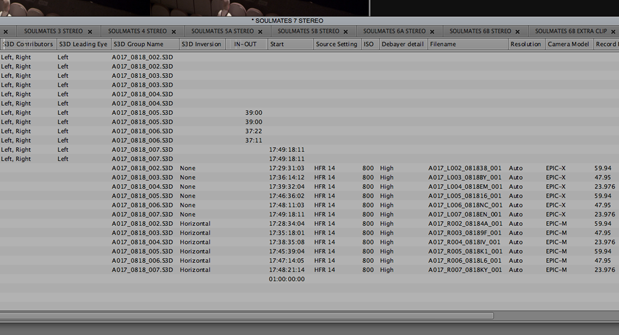
LotsOfMetadata_small

Click to see a larger image with Avid’s comprehensive metadata.

About editing HFR / VFR material

If you are planning on editing with proxies (this is likely going to be the only way to view the S3D HFR material in real-time) you can one light and encode to HD within dailies program. You can then advance to your editing software (in our case, Avid).

Our original clips were 4096×2160 at 59.94, 48.95 and 23.98. You can get almost real time playback of this material in 3D within Redcine, rastered to 1/4 with a RedRocket in chassis connected on the MacBook Pro, and ¼ raster with the MacPro with a RedRocket inside. Similarly, within Avid I was able to view real time playback of AMA 3D HFR material at draft quality.

Depending on your final output, you can use these dailies and editing software to export to a variety of deliverables. Avid Symphony exported any QuickTime or video you wished, and Avid DS was able to export TIFF 16bit Image Sequences if you desired a conversion for DCP. RedCine was able to create new Red clips (called trims), pretty much any video and some image sequence options. DaVinci Resolve had excellent deliverables support of video, image sequences, and DPX.

Resolve_Correct_Large

To view a larger image of the correct setting in DaVinci Resolve for 60fps OR VFR inside 60fps container WITH real time playback, click the above image.

Creatively editing with HFR / VFR

Stepping away from the technical discussion for a bit, I wanted to discuss creative choices for a VFR project. I first want to be completely honest and say that after viewing the HFR proxies in 2D, 3D alongside standard frame rate material, I had some very surprising reactions.

I found that it was incredibly difficult to go back to watching this material in ONLY 23.98fps after being exposed to the HFR versions of the material. While watching the 23.98fps material I felt as though it was simply missing something. I speculate I was not enjoying the blur of 23.98fps on the majority of footage, and preferred the HFR versions on many occasions. I found that I did NOT like the aesthetic of HFR on close up faces, something echoes by my colleagues. HFR on CU faces seems to be far more intimate than what a viewer may like during emotional scenes. We all observed that the background separated, and was more defined in the HFR versions than in 23.98fps. This is a great thing in 3D, but be careful with set decoration. Any flaws in the background become more pronounced in HFR.

Imperfect movements whether it is a shaky dolly or jerking dance move became even more pronounced in HFR 3D. I decided on one occasion to cover up a bumpy dolly track with the 23.98fps version of the clip- the blurred frames ‘smoothed’ the image compared to the HFR versions. I found that our main subject, the dancer, was a very beautiful dancer but sometimes the HFR created a kind of ‘animated’ look to her dancing. 23.98fps seemed to retain the ‘soft, graceful’ aesthetic of dance, but it also enhanced blur and judder to the point that it was unwatchable in 23.98fps. Lighting on a human subject appeared more ‘hard edged’ and defined, and when viewers of the material suggested it made a person look video-game like, I speculate that this hard edged lighting was a common denominator.

The HFR handheld shots were shockingly intimate, and I had a great time playing with these and intercutting them among different moments to create different effects. The film is not 100% complete yet, so that is all I will say on this for now.

In general, Stereo 3D shots need to be held longer, and the entire edited sequence slowed down to allow the viewer time to absorb and appreciate the effect. This is fairly common knowledge, and with HFR I find the shots need to be held a fraction longer. HFR seems to provide even more information, and there is more to look at with the added frames and background depth. So slowing the pace of the edit down is even more important now that ever. After recently viewing “Life of Pi” in 3D, I feel this film is an excellent example of the editing held longer than is typical in a feature film. The scenes were artfully composed with spectacular scenery everywhere, even in the reflections of water. If this film was HFR, I think that the shot length would have become even more important due to the increase of detail.

There may be a second part to this post soon, due to the very soon to be released “The Hobbit: An Unexpected Journey” and information from that project. I can confirm that the post team used Avid Media Composer and SGO Mistika, and actually edited the film in 24fps offline only to online in Mistika later. This was due to technical limitation in HFR 3D, but also the editor’s familiarity to the 24fps pipeline. More toolsets are due out soon that we may have access to so this blog may be updated sooner rather than later with more information.

Learn more about Stereoscopic 3D editing at Avid.com ‘Working in Stereoscopic’ guides.

Avid_MediaComposer


Categories
news S3D

WIN 2 passes to TT3D: Closer to the Edge screening 12/12/2012

Join the S3D Centre with DOXA’s Motion Picture FIlm Series, Pacific Motosports & Vancouver BMW Ducati for a special screening of TT3D: Closer to the Edge !

Win a set of two tickets to come to either the 7:00pm or 9:15pm screening at the Park Theatre- in Stereoscopic 3D!

To enter, just send an email to S3DCentre@ecuad.ca with the subject TT3D, and answer to this question: Where does the annual TT road race take place?

Good luck, and we hope to see you there! Winners will be notified 12/12 at 12pm!
___

“If it doesn’t excite you, you’re not alive,” says one particularly avid fan of the world famous TT. The same holds true for TT3D: Closer to the Edge, director Richard De Aragues’s debut documentary.

Razor sharp in its execution, TT3D captures not only the adrenalin-fueled rush of the race itself, but also conveys the culture of the participants and their families. At the centre of the action is one Guy Martin, a rider with bravado to spare, and an accent so thick it often warrants subtitles. Desperate to win his first TT, Guy pits his skill and ability, as well as apparent fearlessness, against some of the fastest men and women on the planet.

As the bucolic English countryside is interrupted by screaming motorcycles and some truly horrific accidents, the ability of 3D technology (via cameras on overhead helicopters, and mounted on riders’ helmets and bikes) places you in the driver’s seat as it were. Infamous for claiming the lives of riders, one mistake at speeds upwards of 200KM leaves little room for error, the TT is a Mecca for motorcyclists around the globe. TT3D captures the courage, madness and triumph of the race in all its intensity.

“It’s a saturnalia of excitement, saturated with thrills and a sense of danger that is almost spiritual.”
— The Guardian

TT3D: Closer to the Edge

Wednesday, December 12, 2012
7:00pm and 9:15pm
Park Theatre, 3440 Cambie Street, Vancouver, BC

Tickets: $12 in advance online; $15 at the door

TT3D-Guy-Martin-motocykle-3d

Categories
news S3D

Effective Pre-Production and Production of Variable HFR projects (Part 2 of 2)

For more information on the S3D Centre’s research activities in HFR and other areas, and to see our current supporting press material please visit HFR Research home.

We advise the reading of the first HFR Blog #1 Here , and Effective Pre-Production and Production of Variable HFR projects (Part 1 of 2) before reading on

Key words for this article:  

  • HFR = High Frame Rates. Traditionally, cinema productions are filmed at 24 frames per second, or for broadcast at 29.97 (30) frames per second. There are numerous advantages to filming in HFR, especially in 3D.
  • VFR = Variable Frame Rates. This is the use of multiple frame rates within the same container/sequence. Does the utilization of HFR as a ‘tool’ in this regard change the immersive experience for the viewer? We suspect that the question of whether or not to utilize HFR in a stereoscopic 3D film within a narrative context depends largely on the creative intent of the film itself.
  • SFR = Standard Frame Rate (24fps in North America, 25fps in Europe)

To re-iterate: We are researching not only the standalone benefits of higher frame rates in S3D, but also the effect of VARIABLE HFR on aesthetic and immersion in the context of a single narrative.

Production Considerations

FIRST THINGS FIRST in regards to the camera:

1.  A camera capable of shooting HFR must be used, and one that provides quick switching between recording frame rates and camera timebase. A noticeable delay on camera will discourage the experimentation of HFR on set.

Cameras capable of HFR in genlocked S3D:

Red Epic (up to 120fps 4K, 300+ 2K), Red One (up to 60fps 4K, 120fps 2K), Phantom 65 (4K up to 141fps, 2K up to 169fps), Phantom FLEX (2K up to 1560fps), Arri Alexa (2K up to 120fps), Arri Flex D-21 (2K up to 60fps). Unavailable when we were preparing for our shoot, now the Sony F65 CineAlta has been announced and shoots 4K up to 72fps, and 120fps at 2K.

2.  Remember to match the in camera timebase to the recording frame rate. This is an important but easily confused step for HFR projects. A non-matching timebase and frame rate will result in a VariSpeed product, NOT an HFR product. This is of upmost importance to double check, as the genlock device on your camera configuration could cause a slip in sync (resulting in temporal offset) OR reset of timebase.

Metadata

Our shooting specs:

Rig: Kernercam S3D rig with motorized IA, convergence, and focus on Preston controllers.
Cameras: RED Epic filmed at 4096×2160 resolution at 59.94, 48.95 and 23.98fps timebase/recording frame rate with a shutter angle of 180 degrees.

Why 24, 48, and 60fps?

The use of 24fps in this production –as the SFR– was chosen due to our North American location, and audience familiarity with the frame rate aesthetic.

48fps was chosen because it is simple to double the 24 frame rate, and if it is required in double flash for projection, this could be done easily. Also since The Hobbit was filmed at 48fps, we were curious to see what the aesthetic was like.

60fps was chosen with television in mind. 60fps performs well on 60Hz, 120Hz and 240Hz TVs without compensation in the motion. 60fps is double the frame rate of regular broadcast television at 30fps, so we considered this might make the frame rate easier for testing in a broadcast environment.

motion_analysis

On Shutter Speed/Angle :

Shutter speed is the amount of time the shutter is open to expose the sensor / media. 

Frame rate is the number of frames per second.

 Shutter angle (in degrees) is the film equivalent to shutter speed and is used by most professional systems.

–    360 degree shutter = exposure time to be 100% of frame time
–     270 degree shutter = 75% of frame time
–     180 degree shutter = 50% of frame time
–    90 degree shutter = 25% of frame time

This excellent article by Red Digital Cinema covers shutter angle in a easy to understand method (with examples) : http://www.red.com/learn/red-101/shutter-angle-tutorial

This is where shutter angle relates to HFR. From the article:

“By far the most common setting for cinema has been a shutter angle near 180 degrees, which equates to a shutter speed near 1/48 of a second at 24 fps. Any larger, and motion appears more smeared since the end of blur in one frame extends closer to the start of blur in the next frame. Any smaller, and the motion appears more stuttered and disjoint since the blur gap increases, causing frames to become more like discrete images.”

It was the DPs and Stereographers choice to keep the shutter angle for our film at 180 degrees for creative purposes and the above reasons concerning judder/blur.

270 degrees was used on The Hobbit for what appears to be creative/aesthetic reasons, and that particular shutter angle introduces a bit of a cinematic looking blur back into the picture. We had looked at many tests of shutter angles with HFR completed by Fraunhofer and Park Road Post, and it is very clear that each shutter angle also has its own aesthetic. Many HFR enthusiasts claim 270 and even 360 degree shutter angles in HFR content produces a better looking image. More testing will be needed to explore these claims, and this is an area in which the SMPTE HFR work group is very active. Results should be available WInter/Spring 2013, and we will have an idea after watching The Hobbit on what this combination of 270 degree shutter angle/48fps looks like.

In conclusion (for now)

The production of VFR HFR 3D content was remarkably similar to that of a normal SFR 3D film project. We were unable to monitor out in HFR during production, as we were unable to access monitors / tools needed to do so. At the time we could not find any HD-SDI devices from Matrox, AJA or Blackmagic that were able to signal out at the HFR, but that may no longer be the case now. There was no delay on camera to switch between frame rates, it was just a couple pushes of a bottton although we had to be cautious of retaining genlock. The only main difference is that we shot each scene in 24, 48, and 60fps. That may have meant more takes in the long run in order to get coverage. Otherwise shooting S3D in HFR was very akin to filming a non HFR production.

Categories
news S3D

Effective Pre-Production and Production of Variable HFR projects (Part 1 of 2)

For more information on the S3D Centre’s research activities in HFR and other areas, and to see our current supporting press material please visit HFR Research home.

We advise the reading of the first HFR Blog #1 Here before reading on.

Key words for this article:  

  • HFR = High Frame Rates. Traditionally, cinema productions are filmed at 24 frames per second, or for broadcast at 29.97 (30) frames per second. There are numerous advantages to filming in HFR, especially in 3D.
  • VFR = Variable Frame Rates. This is the use of multiple frame rates within the same container/sequence. Does the utilization of HFR as a ‘tool’ in this regard change the immersive experience for the viewer? We suspect that the question of whether or not to utilize HFR in a stereoscopic 3D film within a narrative context depends largely on the creative intent of the film itself.

To re-iterate: We are researching not only the standalone benefits of higher frame rates in S3D, but also the effect of VARIABLE HFR on aesthetic and immersion in the context of a single narrative.

On Pre-Production and Concept Development for the Research

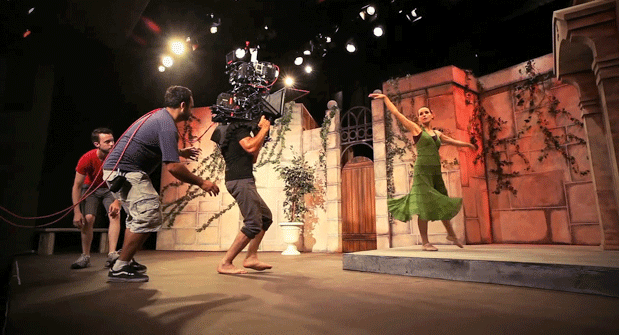
The concept and storyline of “L’âme Soeur (Soul Mate) 3D” was created with the intent of experimenting with variable frame rates from the beginning (both standard 24fps and HFR). Variable frame rates will be referred to this point forward as VFR. We were initially inspired by the idea of HFR after hearing Wim Wenders keynote at the 2011 Toronto International S3D Conference. The accomplished filmmaker expressed his thoughts about his landmark S3D documentary “Pina” being considered a candidate for HFR capture at one point in pre-production. As Wenders explains about his decision to film in 3D: “The two-dimensional cinema screen is simply not capable of capturing Pina Bausch’s work, either emotionally or aesthetically. When I watched her dance for the first time twenty-five years ago, I was captivated and deeply moved. I was able to understand human movement, gestures and feelings in a whole new way. And this magic is what I would like to translate to the screen […] 3D gives us the possibility of taking the audience directly onto the stage, into the middle of the event.” With “Pina” already being such a shining example of the art and technical achievement of S3D filmmaking, the thought of it also being filmed in HFR was striking. Would such a graceful, raw example of dance and human emotion that “Pina” is, become elevated with the use of HFR? Or would the use of HFR, noted for its ‘ultra-real’ definition, work against the beauty and emotion of the film? It is hard to imagine now what audience reaction may have been, but we did suspect that the use of HFR might have worked both for and against the film if its use was indeed employed.

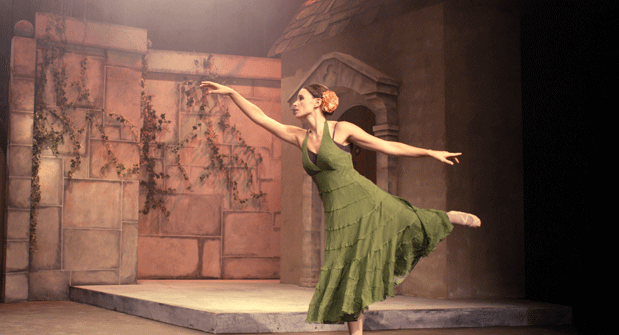
Dancer1

A screenshot from  “L’âme Soeur (Soul Mate) 3D”. Does HFR/VFR affect the aesthetic of graceful dance?

Our interest in the topic grew as it was announced The Hobbit was filming in 48fps, and a year later audience reactions from CinemaCon 2012 was widely mixed. There had been reports of the HFR implementation working both for and against clips demonstrated, but as I have noted previously, this could also be due to the fact that the clips were not shown in the context of a narrative and furthermore were incomplete in VFX, grading and audio.

The debate for HFR rages on in the meanwhile, and during this time the initial seed of thought that VFR could have real creative strengths grew into a full-fledged idea. We decided to model the story of  our film around the actual capabilities of what we suspected VFR and HFR could demonstrate. The initial shot list that encompassed experiments surrounding VFR/HFR was later discarded as we realized these ‘tests’ had no meaningful relevance once they were placed into a story narrative. For example, we could not find a legitimate way to test various shutter angles, gigantism, miniaturization, refraction/reflection, and temporal frequency all within the structure of a story. If we were to complete ‘tests’, they should remain just that- TESTS that result in comparative analysis of the effects of various VFR/HFR shots. So we ended of altering the shot list to contain the priority shots:

1.    What do PEOPLE look like in HFR? (CU, MS, WS)

2.    What does stationary movement/fast action look like?

3.    How does HFR effect reflection?

4.    How does HFR effect depth (foreground/background)

5.    How does HFR affect REALISM?

We built the composition, framing, staging and action all within the structure of these five priorities. And the truth is while on location, we ended up altering our shots on several occasions to respond to the observations/desires we had at that time, while in the moment.  For example, the decision to accommodate a request from a crew member to attempt a hand held shot resulted in one of the more interesting compositions of the shoot. On another occasion more dolly movement was used in a scene to address concerns around strobing/blur in moving S3D shots, and test these concerns on the spot.

HFRWorkshop
A Kernercam S3D rig with two Red Epics mounted on a shoulder. To see the video in action, visit our Vimeo site.

So what is the “L’âme Soeur (Soul Mate) 3D” story exactly?

Deeply inspired by the success of “Pina”, we decided that the narrative and action sequences of the story would revolve around dance. We believed that this was an artful departure from other HFR experimentation that filmed martial arts and boxing content.

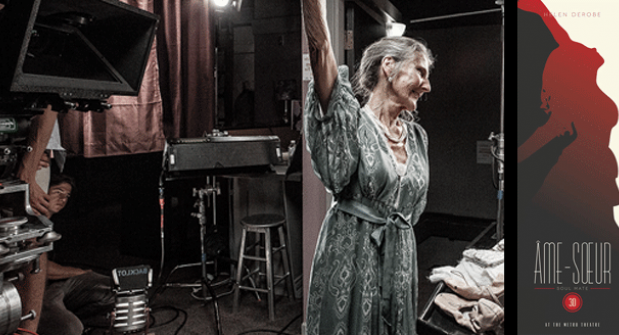
Synopsis: A return to the theatre ensures that an elderly husband and wife couple is able to escape once more into their youth- and their youth means nothing without the devotion and love they have formed over their long lives. Elderly dancer Helen Derobe has always been a person of few words, preferring to show rather than tell. Her husband is everything to her and she finds herself becoming more dependent on him. Lately she is unable to use words to describe what her husband means to her, so she reminds him once more- through dance, which had initially brought them close together.

Pre-Production Considerations

As I previously mentioned, we had imagined early on the use of an elaborate shot list that tests many of the theorized HFR and VFR capabilities. Once we realized this would be tremendously difficult to do (both time and space issues) it was thinned out.

The final shot list as it appeared on set:

Shotlist

You may notice it looks like a very traditional shot list, not one that explains any S3D or HFR/VFR components. We found the Shot list would be confusing to most of the camera crew, and instead we decided for the directors/producers to use the Shot list as a tool to guide the shots since the HFR/VFR components were already planned within it. Rather we would allow the DOP and Stereographers to have complete creative control of the lighting and Stereo, while using the shot list as a guide for framing.

A storyboard was discussed, and even drafted but it was decided that the boards would not help much due to the space that we were filming in being very customizable. We were working with a stage that allowed for the action and even camera equipment to be adjusted as we felt fit. We theorized that we would change our intial staging/framing ideas once we actually begin working inside the space, and this proved to be very much true.

The only very relevant stereo 3D tool that was created before production, and is still currently being used isa stereo depth script for post production.  For excellent examples of depth scoring, and to hear what Brain Gardner has to say about perception and the art of 3D storytelling, visit here:http://magazine.creativecow.net/article/perception-and-the-art-of-3D-storytelling

We also spent a considerable amount of time on props and set decoration. In our attempt to test out what HFR looked like, we wanted to play with lots of mirrors and surfaces provided reflection/refraction. Not exactly what most S3D productions would consider pleasant, but we did want to see if HFR affected the common issues around reflection (which can be very distracting in that they do not mimic normal perception in real life. They often float within the Stereo 3D depth). It was important with all these reflective surfaces that we avoid light flares, and this was considered in pre-production before dressing the set.

This ends part 1 of this topic. Stay tuned for Part 2 on Effective Pre-Production and Production of Variable HFR projects on November 13th.

Categories
news S3D

For Immediate Release: Emily Carr’s S3D Centre Creates Variable HFR FIlm

A new live action short, created at the Emily Carr University of Art + Design’s Stereoscopic 3D (S3D) Centre, incorporates scenes shot at 24, 48, and 60 fps to demonstrate the creative potential of using variable frame rates within a narrative context.

The production, L’Ame Soeur (Soulmates) 3D, incorporates variable frames rates as both a creative and technical tool.

“As the film and broadcast industries move toward higher frame rate 3D productions, it is important that researchers look at the implications both on a technical and perceptual level,” described Dr. Maria Lantin, Director of Emily Carr’s Stereoscopic 3D Centre. “With this research we specifically address the notion of using frame rate as an additional component to storytelling and audience engagement.”

The S3D Centre’s variable HFR research offers the creative community a valuable exploration of how variable frame rates can be used to tell compelling stories.

Motion artifacts such as judder and blur are often visible at standard frame rates like the 24fps of traditional cinema. Productions shot at higher frame rates create a different viewing experience by showing fine movement detail — instead of more resolution in the image there is more resolution in time.

The Centre’s research into variable frame rates suggests that the choice of frame rate can influence viewer comfort and become another cue in the perception of narrative in live action films.

A video overview of the research is available at http://vimeo.com/s3dcentre/abouthfrresearch

The S3D Centre’s footage was captured using RED Epic cameras, capable of capturing images at up to 60 uncompressed frames per second. Each scene was filmed at 24fps, 48fps, and 60fps with the intent of delivering a final product that incorporates these three frame rates. The use of a particular frame rate in a given shot is derived from creative observation and experimentation into variable frame rates as a storytelling tool.

The final short will be delivered for both projection and broadcast television.

With the upcoming release of The Hobbit trilogy filmed at 48 fps, a wide audience will become aware of the look and feel of higher frame rates. The goal of the Emily Carr S3D Centre is to increase the knowledge base in the proper application of HFR in production and post-production.

The Centre is part of the Society of Motion Picture and Television Engineers (SMPTE) working group on HFR and a member of the GRAND Network Centre of Excellence linking Canadian universities that are active in stereoscopic 3D research.

The research is made possible by generous contributions from TELUS, the Natural Sciences and Engineering Research Council (NSERC) through the College and Community Innovation (CCI) Program, and the GRAND Network Centre of Excellence. The S3D Centre gratefully acknowledges the support of Western Economic Diversification, the Industrial Research Assistance Program, and the Canadian Foundation for Innovation.

Categories
news S3D

S3D Centre to join panel at High Frame Rate 3D Cinema Workshop

The S3D Centre team members Alan Goldman and Denise Quesnel will be joining HFR experts Christie Digital Systems, York University, Screen Industries Research and Training Centre – SIRT, Real-D, and more on the 3D Film and Innovation Consortium (3D FLIC) hosted  “High Frame Rate 3D Cinema Workshop” October 30th, 2012. (EDIT: Re-Sceduled to November 20th due to technical issues).

The S3D Centre will be speaking on the topic Planning, Pre-production, Production: What do I need to consider in a HFR 3SD/2D project? with SIRT’s John Helliker, and Rob Burton of Arc Animation. The afternoon will consist of HFR 3D and 2D demonstrations on a HFR enabled Christie Digital Cinema Projector. We will be showing some of our HFR material from the “Soul Mates 3D” production at this time.

The S3D Centre was in Toronto last year for the Toronto International Stereo 3D Conference. You can read a report on the event here.

For complete information, please vist the Eventbrite page.