Categories
news S3D

Stereo 3D Weekly News Roundup :: June 14 2012

____________________

International Events and Announcements

International 3D Society and Autodesk Announce Worldwide 3D Short Film Competition :: 3dindycompetition.com

If you have been wondering what to do with your S3D short film, or even that idea for a S3D short you have been thinking about, look no further. Deadline to submit is Nov 16 2012, and winners will be flown to Hollywood and accommodated for 5 days and 4 nights in a four-star hotel while they get to tour a major Hollywood studio and have the opportunity to go on set with one of Hollywood’s top 3D stereographers.

NBC lays out 2012 London Olympics broadcast plan on TV, internet, apps and in 3D :: Endgadget

NBC has described in detail the broadcast system for US residents, and BBC has also explained their comprehensive plans last month. Unfortunately for Canadians, they will not receive 3D broadcast of the London 2012 Summer Olympics because the broadcast consortium has decided it would be too expensive to deliver. The broadcasting consortium likely had conducted its investigations and trials into Olympic 3D content delivery too late, considering NBC and BBC’s own investigations occurred immediately following the completion of the Beijing and Vancouver Olympics.

Behind the Scenes Video of Pixar’s “Brave” :: CGMeetUp

Pixar’s latest Stereo 3D animation feature “Brave” hits theatres on June 22nd, and CGMeetup as released a fantastic behind the scenes video on the production.

Brave-Meridas-Leap_small

____________________

Software News

Autodesk Launches Smoke 2013 Trial :: Autodesk

A free pre-release trial of Autodesk Smoke 2013 for Mac (with improved stereoscopic tools), is now available for download via Autodesk http://www.autodesk.com/smoke-trial
Have a look at some Free tutorials to familiarize yourself with Smoke. Autodesk’s Official YouTube Channel: http://www.youtube.com/user/SmokeHowTos

Firmware Update for HERO2 GoPro 3D System and New Cineform Stuido Launched :: Cineform

David Newman, GoPro’s Senior Director of Software Engineering (p.k.a. CineForm CTO) has confirmed that there is a new HERO2 firmware update for GoPro 3D to improve exposure accuracy between cameras. Additionally, CineForm Studio 1.2 has been launched this week. Visit http://www.Cineform.com for the download links.

____________________

Hardware News

Matrox Announces Thunderbolt™ Docking Station at $249 :: Creative Cow

News of particular interest comes to DIT (Digital Intermediate Technicians) and Stereographers as Matrox announces a new Thunderbolt™ Docking Station at $249, an ultra low price in September 2012.


Categories
news S3D

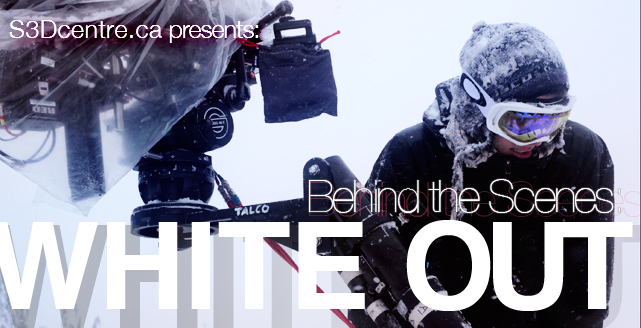
White Out – Behind the scenes with Atomized Creative at Grouse Mountain Resort


When we decided to shoot for a day on Grouse Mountain, we knew there might be snow and wind but there was a lot of snow and wind. Director and Stereographer, David Tenniswood didn’t let that deter us. If the mountain was open then we were shooting. The plan was to be on the mountain, in position and shooting by 930 -10. The morning proved to be grueling as the wind and snow were particularly strong. We set up camp and our first camera position next to the first big transition jump in the Quicksilver Snowboard Park. There was a small tent for set up, alignment and monitoring.

White Out 3D | Behind the Scenes Video from Oliver Millar on Vimeo.

Rig 1 was two RED Epic’s with 25mm Zeiss Super speeds. Our DoP, Oliver Millar, had spent sometime in the back with the technicians from Panavision figuring out which 2 lenses were optically close enough to shoot with. The cameras we mounted on a modified Hurricane rig. The rig was outfitted with the bolster bracket, allowing for heavier cameras and 2 modified Arri dove tails. Typically the Hurricane has Manfrotto quick release plates, but these were not sufficient to hold the REDs. Because of all the jostling, moving and adjustments this experimental setup required, we need on set monitoring. We built up a custom carrying case with an 23″ LG monitor. To mux our signal we used the Matrox MC100. A super handy flip flop box that outputs 3D over dual SDI or HDMI.

Rig 2 was a pair of Si2Ks on a fig rig. Emily Carr has a pair of Schneider 8mm machine lenses that open to f2. We were able to get some decent material with this rig. We mounted a 3rd GoPro with the usable image area taped off to give the operator some feed back on what he was shooting. The Cinedeck recorder was wired into his back pack.

Rig 3 and 4 were two 3D GoPro setups. These we mounted to ski poles and gave them to some of the pro riders to shoot with. I can’t express how great these little cameras are. We go some great material with them. Very excited to get some of the Hero 2 cameras. The final short is close to completion and will be released shortly. If the post production gods are good we will have a screening at the next 3D Meetup / Master Class. More details to follow on that one. The project was a great first foray for the S3D Centre for an on location shoot. Many thanks go out to Grouse Mountain Resort, Oliver and Dave of Atomized Creative and the crew and riders who made it all happen. Special thanks to the Mackenzie Sheppard who put this together.

Categories
news S3D

S3D Essentials :: free software and plugins

S3D Essentials is your link to great S3D resources. If you’re new to S3D production you’ll definitely want to check out these free S3D software + plugins.Free GoPro Cineform Studio software (Premium version is $999)

GoPro Cineform Studio takes footage captured with the 3D HERO System and converts it into viewable 3D files. You can then export the files and watch them on your computer, online at sites like YouTube and on your 2D or 3D TV at home.
http://gopro.com/3d-cineform-studio-software-download/

Bororo 3D for Sony Vegas
Bororo 3D is a plugin for Sony Vegas and any other video editor that supports Sony Vegas DirectX plug-ins. With Bororo 3D you can edit and produce stereoscopic videos.
http://www.pantarheon.org/Bororo3D/

Onsight OS 3D Plugin
OS 3D provides users with a intuitive way of working in 3D, be it with discrete left and right eye files or side by side, it allows you to make stereoscopic corrections and decisions during the editorial process.
http://www.onsight.co.uk/OS3D

StereoSplicer software
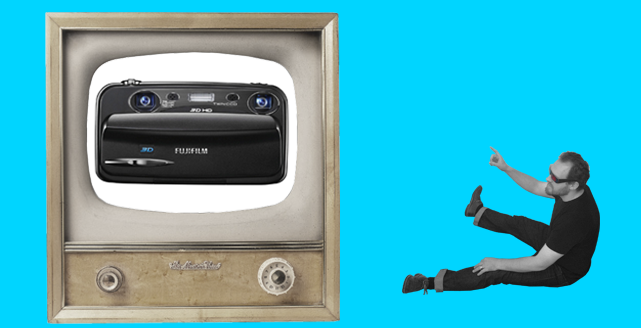
StereoSplicer separates the left and right video footage in the FUJIFILM FinePix REAL 3D W1 & W3 cameras.
http://web.me.com/ijunji/Challenge!_REAL_3D_and_Mac_E/StereoSplicer.html

Categories
news S3D

Stereo 3D Weekly News Roundup

Every Wednesday, the S3D Centre at Emily Carr University collects interesting Stereoscopic 3D (S3D) news from the past week.

____________________

Fox Plans Special Trailers to Let Film’s 3-D Effects Shine :: The New York Times Media Decoder

20th Century Fox is planning marketing the Stereoscopic 3D potential of their upcoming release “Life of Pi” in previewing a few minuties of the film before the 3D Blockbuster “Prometheus” this week, another segment before “Abraham Lincoln: Vampire Hunter,” which arrives on June 22 and hopefully a third scene with “Ice Age: Continental Drift,” due from Fox on July 13. This is a great step in studios coordinating with exhibitors to sell the real value of S3D. It should be noted that Vancouver based Moving Picture Company worked on this amazing film.

lifeofPi02____________________

Editorial: Despite shaky 48 fps Hobbit preview, high frame rates will take off :: Engadget

There has been a very split reaction to the footage of “The Hobbit” shown by Peter Jackson at CinemaCon last month. For many, the pristine look of HFR (high frame rate) material was difficult to get used to. This article by Steve Dent does a great service in explaining the history of the 24 frames per second standard, the histpry of Showscan, and the technology of HFR filming.

____________________

Free 3D Stereo Calculator for iPhone :: Stereoscopy News

RittaiCalc3D is the latest app to hit the iTunes store that makes your S3D production a bit easier. Developed by Junji Ikeda of Japan, you can calculate inter-ocular distamce using numerous variables. The iTunes page is in Japanese, but the app itself is available in English as well.
____________________

Go Pro Hero 2 ‘Goes Pro’ :: 3dguy.tv

With the newly announced Protune Mode firmware upgrade to the camera, GoPro seems poised to take on the professional market once and for all. The new upgrade will feature the abilty to record at 24 frames at 35Mbps in addition to their already established 120, 60, 48 and 30 fps modes. This article does a nice job of showing what the new upgrade means for the professional market.

Categories
news S3D

S3D Essentials :: software, plugins and hardware

S3D Essentials hooks you up to great S3D resources. This post showcases various software, plugins and hardware that are essential to S3D production.

____________________

Dashwood Cinema solutions 3D Toolbox, 3DA1 Calc and Stereo3D CAT

http://www.dashwood3d.com/

____________________

Stereoscopic Player and Stereoscopic Multiplexer

http://3dtv.at/Index_en.aspx

____________________

Sony LMD2451TD WUXGA LUMA 3D Monitor 

http://pro.sony.com/bbsccms/ext/BroadcastandBusiness/minisites/NAB2010/p…

____________________

Aetuts+ After Effects Tutorials Including 3D

http://ae.tutsplus.com/

Categories
news S3D

Meetup: S3D for Theatrical Film : Special Guest Patrick Lussier :: March 28, 2012

Join the S3D Centre at Emily Carr in partnership with Grand NCE, Annex Pro and Patrick Lussier for the sixth Stereoscopic 3D Meetup: “S3D for Theatrical Film”.

This event is FREE and open to the public, but space is limited! 
Register now at: 
http://s3dmeetup6.eventbrite.com/
There is discussion among industry professionals about whether it is more fitting to describe the format of Stereoscopic 3D as a tool, or a medium. Theatrical directors also debate the advantages and disadvantages of using subtle or aggressive 3D when creating a depth script for a film. Director Patrick Lussier is known for using 3D like a roller coaster ride where the audience can experience its full range of potential, and he explores the 3D formats’ immersive and fun qualities. Lussier’s presentation will feature clips from two of his films, My Bloody Valentine 3D (2009) and Drive Angry (2011) and he will describe the pre, production and post process of directing these films, challenges shooting on location and technical advancements that occurred between films.

A new door prize from Annex Pro, Glyph Technologies 500GB PortaGig 50 Portable Hard Drive (7200rpm). This is valued at $200.00 USD so don’t forget to bring your business cards for a chance to enter!

**********************************

S3D Centre Meetup ::  S3D for Theatrical Film 
This event is FREE and open to the public but space is limited! 
Register: http://s3dmeetup6.eventbrite.com/

Wednesday, March 28, 2012
Emily Carr University of Art + Design
North Building | Intersections Digital Studios
Event 6–8:30 pm (Doors 5:30)

**********************************

Patrick Lussier is a Vancouver born writer, director and editor who has established himself as one of the most versatile talents in the horror and thriller genres. Lussier started his career as an editor, working with iconic genre filmmakers including Guillermo Del Toro and Wes Craven. His credits for them include Del Toro’s Mimic, Craven’s Scream, Scream 2, Scream 3 and Red Eye. He made his directorial debut withProphecy 3, starring Christopher Walken for Dimension Films, then went on to direct the Wes Craven-produced Dracula 2000, starring Gerard Butler, along with the film’s two sequels.
 Lussier recently directed the 3D film Drive Angry for Summit Entertainment, which was released in February 2011, starring Nicolas Cage, Amber Heard and William Fichtner. Prior to that, he directed 2009’s breakout hit My Bloody Valentine 3D – a $16 million film which grossed over $100 million world-wide – and ranks as one of the highest grossing slasher films of all time.

Lussier also worked as a visual consultant for Dimension Films on The Brothers Grimm, which starred Matt Damon and Heath Ledger; as well as on Paul Schrader’s Dominion; Jonathan Liebesman’s Darkness Falls;Exorcist: The Beginning; 54; The Return; Whisper and The Eye. He also served as a music consultant onReindeer Games, which was directed by John Frankenheimer and on Kurt Wimmer’s Equilibrium, which starred Christian Bale. Lussier recently teamed up with writer and producer Laeta Kalogridis (Martin Scorsese’s Shutter Island; James Cameron’s Avatar) on a number of projects. Most recently, he edited the Timur Bekmambetov-produced Apollo 18, which released in August of last year.

Annex Pro is a value-added reseller, specializing in software and hardware for the entertainment industry in Vancouver, BC. We provide technical support, training and consulting for studios creating animation, games, film/TV, visual effects, audio post and music, as well as education and corporate media. We have been supporting the local entertainment industry in Vancouver, BC since 1983, and are proud of our community involvement, which include scholarships, sponsorships and participation in local customer events. Click here for a list of our authorizations. We are here to help make your project a success. Contact us today for a no-obligation consultation.

Thank you to GRAND NCE for their sponsorship of the event!

GRAND is a research network and commercialization engine whose goal is to address complex issues in digital media and transform multidisciplinary research into user-centred solutions. GRAND will explore the use and application of digital media in a variety of settings including entertainment, healthcare, education, environmental sustainability, and public policy.

GRAND is a federally-funded Network of Centres of Excellence supporting 34 research projects divided into5 cross-pollinating themes involving researchers at 25 universities across Canada with more than 60 industry, government, and nonprofit partners.

NSERC aims to make Canada a country of discoverers and innovators for the benefit of all Canadians. The agency supports university students in their advanced studies, promotes and supports discovery research, and fosters innovation by encouraging Canadian companies to participate and invest in postsecondary research projects. NSERC researchers are on the vanguard of science, building on Canada’s long tradition of scientific excellence.

Emily Carr’s S3D Centre is a national centre of excellence dedicated to advancing the art of stereoscopic 3D through research, education and training.
Visit us online: http://www.s3dcentre.ca 
Follow us on Twitter: @emilycarrs3d

Categories
news S3D

Emily Carr University Presents: A 3D movie making workshop in Victoria

This workshop will show production companies and filmmakers how to become 3D ready.

The day will start by teaching the science, history, art and business of S3D. Why has the acronym 3D been changed to S3D? And how has digital capture technology become the big game changer for S3D content creators? In addition, we will describe the new production and post-production workflow.

Emily Carr’s Sean Arden and Filmmaker David Tenniswood will discuss how S3D is a different way of conceiving and visualizing your story. Followed by looking at some the 3D previsualization tools available for pre-production, production and post-production.

The cost and expense and budgeting of S3D will be discussed as well as the language of S3D. Attendees will be given list of terms that they can refer to when working in the medium.

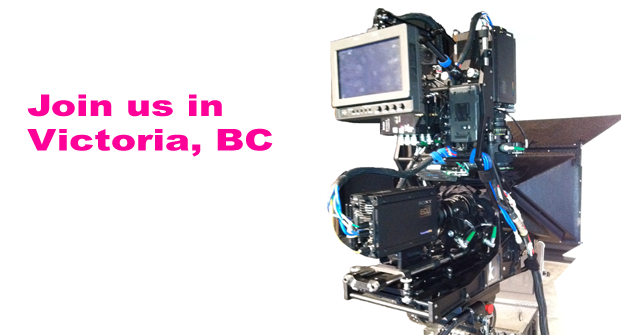
S3D production technology demonstrations will happen in the second part of the day. The Kerner S3D rig will be assembled, operated and aligned. Our ultimate aim is to give each attendee the opportunity to work on the beam splitter rig (Kerner) throughout the course of the day. The goal is for attendees to be able to confidently assemble, operate, align and disassemble the rig.

**********************************

Monday, March 26, 2012
10:00am – 5:00pm
Intrepid Theatre #2-1609 Blanshard Street, Victoria BC
PRICE: $20
(RSVP required to office@cinevic.ca or by calling Krista at 250-389-1590. Spots are limited.)

**********************************

CONTACT:
Krista Loughton
CineVic Society of Independent Filmmakers
250-389-1590
office@cinevic.ca
http://www.cinevic.ca/

Cinevic is an artist run cooperative facilitating the expression of unique, innovative voices in the ever-evolving language of film.  Located in Victoria, BC

Emily Carr’s S3D Centre is a national centre of excellence dedicated to advancing the art of stereoscopic 3D through research, education and training.
Visit us online: http://www.s3dcentre.ca 
Follow us on Twitter: @emilycarrs3d

Categories
news S3D

Meetup: Gener8: Changing the Conversation about Conversion :: March 7, 2012

This event is FREE and open to the public, but space is limited! 

Register now at: http://s3dmeetup5.eventbrite.com

Gener8 is a successful company that has developed a positive reputation in a challenging industry. The conventional wisdom in the film industry and popular press seems to be that the only way to produce a quality stereoscopic 3D film is to shoot with native stereo camera rigs. Stereoscopic 3D post-conversion is generally looked upon as a lower-quality alternative. We suggest that 3D conversion can produce high quality results; in fact a more useful conversation is “what is the right tool for the job?”

Tim Bennison and Mark Lasoff from Vancouver-based Gener8 will present an overview of their company’s stereo conversion work on such film franchises as Harry Potter, Priest, and Ghost Rider.  They will give a backgrounder on the state of the conversion industry and then describe Gener8’s conversion process. They will also be discussing production issues such as integrating conversion with visual effects and native stereo 3D shots, and the logistics of converting a full-length feature film. There will be the usual draw for a great door prize, so don’t forget to bring your business cards for a chance to enter! Stay tuned for more upcoming Meetup events from the S3D Centre.

**********************************
S3D Centre Meetup :: Gener8: Changing the Conversation about Conversion
This event is FREE and open to the public but space is limited! 
Register: http://s3dmeetup5.eventbrite.com/

Wednesday, March 7, 2012
Emily Carr University of Art + Design
North Building | Intersections Digital Studios
Event 6–8:00 pm (Doors 5:30)
**********************************

Tim Bennison joined Gener8 as Chief Operating Officer after serving as Executive Producer at Radical Entertainment. At Radical, he co-created several award-winning video games including Prototype, The Hulk and Incredible Hulk: Ultimate Destruction. Tim also worked as Radical’s Vice President of Technology, responsible for directing technical development for all production teams and overseeing research efforts. Prior to joining Radical, Tim worked at Alias|Wavefront, where he built advanced surface construction tools, implemented rendering systems on a variety of custom hardware, and designed a digital video 3D animation system. A graduate of University of Waterloo with an M Math degree in Computer Graphics, Tim was an associate professor in Computer Science at Lincoln University in New Zealand.
http://www.gener8.com/

Mark Lasoff is an Academy Award-winning Digital and Visual Effects Supervisor. He has worked on numerous visual effects-driven blockbusters including Avatar, Titanic, Apollo 13, The Matrix 2 & 3, The Hollowman, and True Lies, to name a few.  Mark has worked at many of the world’s leading visual effects companies including Digital Domain, Sony Pictures ImageWorks, Disney Feature Animation, and Electronic Arts. Beyond feature films, Mark has supervised two seasons of television visual effects for Syfy’s Sanctuary, and several large-format stereoscopic films for theme parks around the world, including the award-winning Terminator 2/3D.  Mark also served as the franchise Art Director for EA’s Medal of Honor. Mark began his visual effects career as a software developer for Total Recall, where he developed rendering software for the x-ray skeleton sequence, which earned the film a Special Achievement Academy Award for the Best Visual Effects. Mark graduated with a M.S. in Computer Science from the University of Maryland, and a B.S in Computer Science and a Bachelors of Electrical Engineering from the University of Delaware.
http://www.gener8.com/

Emily Carr’s S3D Centre is a national centre of excellence dedicated to advancing the art of stereoscopic 3D through research, education and training.
Visit us online: http://www.s3dcentre.ca 
Follow us on Twitter: @emilycarrs3d

Categories
news S3D

Meet the Gear :: point and shoot 3D

In this edition of Meet the Gear, Sherman Tam chats with Alan Goldman, an adjunct research associate and industry liason at the S3D Centre, about the rise of point and shoot 3D and what they bring to the industry of stereoscopic 3D production.

First of all, what is it that sets 3D point and shoot solutions apart from more traditional, industry-standard offerings?

Point and shoot cameras in 3D is a recent phenomenon. Advances in digital technology has allowed image synchronization, which is key in producing stereoscopic 3D imagery, to happen within the camera itself. Traditionally, 3D images were captured on either rigs that synchronized two individual cameras, or on beam splitter devices. These solutions were and still are widely used in professional shoots. Point and shoot cameras, however, have both simplified the creation of 3D images and lowered the entry cost for average consumers seeking to produce 3D content.

Since point and shoot 3D is relatively new, what sort of presence do they have on the 3D production market? What does the market for point and shoot look like right now?

Right now, FujiFilm, Sony, JVC, Panasonic and GoPro (Canon is also showing interest in entering the market) are amongst the main players in entry level point and shoot 3D, and each manufacturer to certain extents have geared their products to meet specific demands in the entry level market. For instance, FujiFilm point and shoots such as the W1 and the W3, while capable of taking video, are great for taking still 3D photos. The GoPro Hero system which uses two cameras stands out in capturing motion, such as extreme sports and the like. Sony, JVC and Panasonic have offerings that are more powerful in terms of taking 3D videos, but are also pricier as well. These companies have taken the leap from the consumer market to a prosumer market, and point and shoots in this segment can range from $2,000 for lower end models to upwards of $30,000 for the high end solutions.

An issue that emerged from having so many players in this market is that different manufacturers use different codecs for their camera outputs. For example, if I shot something with a Sony camera, I can only edit the footage in Sony software. Footage shot from a Panasonic camera will use a different codec, but may be more universal. There are workarounds for dealing with some of the codecs, but it’s unfortunate that filmmakers have to figure out how to work with all these different codecs and proprietary software. Some of the more powerful software such as Final Cut Pro and Avid do read a lot of codecs, but I’m not sure if there’s one that reads every codec.

Fuji3d

The FujiFIlm Finepix Real 3D W3.

What are some of the drawbacks of point and shoot 3D?

Point and shoot solutions may be comparatively inexpensive and easier to use, but they do not offer the same flexibility as the more expensive and comprehensive professional solutions. For fixed-width point and shoots like the FujiFilm cameras, where the two lenses or “eyes” are in fixed positions on the camera body, the obvious downside is the fixed interaxial distance. This forces you to learn to position your body in relation to the subject. Other downsides include lower image quality due to a less powerful image sensor, and less options to change factors such as bitrate and polarization.

Is point and shoot 3D, despite the downsides, still a good way to get into the world of stereoscopic 3D?

Definitely. A FujiFilm point and shoot costs between $400 to $500, and all you really need is that one camera to start producing 3D content. One of the great things about point and shoot 3D is that sense of instant gratification; you take the image and you can view it on the back of your camera immediately afterwards. The limitations of point and shoots can also be beneficial. I mentioned earlier that one of the drawbacks of fixed-width point and shoot cameras is that you have to be very aware of your body positioning because of the fixed interaxial distance. For me, it was extremely useful as I got to see and understand 3D compositionally and I can translate that into body position, which I think is really important for people working with 3D photography. For the more patient and technologically proficient, building your own rig with two regular cameras can also be a way to start producing 3D content. The tricky part is syncing the two cameras. Sean Arden at the S3D Centre had his first 3D experimentation with a custom rig, and building your own rig is a great way to learn 3D.

GoPro3D-2


The GoPro 3D Hero System.

Point and shoot 3D has made its mark on the market, so where does it go from here?

So far, point and shoots haven’t made that big of an impact in the professional market. The GoPro systems do see some use; the footage from those systems are being intercut with other footage. Prosumer cameras like Sony’s are making headways into professional shoots, but prosumer solutions can probably make up 20% to 30% of a professional shoot and the rest will need to be shot with professional-grade cameras. I would say that the two main camps in professional 3D production are beam splitter cameras and single camera solutions, but I think fixed-width cameras like the point and shoots we talked about may play an interesting role as they get more powerful and go down in price.