Categories
Design Development Events innovation news Projects S3D stereoscopic student virtual reality

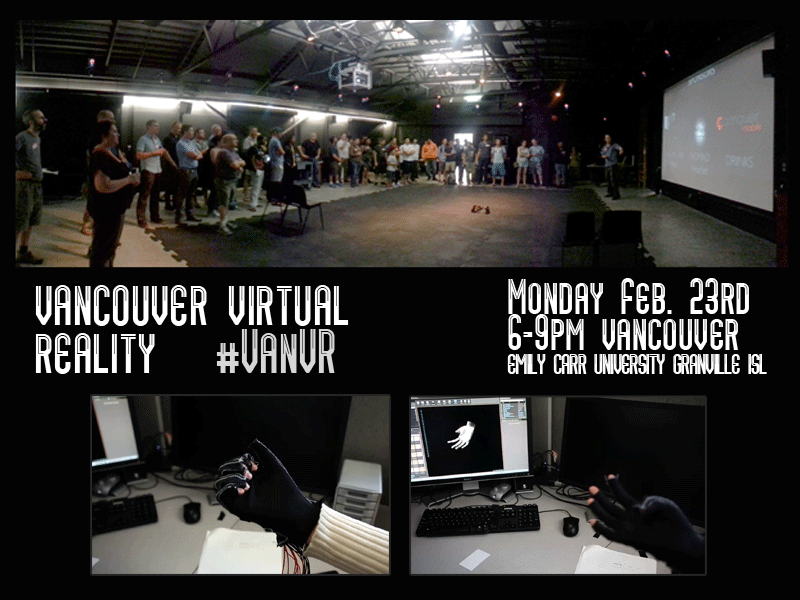
Vancouver Virtual Reality Event- Feb. 23rd ’15 at Emily Carr

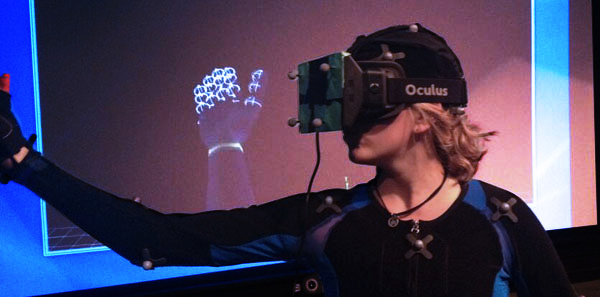
Please join the S3D Centre at Emily Carr and VanVR Meetup group on Monday February 23rd at the MOCAP studio inside Intersections Digital Studios @ Emily Carr! In our fourth partnered event with VanVR, we showcase for a very first public look the work of our team at Emily Carr for a wearable VR glove. As always, attendees will be encouraged to experience all the demos with wireless VR headsets and other tools provided by the evening’s special guests!

We are packing in some incredible experiences, including:

Destination BC / This Is DARE – VR Tourism Experience of BC
Emily Carr University team – A brand new wearable glove for VR
Lamper VR – How far can you fly as a small bug in a HUGE world?
uForis – experience 360-degree panoramas of real locations, videos, and 3D spaces
VRChat – Use VRChat to quickly and efficiently add multiplayer to any world you can create in Unity3D

Please navigate to the VanVR meetup page to RSVP your attendance. The guest list will be tightly controlled on the evening of the event to avoid excessive wait times for the demos and overcrowding. Thank you for understanding!

Follow the signs for “MOCOP Studio, Intersections Digital Studios” once inside Emily Carr. 

Categories
Development Events innovation news Projects S3D stereoscopic student virtual reality

‘The Internet’ VR demo by student Kushal Goenka, Monday Nov 17th

Please join the S3D Centre at Emily Carr and VanVR Meetup group on Monday Nov 17th, 7pm at the MOCAP studio inside Intersections Digital Studios @ Emily Carr University of Art + Design! In our third partnered event with VanVR, we showcase the work of our undergraduate student Kushal Goenka with his creation “The Internet” UE4 VR environment. Attendees will be encouraged to experience the demo with the VR headsets provided, including David Clements latest generation VR headset design.

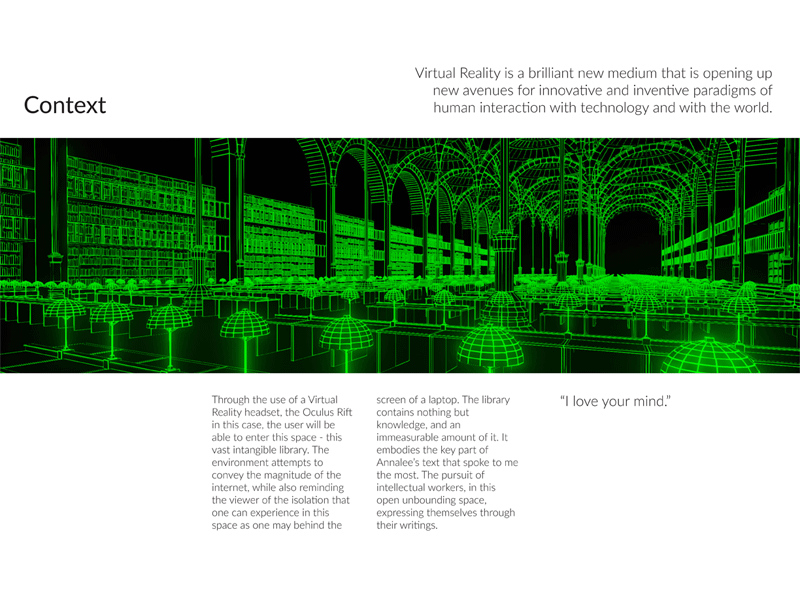
“Through the use of a Virtual Reality headset, the Oculus Rift in this case, the user will be able to enter this space – this vast intangible library. The environment attempts to convey the magnitude of the internet, while also reminding the viewer of the isolation that one can experience in this space as one may behind the screen of a laptop.”

When: Monday November 17th, 7pm

Where:  MOCAP studio inside Intersections Digital Studios @ Emily Carr University of Art + Design

More info: VanVR Meetup page

KushalGoenka_TheInternet-1

KushalGoenka_TheInternet-2

KushalGoenka_TheInternet-3


Download Kushal’s PDF in full here: KushalGoenka_TheInternet

Check out the videos from previous events:

• VR night at The Sawmill, by The Vancouver Project
https://www.youtube.com/watch?v=jr4KTxI78xk

• VR night at Emily Carr S3D, by Johnny Ostrem:
https://www.youtube.com/watch?v=lb5edbz4tu0

• Van Virtual Reality at Vancouver Hackspace, by James McCartney
https://www.youtube.com/watch?v=7BRtNgLIWMM

Categories
collaboration Design Development innovation news Projects S3D stereoscopic virtual reality

New Partnership between the S3D Centre and 3D Innovation Center

August 25th 2014 – The S3D Centre at Emily Carr University of Art + Design and the 3D Innovation Center (3DIC) in Berlin, Germany are now partners.

With both establishments having a rich history in stereoscopic 3D, virtual reality and advanced imaging projects and expertise, we look forward to collaborating together!

This will occur through the sharing of research and resources; collaborations on projects and R&D; co-presentations when applicable; and work together in advocating for academic, business and personal adoption of advanced imaging tools and concepts, visual and immersive technologies. We are also exploring ideas around student exchanges and co-research as our relationship progresses.

The formalization of the partnership comes just in time for 3DIC’s two-year anniversary. Find out more online. 


ABOUT : The 3DIC was initiated by Fraunhofer Heinrich Hertz Institute in Berlin, which is responsible for the structure and organization. www.3dinnovationcenter.de
Mission: Synergies through Collaborations!


The 3D Innovation Center Berlin offers the whole cast of actors a new platform of 600qm in a pre-competitive environment where they can exchange views and opinions, build contacts, put their products and systems to the test and present them jointly to a diversity of target audiences. The given know-how covering the whole 3D systems chain will generate new synergies – in terms of product development, marketing and sales as well as market positioning and public relations.

Categories
Design Development news Projects S3D virtual reality

New vIVE video created + press about VR Vancouver Community

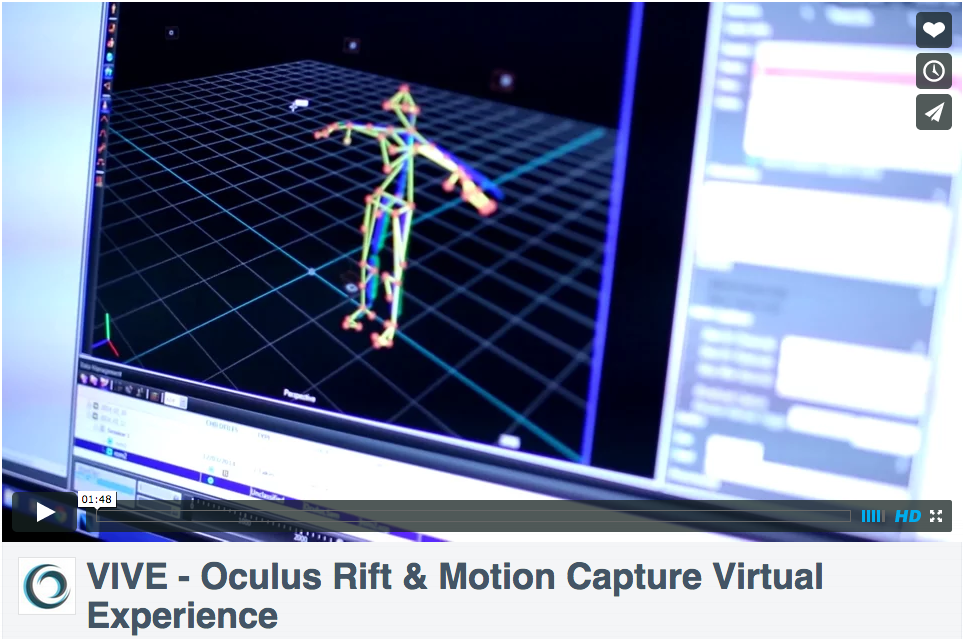
A brand new video about vIVE, the Very Immersive Virtual Experience utilizing Oculus Rift and Motion Capture at Emily Carr University of Art + Design in collaboration with the Vancouver VR community.

VIVE combines the Oculus Rift headset with motion capture systems to create a whole body virtual experience. Being able to roam and interact with the environment creates a more realistic VR experience. Emily Carr researchers are using this system to investigate modes of interaction and networked presence in VR. The project is partially supported by the SSHRC partnership project, Moving Stories, which is focused on qualitative movement analysis.

VIVE – Oculus Rift & Motion Capture Virtual Experience from Emily Carr S3D on Vimeo.

Also, check out this article by Charlie Cho of CBC News in an interview by the S3D Centre’s Dr Maria Lantin on 4 ways Vancouverites are using Virtual Reality. Listen to a 5 minute interview with CBC’s Stephen Quinn online here: LISTEN ONLINE

 VR_MeetupMay2

Photo by the S3D Centre at Emily Carr. 

View the vIVE project page here.

Categories
Design Development news Projects S3D

vIVE – Very Immersive Virtual Experience (Virtual Reality with MOCAP)

vIVE – Very Immersive Virtual Experience

The initial goal of this project was to use passive optical motion capture to track an Oculus Rift to create an immersive virtual experience. The physical Oculus Rift is motion captured and in realtime with low latency the data is piped to unity to drive the virtual Oculus Rift. The output is wirelessly transmitted to the device. This results in an untethered virtual experience, which can include hands, feed or even a full body avatar.

The future goals for this project are:

  • Develop opensource tools to create an immersive virtual experience
  • Develop or adopt tools and protocols to allow virtual spaces to overlap
  • Using observation and experimentation; explore new user experiences, interactivity and UI/UX language and protocols

vIVE now has its own project page. Visit vIVE for more information!

Categories
Projects S3D

Effective Post Production and Dailies Pipelines

For more information on the S3D Centre’s research activities in HFR and other areas, and to see our current supporting press material please visit HFR Research home.

We advise the reading of the first HFR Blog #1 Here , and Effective Pre-Production and Production of Variable HFR projects (Part 1 of 2) , Effective Pre-Production and Production of Variable HFR projects (Part 2 of 2) before reading on.

Key words for this article:  

  • HFR = High Frame Rates. Traditionally, cinema productions are filmed at 24 frames per second, or for broadcast at 29.97 (30) frames per second. There are numerous advantages to filming in HFR, especially in 3D.
  • VFR = Variable Frame Rates. This is the use of multiple frame rates within the same container/sequence. Does the utilization of HFR as a ‘tool’ in this regard change the immersive experience for the viewer? We suspect that the question of whether or not to utilize HFR in a stereoscopic 3D film within a narrative context depends largely on the creative intent of the film itself.
  • SFR = Standard Frame Rate (24fps in North America, 25fps in Europe)

To re-iterate: We are researching not only the standalone benefits of higher frame rates in S3D, but also the effect of VARIABLE HFR on aesthetic and immersion in the context of a single narrative.

Post Production Considerations

We were at this years SMPTE Symposium, where the 2012 topic was HFR. We have been dealing with many post production considerations over the past months, and this is an area of concern echoed relentlessly at the Symposium. From http://smpteconnect.blogspot.ca/ :

“Paul Chapman, senior vp of technology at Burbank-based postproduction facility Fotokem, led a discussion of some of the challenges that high frame rates bring to post, during SMPTE’s symposium on high frame rates for digital cinema.
 For starters, he asserted that support from creative editorial is lacking and needed. This was a sentiment echoed by additional speakers, including Disney’s Howard Lukk, who did however single out Adobe’s Premiere Pro as offering HFR support.
Chapman reported that he conducted an informal survey of dailies vendors, and his findings suggest that all are now testing high frame rates. He expects to see quite a lot of development in this area during the next 12 months. He reported that Fotokem’s NEXTlab near-set dailies system is already working on a HFR project.
Nico Recagno of SGO (the maker of the Mistika postproduction system, which is in use at Park Road Post on The Hobbit) said that managing dailies at HFRs is “horrifically difficult,” citing challenges including time code, methods of viewing and QC, and sound sync.
Recagno added that the biggest concern that he is hearing from colorists is getting proper calibration during color grading. He and Chapman both urged the community to create HFR standards in some of the discussed areas, including time code.”

We are also members of the SMPTE 21DC high frame rate study group and can echo that these are very new concerns. Furthermore, there are simply not many software applications/dailies software and hardware already capable of S3D toolsets, let alone HFR 3D toolsets. SGO Mistika has been reckoned as the ultimate HFR 3D toolset, but with its steep price point we have found it to be out of reach for the majority of filmmakers. Denise has been a user (and Beta tester) of Avid Media Composer and Symphony for S3D already, so we were able to test it on our HFR 3D material. Avid already has functional S3D toolsets so this made the process of attempting the playback of HFR 3D simplified.  Before we go more into this process, we will share some specs on our post production toolsets:

Macbook Pro for on set dailies and offline edit:

  • 17” running 10.7.3. 2.4 GHz Intel Core i7.
  • 8 GB 1333 MHz DDR3. AMD Radeon HD 6770M. GPU Graphics bus, Intel HD Graphics 3000. GPU built in bus.
  • Footage stored on Pegasus Promise through thunderbolt connectivity.

We have an additional Magma 3-slot chassis that can be used with this configuration, running Red Rockets or other cards.

MacPro tower:

  • 3.2 GHz dual quad core with 18gb ram.
  • Nvidia Quadro FX 4800. Mac Raid Card – Raid 0.
  • 1 x RedRocket. BlackMagic 3D Extreme PCI card for playback.

Cine-Tal Cinemage 2000 monitor for colour grading, and Hyundai Hyundai 46” passive polarized 3D LCD (S465D) for 3D TV playback.

Regardless of your software, realtime playback of S3D material is already a problem. Unfortunately HFR and VFR footage only exemplified this issue. This is where the greatest expense may be incurred by an HFR / VFR 3D shoot- the cost of a reasonably new machine, additional video/PCI cards, and fast storage to get fast ingestion and playback of footage.

Software Capable of viewing HFR that we used:
•    Dailies:
1.    RedCine X (limited depth grading/convergence tools, some colour grading tools. Great way to view camera metadata and export new clips. Somewhat confusing to create S3D containers)
2.    DaVinci Resolve 8 (excellent metadata capabilities, easy to create S3D containers but ONLY from EDLs created within Resolve. Excellent colour and depth grading. Easy to switch between left and right image. You can export literally any deliverable in HFR from DaVinci Resolve.)

•    Editing Solution that we used:
1.    Avid Media Composer or Symphony. Can work directly from RED footage using AMA, or you can create proxies either from a dailies software OR inside Avid directly using the transcode tool. Easy to create S3D containers, easy to adjust sync on clips. Excellent depth grading and colour grading. Can export 720p60 media.

We were very encouraged to discover that Avid DS can utilize 23.98, 24, 47.95, 48, 59.94, 60fps timebases and footage among many other frame rates. It also had S3D toolset, and was capable of delivering full HD and 2K video. Unlike MC and Symphony, DS uses a different plugin scheme than AMA, but it has been built to match the experience and settings as closely as possible to AMA.

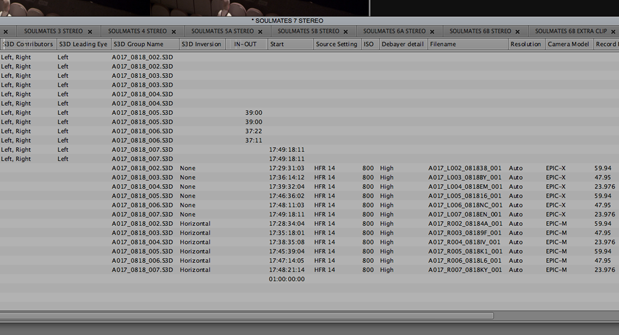
LotsOfMetadata_small

Click to see a larger image with Avid’s comprehensive metadata.

About editing HFR / VFR material

If you are planning on editing with proxies (this is likely going to be the only way to view the S3D HFR material in real-time) you can one light and encode to HD within dailies program. You can then advance to your editing software (in our case, Avid).

Our original clips were 4096×2160 at 59.94, 48.95 and 23.98. You can get almost real time playback of this material in 3D within Redcine, rastered to 1/4 with a RedRocket in chassis connected on the MacBook Pro, and ¼ raster with the MacPro with a RedRocket inside. Similarly, within Avid I was able to view real time playback of AMA 3D HFR material at draft quality.

Depending on your final output, you can use these dailies and editing software to export to a variety of deliverables. Avid Symphony exported any QuickTime or video you wished, and Avid DS was able to export TIFF 16bit Image Sequences if you desired a conversion for DCP. RedCine was able to create new Red clips (called trims), pretty much any video and some image sequence options. DaVinci Resolve had excellent deliverables support of video, image sequences, and DPX.

Resolve_Correct_Large

To view a larger image of the correct setting in DaVinci Resolve for 60fps OR VFR inside 60fps container WITH real time playback, click the above image.

Creatively editing with HFR / VFR

Stepping away from the technical discussion for a bit, I wanted to discuss creative choices for a VFR project. I first want to be completely honest and say that after viewing the HFR proxies in 2D, 3D alongside standard frame rate material, I had some very surprising reactions.

I found that it was incredibly difficult to go back to watching this material in ONLY 23.98fps after being exposed to the HFR versions of the material. While watching the 23.98fps material I felt as though it was simply missing something. I speculate I was not enjoying the blur of 23.98fps on the majority of footage, and preferred the HFR versions on many occasions. I found that I did NOT like the aesthetic of HFR on close up faces, something echoes by my colleagues. HFR on CU faces seems to be far more intimate than what a viewer may like during emotional scenes. We all observed that the background separated, and was more defined in the HFR versions than in 23.98fps. This is a great thing in 3D, but be careful with set decoration. Any flaws in the background become more pronounced in HFR.

Imperfect movements whether it is a shaky dolly or jerking dance move became even more pronounced in HFR 3D. I decided on one occasion to cover up a bumpy dolly track with the 23.98fps version of the clip- the blurred frames ‘smoothed’ the image compared to the HFR versions. I found that our main subject, the dancer, was a very beautiful dancer but sometimes the HFR created a kind of ‘animated’ look to her dancing. 23.98fps seemed to retain the ‘soft, graceful’ aesthetic of dance, but it also enhanced blur and judder to the point that it was unwatchable in 23.98fps. Lighting on a human subject appeared more ‘hard edged’ and defined, and when viewers of the material suggested it made a person look video-game like, I speculate that this hard edged lighting was a common denominator.

The HFR handheld shots were shockingly intimate, and I had a great time playing with these and intercutting them among different moments to create different effects. The film is not 100% complete yet, so that is all I will say on this for now.

In general, Stereo 3D shots need to be held longer, and the entire edited sequence slowed down to allow the viewer time to absorb and appreciate the effect. This is fairly common knowledge, and with HFR I find the shots need to be held a fraction longer. HFR seems to provide even more information, and there is more to look at with the added frames and background depth. So slowing the pace of the edit down is even more important now that ever. After recently viewing “Life of Pi” in 3D, I feel this film is an excellent example of the editing held longer than is typical in a feature film. The scenes were artfully composed with spectacular scenery everywhere, even in the reflections of water. If this film was HFR, I think that the shot length would have become even more important due to the increase of detail.

There may be a second part to this post soon, due to the very soon to be released “The Hobbit: An Unexpected Journey” and information from that project. I can confirm that the post team used Avid Media Composer and SGO Mistika, and actually edited the film in 24fps offline only to online in Mistika later. This was due to technical limitation in HFR 3D, but also the editor’s familiarity to the 24fps pipeline. More toolsets are due out soon that we may have access to so this blog may be updated sooner rather than later with more information.

Learn more about Stereoscopic 3D editing at Avid.com ‘Working in Stereoscopic’ guides.

Avid_MediaComposer


Categories
Projects S3D

2012 Degree Exhibition

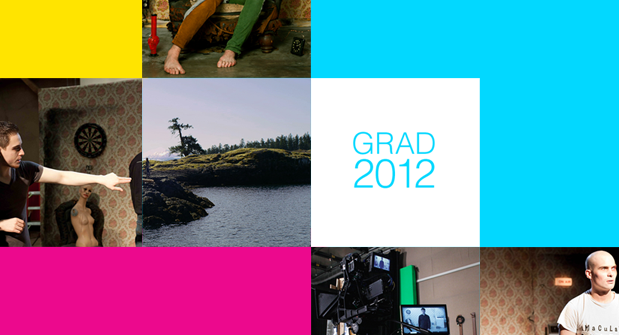
We welcome you to attend the 2012 Degree Exhibition at Emily Carr University of Art + Design. The annual Degree Exhibition highlights students’ creativity and innovation across design, media and visual arts in our Bachelor and Masters’ programs. We are pleased to announce two students, Sean Arden in the Graduate program and Nick Kalish in the Undergraduate program have completed Stereoscopic work which will be exhibited at the show. Please note the screening times and dates for the exhibits.

Industry professionals are welcome to attend Preview Night on Friday, May 4th from 6-9pm or the Opening Reception on Saturday, May 5th from 5pm-10pm. 

The event is FREE, and no RSVP is required.

***************

Hotbox

Nick Kalish 
BFA Film/Video + Integrated Media
Hotbox, 2012, 18 min Short Narrative

Preview Night: May 4th, 6pm (doors open 5:30), 18 minute film followed by Q&A.
Opening Reception: May 5th, with screenings at 6pm, 7pm, 8pm
Intersections Digital Studios, 2nd Floor, North Building

Hotbox is a psychological character study that explores the boundaries between film, theatre, and the mind. It is a short film that consists of one actor performing an on set monologue, captured in stereoscopic 3D.
For more information please visit http://www.synapsecinema.com/hotbox


***************

Transference_0

Sean Arden
MAA (Masters of Applied Arts)
Transference, 2012, Stereoscopic Installation

Preview Night: May 4th, 6-9pm
Opening Reception: May 5th 5-10pm Exhibiting daily until Sunday, May 20th 6:00pm
Charles H Scott Gallery, Main Floor, North Building

For more information please visit http://adventuresinstereo.tumblr.com/

Categories
Projects S3D

Meetup: IMAX the evolution of 3D :: Jan 19, 2012

This event is FREE and open to the public, but space is limited! 

Register now at: http://s3dmeetup3.eventbrite.com

We are in for a real treat with guest Dylan Reade, a freelance camera operator and stereographer who has specialized almost exclusively in IMAX 2D and 3D formats for the past twenty years. He will present a historical overview of the evolution of large format 3D over a twenty five year period, including an explanation of the technological breakthroughs that allowed IMAX to move beyond the technology of beamsplitters and into far simpler and more portable systems than those in current theatrical use. His presentation will include personal stories, photographs and an acknowledgement of some of the key players that kept 3D thriving prior to its current mainstream renaissance (including several from the Vancouver film industry). He will discuss the IMAX philosophical approach to 3D and an appraisal of how it has relevance for the broader industry. Clips from several soon to be released and also high profile IMAX 3D films will be shown.

**********************************
S3D Centre Meetup :: IMAX: The Evolution of 3D with special guest Dylan Reade 
This event is FREE and open to the public but space is limited! 
Register: http://s3dmeetup3.eventbrite.com/

Thursday, January 19, 2012
Emily Carr University of Art + Design
North Building | Intersections Digital Studios
Event 6–8:30 pm (door 5:30)
**********************************

Emily Carr’s S3D Centre is a national centre of excellence dedicated to advancing the art of stereoscopic 3D through research, education and training.
Visit us online: http://www.s3dcentre.ca
Follow us on Twitter: @emilycarrs3d

IMAX Corporation is one of the world’s leading entertainment technology companies, specializing in immersive motion picture technologies. The worldwide IMAX® theatre network is among the most important and successful theatrical distribution platforms for major event Hollywood films around the globe, with IMAX theatres delivering the world’s best cinematic presentations using proprietary IMAX, IMAX® 3D, and IMAX DMR® technology. 
http://www.IMAX.com